Photoperiodic regulation of Wnts in spermatogenesis of Brandt’s vole (Lasiopodomys brandtii)
Lijuan Zhao, Jiajia Shi, Yan Liu, Lewen Wang, Junping Zhao, Yuhua Shi, Hong Sun, Dawei Wang, Zhenlong Wang

TL;DR
This study shows how light exposure during development affects Wnt signaling in the testes of Brandt’s voles, influencing seasonal breeding.
Contribution
The study reveals the role of Wnt signaling in photoperiodic regulation of spermatogenesis in a seasonal breeder for the first time.
Findings
Prenatal and postnatal photoperiod exposure affects testis volume and Wnt gene expression in Brandt’s voles.
Wnt5a, Wnt6, Wnt7a, and Wnt9a show distinct spatiotemporal expression patterns in spermatocytes and spermatids.
Wnt proteins are localized to specific stages of spermatogenesis, suggesting their involvement in seasonal reproduction.
Abstract
Photoperiod regulates spermatogenesis in seasonal breeders, yet its molecular mechanisms remain unclear. The Wnt signaling pathway is critical for spermatogenesis in non-seasonal breeders, but its role in photoperiodic spermatogenesis in seasonal breeders is unexplored. To investigate this, we exposed male Brandt’s voles (Lasiopodomys brandtii), a strict seasonal breeder, to long-photoperiod (LP, 16L:8D) and short-photoperiod (SP, 8L:16D) from the embryonic stage. Testis volume was markedly larger in LP than in SP from 4 to 10 weeks after birth. RNA-seq analysis of 151 Wnt pathway genes revealed differential expression, with Wnt5a, Wnt6, Wnt7a, and Wnt9a downregulated and Wnt7a upregulated in LP compared to SP. RT-qPCR and Western blotting confirmed these patterns. Immunofluorescence analysis showed that WNT7A and WNT9A were localized to pachytene and diplotene spermatocytes at 4 weeks…
Genes, proteins, chemicals, diseases, species, mutations and cell lines named across the full text — each resolved to its canonical identifier and authoritative record.
Click any figure to enlarge with its caption.
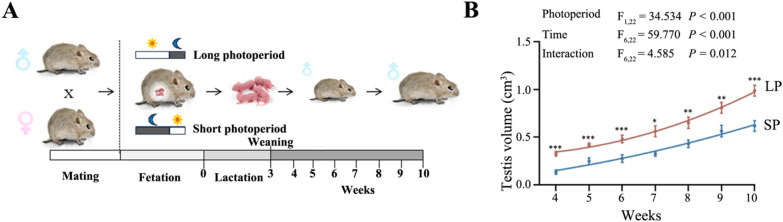 Figure 1
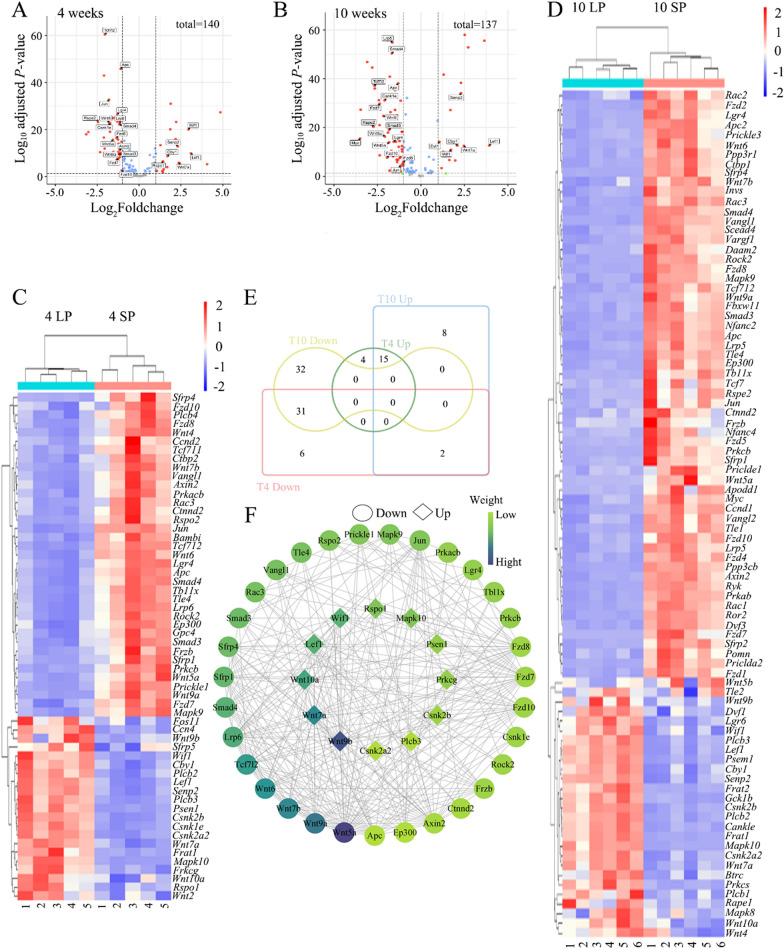 Figure 2
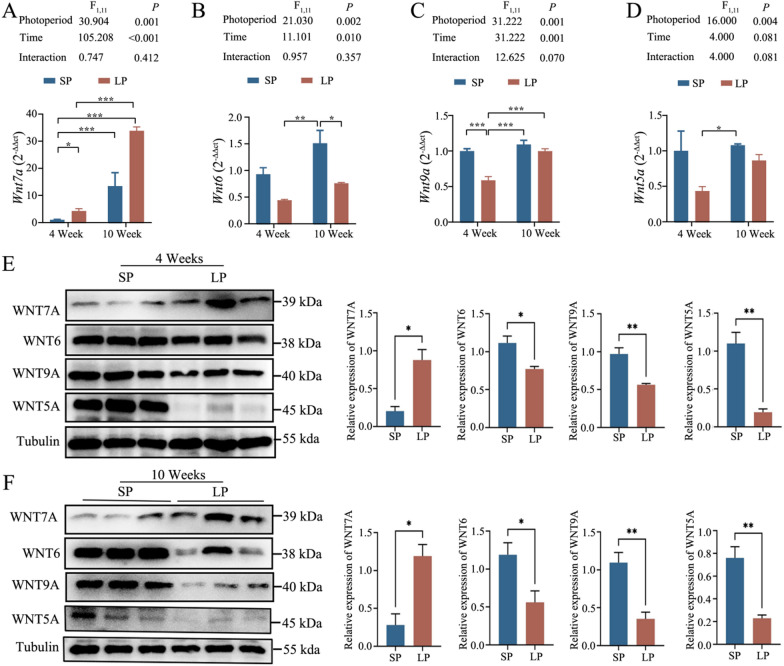 Figure 3
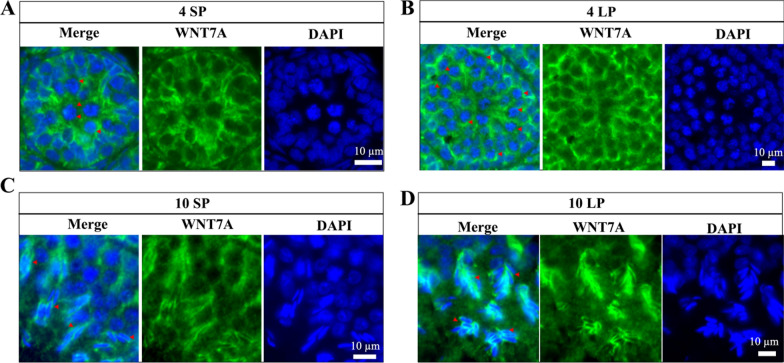 Figure 4
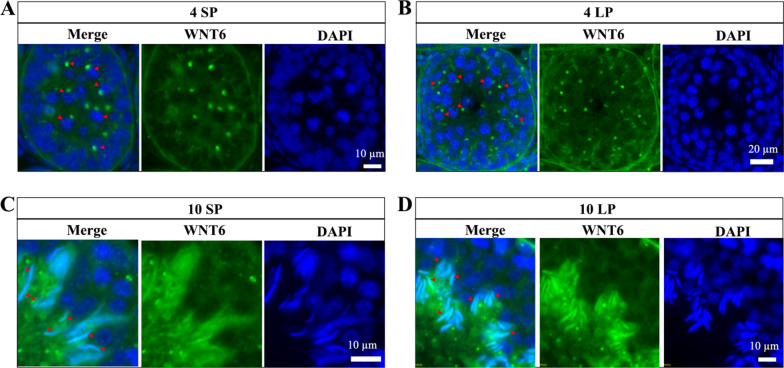 Figure 5
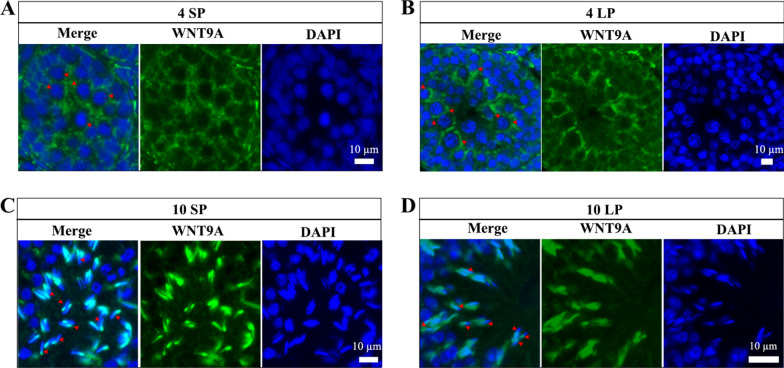 Figure 6
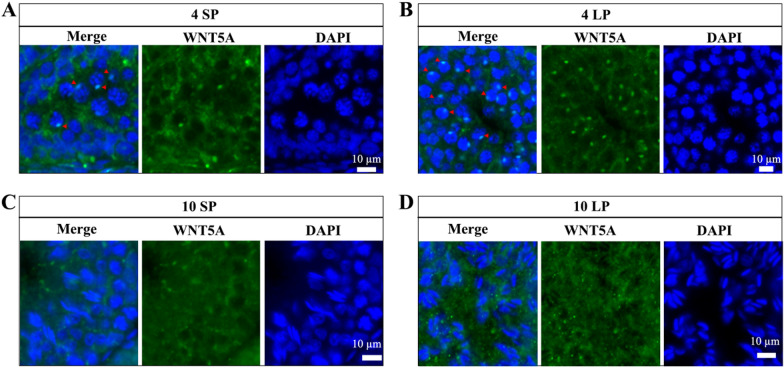 Figure 7
Peer Reviews
No public reviews on file for this paper yet. If you reviewed it on a platform where reviews are public (OpenReview, ICLR, NeurIPS, ICML), you can paste yours below so the community can read it here.
Videos
No videos yet. Explain this paper in a talk, walkthrough, or lecture? Add one.
Taxonomy
TopicsSperm and Testicular Function · Reproductive biology and impacts on aquatic species · Circadian rhythm and melatonin