A typical case of bilateral cataract with corneal arcus senilis
Amol Madhav Deshpande, Mayuri Amol Deshpande

Abstract
Genes, proteins, chemicals, diseases, species, mutations and cell lines named across the full text — each resolved to its canonical identifier and authoritative record.
Click any figure to enlarge with its caption.
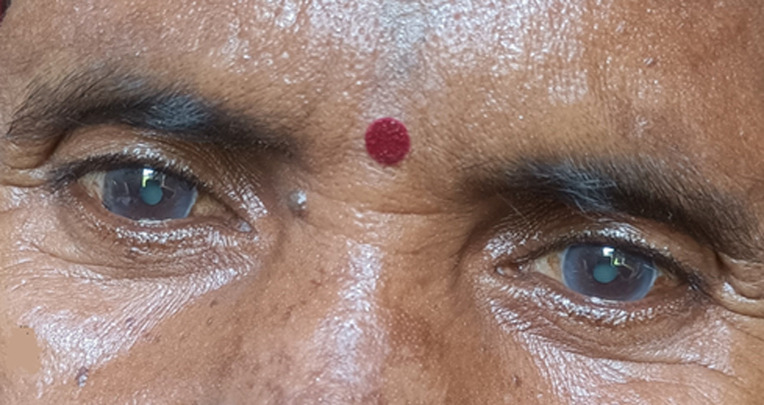 Figure 1
Peer Reviews
No public reviews on file for this paper yet. If you reviewed it on a platform where reviews are public (OpenReview, ICLR, NeurIPS, ICML), you can paste yours below so the community can read it here.
Videos
No videos yet. Explain this paper in a talk, walkthrough, or lecture? Add one.
Taxonomy
TopicsIntraocular Surgery and Lenses · Traumatic Ocular and Foreign Body Injuries · Ocular Infections and Treatments
Image in medicine
Cataract is a common problem in tropical areas and countries like India. In cataract, there is opacity in the lens, causing progressive diminishing in vision and troubling day-to-day life. Cataract is the leading cause of blindness worldwide. The minor surgery, known as extraction, is beneficial. Here is a case of mature bilateral cataract. A 75-year-old woman came to the outpatient department of Mahatma Gandhi Ayurved College Hospital and Research Centre, Salod (H), Wardha, Maharashtra, India. She had blurred vision, which was diminishing day by day. The cataracts were mature enough that they could be seen with the naked eye without the assistance of a torch. Along with this finding, there were senile rings surrounding both corneas, which is known as corneal arcus senilis. The patient was referred to an ophthalmologist for further procedure.
bilateral cataract with corneal arcus senilis