Hybrid-argon plasma coagulation for superficial esophageal cancer at risk of airway obstruction: a case report
Junki Toyoda, Aiji Hattori, Yohei Ikenoyama, Misaki Nakamura, Yasuhiko Hamada, Noriyuki Horiki, Hayato Nakagawa

Abstract
Genes, proteins, chemicals, diseases, species, mutations and cell lines named across the full text — each resolved to its canonical identifier and authoritative record.
Click any figure to enlarge with its caption.
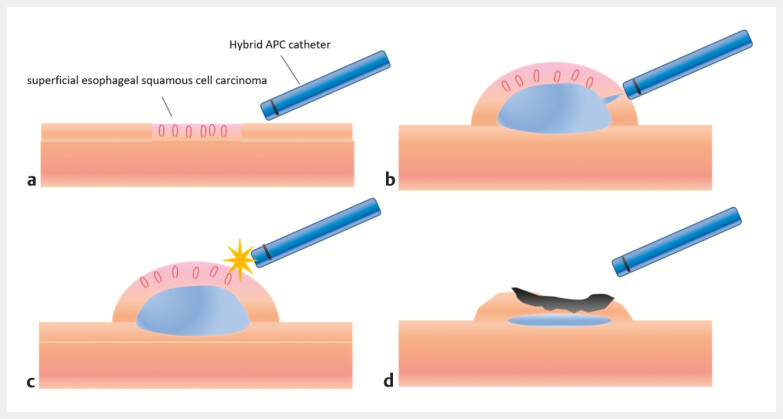 Fig. 1
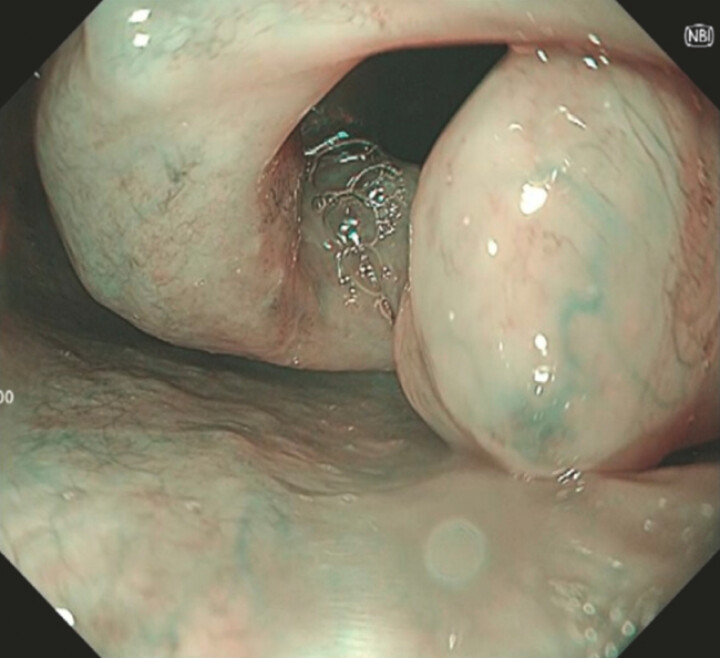 Fig. 2
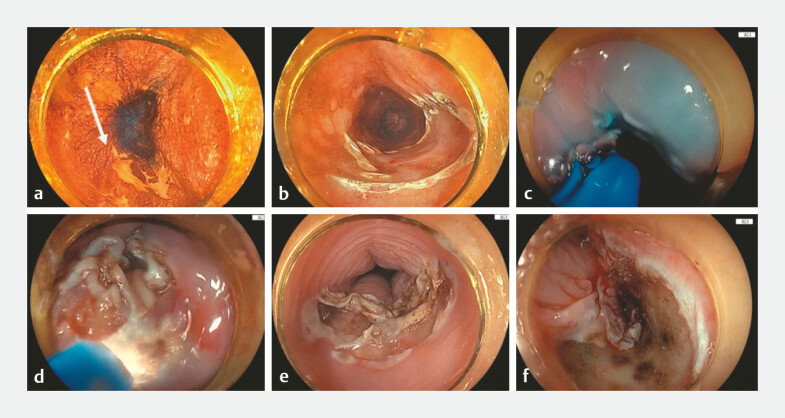 Fig. 3
Peer Reviews
No public reviews on file for this paper yet. If you reviewed it on a platform where reviews are public (OpenReview, ICLR, NeurIPS, ICML), you can paste yours below so the community can read it here.
Videos
No videos yet. Explain this paper in a talk, walkthrough, or lecture? Add one.
Taxonomy
TopicsTracheal and airway disorders · Vascular Anomalies and Treatments · Esophageal and GI Pathology
Endoscopic submucosal dissection (ESD) is the standard treatment for superficial esophageal squamous cell carcinoma (ESCC). However, this procedure is associated with complications and a relatively long procedure time 1 . Argon plasma coagulation (APC) is a technically simple treatment for ESCC, but APC can sometimes cause esophageal perforation or stricture 2 3 . Hybrid APC (H-APC), which combines APC with high-pressure submucosal injection, has recently been developed. This technique enables controlled coagulation with improved safety and precision ( 4 5 Fig. 1 ).
a The APC catheter was positioned in contact with the mucosal surface. b A submucosal fluid cushion was created using a high-pressure, needleless injection. c Following the injection, thermal ablation was performed on the ESCC. d The presence of a submucosal cushion may help enhance the safety of the thermal ablation procedure. Adapted from Hattori A, Ikenoyama Y, Fujiwara Y, et al. Endoscopy 2025; 57: E987–E988. APC, argon plasma coagulation; ESCC, esophageal squamous cell carcinoma.
A 59-year-old male patient was diagnosed with superficial ESCC with significant laryngeal edema due to a prior history of radiation therapy for laryngeal cancer. Due to the high risk of airway obstruction associated with prolonged sedation, H-APC was selected as a simpler and faster treatment for ESCC ( Fig. 2 ).
Significant laryngeal edema was observed during endoscopic evaluation.
A thin-diameter endoscope (EG-840TP; Fujifilm, Tokyo, Japan) was used because of pharyngeal stenosis caused by prior radiation. Following lesion marking, a submucosal cushion was created using H-APC by injecting a saline solution mixed with indigo carmine. Thermal coagulation was performed using the pulsed APC slow 5.0 (ERBE JET2, effect 40). Initial coagulation with H-APC facilitated the detachment of the superficial squamous epithelium. The loosened epithelial layer was then easily removed using an endoscope. A second submucosal injection was subsequently administered using H-APC, and coagulation was reapplied to enhance submucosal ablation. The procedure time from the initial submucosal injection to the completion of coagulation was 8 minutes ( Fig. 3 , Video 1 ). No immediate complications, such as perforations, were observed. Follow-up endoscopy at 2 months showed complete scar formation with no endoscopic evidence of residual or recurrent lesions.
a ESCC was detected in the mid-thoracic esophagus. b The lesion margins were initially marked using H-APC. c Following lesion marking, a submucosal cushion was created by injecting a saline solution mixed with indigo carmine using H-APC. d ESCC was being cauterised using H-APC. e Initial coagulation with H-APC facilitated the detachment of the superficial squamous epithelium. The loosened epithelial layer was then easily removed using the endoscope. f A second submucosal injection was subsequently administered using H-APC, and coagulation was reapplied to enhance submucosal ablation. ESCC, esophageal squamous cell carcinoma; H-APC, hybrid argon plasma coagulation.
Hybrid argon plasma coagulation (H-APC) procedure for superficial esophageal squamous cell carcinoma.Video 1
H-APC was performed safely and efficiently. H-APC could potentially serve as an effective therapeutic option for ESCC cases that are challenging to manage with ESD.
Endoscopy_UCTN_Code_TTT_1AO_2AN
The reference list from the paper itself. Each links out to its DOI / PubMed record.
- 1Guo HM Zhang XQ Chen M Endoscopic submucosal dissection vs endoscopic mucosal resection for superficial esophageal cancer World J Gastroenterol 2014205540554710.3748/wjg.v 20.i 18.554024833885 PMC 4017070 · doi ↗ · pubmed ↗
- 2Tahara K Tanabe S Ishido K Argon plasma coagulation for superficial esophageal squamous-cell carcinoma in high-risk patients World J Gastroenterol 2012185412541710.3748/wjg.v 18.i 38.541223082058 PMC 3471110 · doi ↗ · pubmed ↗
- 3Chung CH Chou TC Chen CY Minute perforation after argon plasma coagulation for management of small colonic polyps Endoscopy 200941 E 251E 25219787576 10.1055/s-0029-1214432 · doi ↗ · pubmed ↗
- 4Davide M Roberta M Silvia P Efficacy and safety of H-APC in Barrett's esophagus: Italian prospective multicenter study Endosc Int Open 202513 a 2531822740018075 10.1055/a-2531-8227 PMC 11866041 · doi ↗ · pubmed ↗
- 5Hattori A Ikenoyama Y Fujiwara Y Hybrid argon plasma coagulation for chronic radiation-induced proctitis following pelvic chemoradiotherapy for cervical adenocarcinoma: a case report Endoscopy 202557 E 987E 98810.1055/a-2686-767840907550 PMC 12411006 · doi ↗ · pubmed ↗