Novel one-step deployment of Y-shaped metal stent: no more stent-in-stent or side-by-side
Kazumasa Nagai, Takao Itoi, Ryosuke Tonozuka, Shuntaro Mukai, Akio Katanuma, Shomei Ryozawa, Yoshinobu Okabe

Abstract
Click any figure to enlarge with its caption.
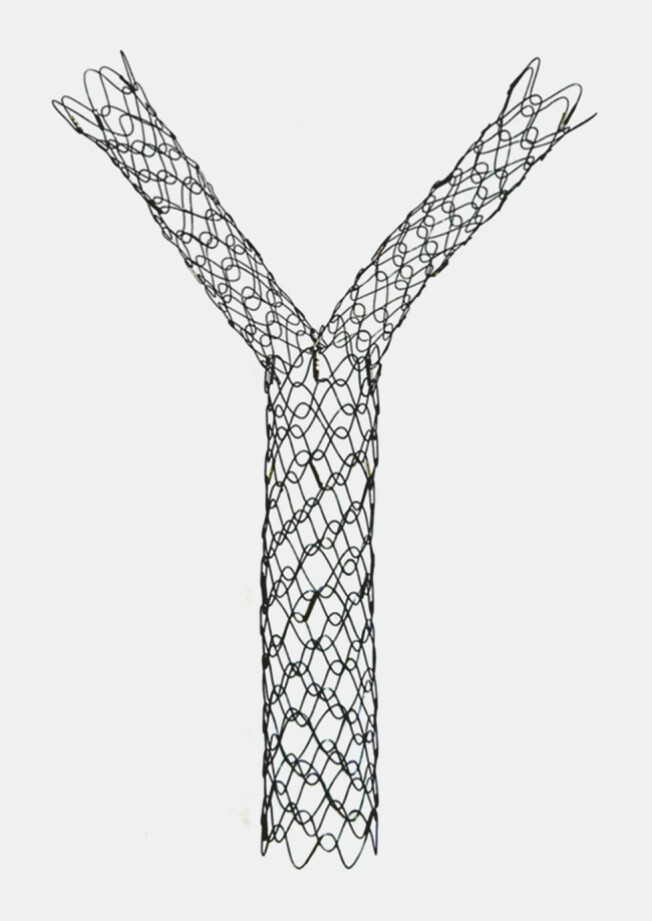 Fig. 1
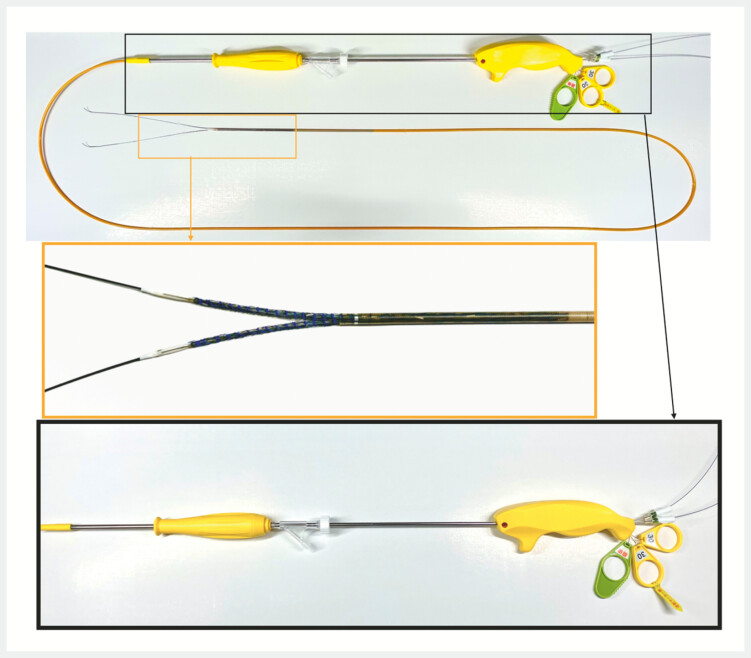 Fig. 2
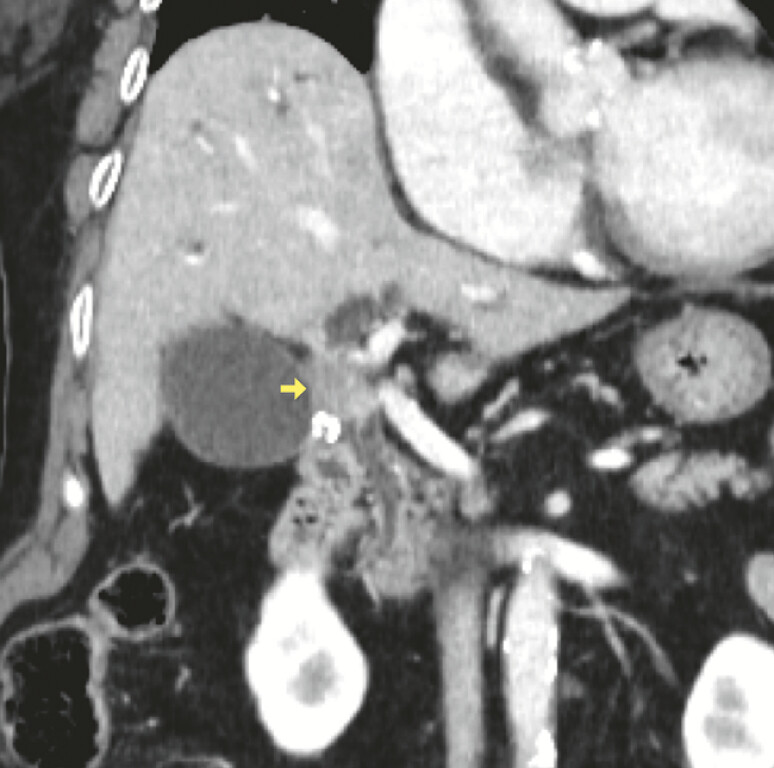 Fig. 3
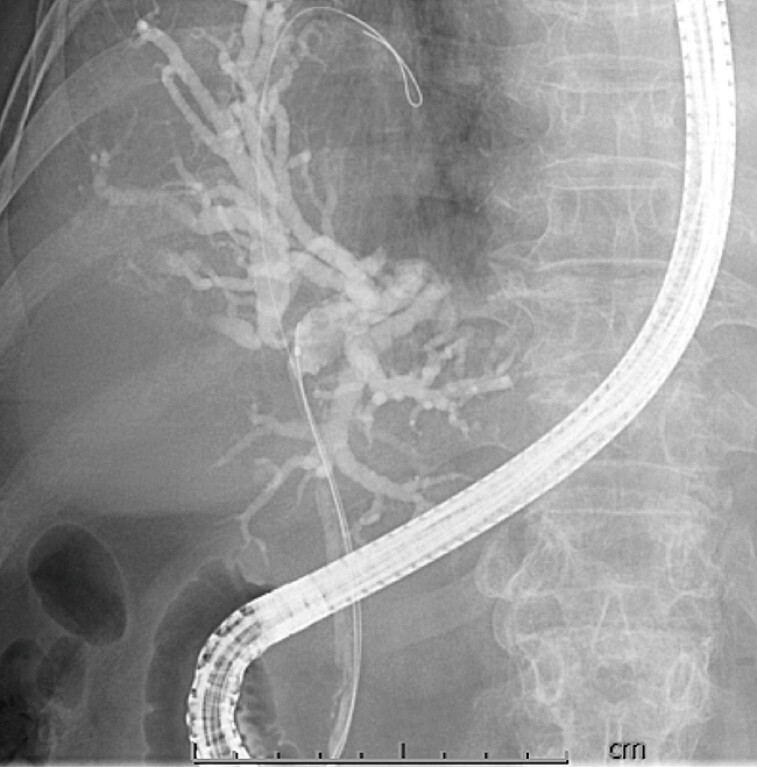 Fig. 4
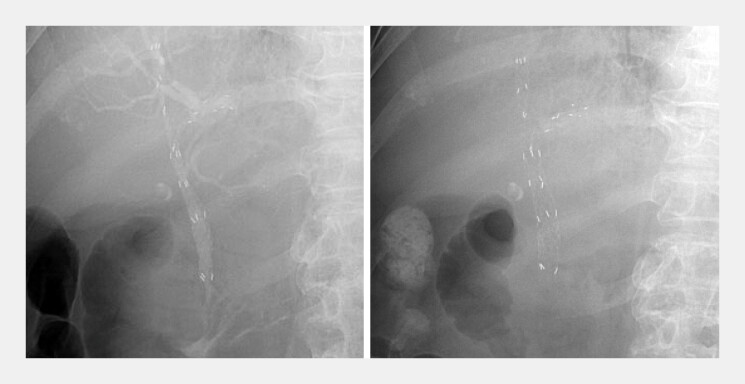 Fig. 5
Peer Reviews
No public reviews on file for this paper yet. If you reviewed it on a platform where reviews are public (OpenReview, ICLR, NeurIPS, ICML), you can paste yours below so the community can read it here.
Videos
No videos yet. Explain this paper in a talk, walkthrough, or lecture? Add one.
Taxonomy
TopicsCoronary Interventions and Diagnostics · Gallbladder and Bile Duct Disorders · Aortic aneurysm repair treatments
Biliary drainage is an essential procedure for malignant hilar biliary obstruction from hilar cholangiocarcinoma. Multiple plastic stent placement or self-expandable metal stent deployment using stent-in-stent or side-by-side techniques are commonly employed; however, these procedures can be technically challenging, and adequate drainage is not always achieved 1 2 3 . We report the world’s first clinical application of a newly developed system that enables one-step placement of a Y-shaped metal stent (YAMS) ( Fig. 1 ). The YAMS has a bifurcated distal tip and is deployed into a Y-shape by sequentially pulling three control levers at the proximal end of the delivery system ( Fig. 2 , Video 1 ).
A newly developed Y-shaped metal stent (YAMS).
Y-shaped Metal Stent (YAMS) has a bifurcated distal tip and is equipped with three control levers at the proximal end of the delivery system to facilitate Y-shaped deployment.
Tabletop demonstration and clinical deployment of the Y-shaped Metal Stent (YAMS).Video 1
An 85-year-old woman was diagnosed with hilar cholangiocarcinoma ( Fig. 3 ) and managed with best supportive care. She presented with a Bismuth type II malignant biliary obstruction ( Fig. 4 ). After biliary decompression with endoscopic nasobiliary drainage, one-step YAMS placement was attempted. Cholangiography confirmed the extent of the stricture, and 0.025-inch guidewires were placed in the right and left hepatic ducts. The stent delivery sheath (9.4 Fr, 1900 mm in length, compatible with a 0.025-inch guidewire) was advanced to the target site. Once fluoroscopy confirmed the bifurcated stent tip directed toward the right and left hepatic ducts, stent deployment was initiated. An uncovered YAMS was successfully placed across the stricture, extending into both hepatic ducts ( Fig. 5 a , Video 1 ). The YAMS selected measured 10 mm × 40 mm at the common bile duct and 6 mm × 30 mm at each hepatic duct. Follow-up X-ray performed two days later confirmed full expansion of the YAMS ( Fig. 5 b ). The patient achieved effective drainage and was discharged the following day with resolution of jaundice. This novel stent design enables simultaneous bilateral drainage in one step while preserving biliary anatomy without overdilation. We consider this a groundbreaking device and report its first clinical use.
CT revealed a mass in the hilar bile duct region (yellow arrow).
On cholangiography, a hilar biliary stricture was identified and classified as Bismuth type II.
An uncovered Y-shaped Metal Stent (YAMS) was successfully deployed across the hilar stricture, extending into both hepatic ducts ( a ). Follow-up X-ray obtained two days later confirmed full expansion of the YAMS ( b ).
Endoscopy_UCTN_Code_TTT_1AR_2AZ
The reference list from the paper itself. Each links out to its DOI / PubMed record.
- 1Lee TH Moon JH Park SH Biliary stenting for hilar malignant biliary obstruction Dig Endosc 20203227528610.1111/den.1354931578770 · doi ↗ · pubmed ↗
- 2Lee TH Kim TH Moon JH Bilateral versus unilateral placement of metal stents for inoperable high-grade malignant hilar biliary strictures: a multicenter, prospective, randomized study (with video)Gastrointest Endosc 20178681782728479493 10.1016/j.gie.2017.04.037 · doi ↗ · pubmed ↗
- 3Dumonceau JM Tringali A Papanikolaou IS Endoscopic biliary stenting: indications, choice of stents, and results: European Society of Gastrointestinal Endoscopy (ESGE) Clinical Guideline – Updated October 2017 Endoscopy 20185091093010.1055/a-0659-986430086596 · doi ↗ · pubmed ↗