Usefulness of electrohydraulic lithotripsy gel-immersion cholangioscopy for giant common bile duct stones
Hiroki Yamana, Hideki Kamada, Kiyoyuki Kobayashi, Naoki Fujita, Daisuke Namima, Hideki Kobara

Abstract
Genes, proteins, chemicals, diseases, species, mutations and cell lines named across the full text — each resolved to its canonical identifier and authoritative record.
Click any figure to enlarge with its caption.
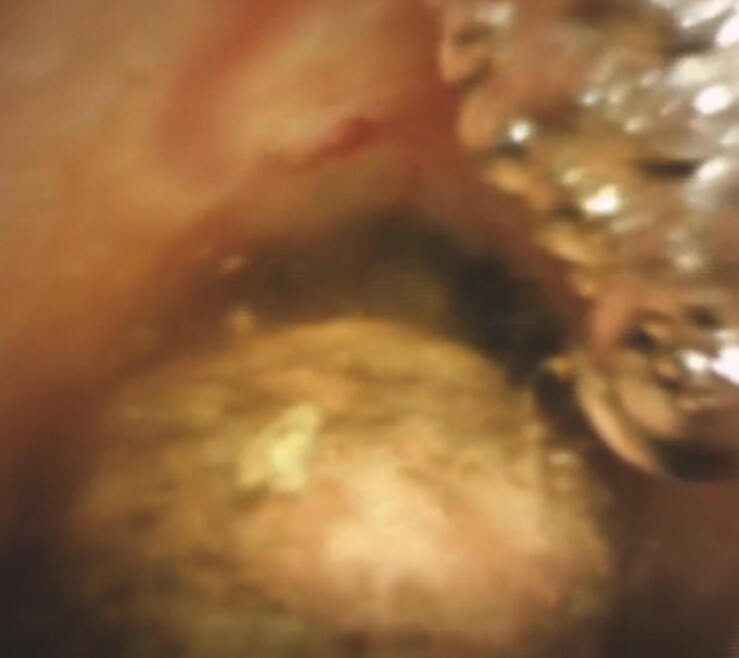 Fig. 1
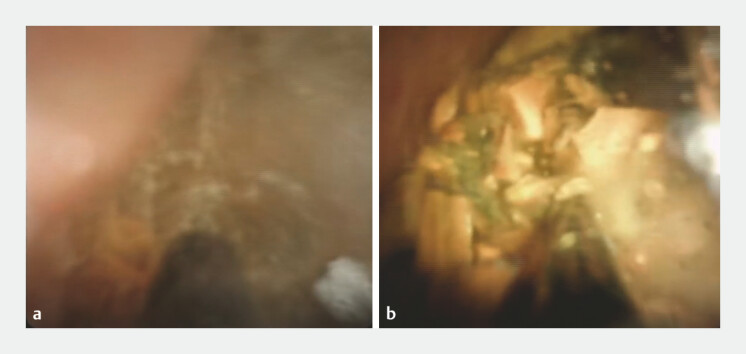 Fig. 2
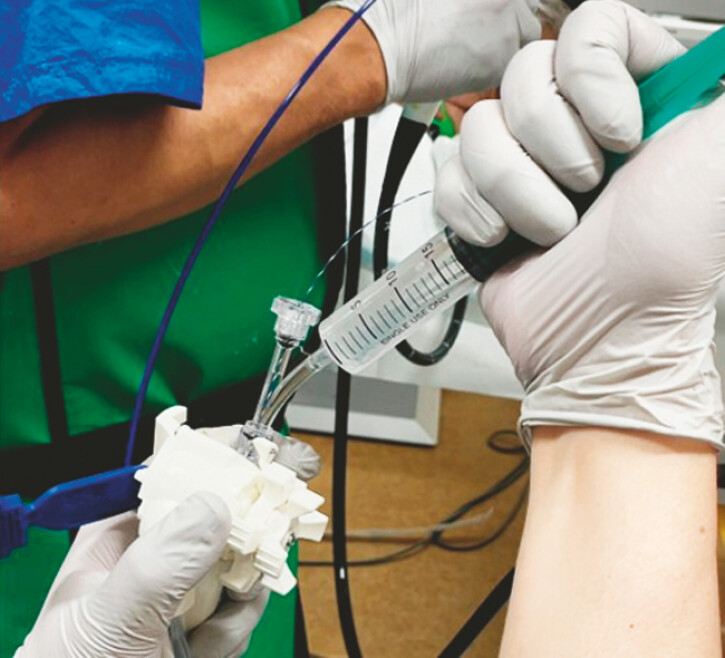 Fig. 3
Peer Reviews
No public reviews on file for this paper yet. If you reviewed it on a platform where reviews are public (OpenReview, ICLR, NeurIPS, ICML), you can paste yours below so the community can read it here.
Videos
No videos yet. Explain this paper in a talk, walkthrough, or lecture? Add one.
Taxonomy
TopicsGallbladder and Bile Duct Disorders · Biliary and Gastrointestinal Fistulas · Gastrointestinal Bleeding Diagnosis and Treatment
Electrohydraulic lithotripsy (EHL) is an effective treatment for large common bile duct (CBD) stones. However, endoscopic visualization can be impaired by turbid bile or stone fragments/debris generated during the procedure. Gel-immersion endoscopy using a transparent, viscous gel (Viscoclear; Otsuka Pharmaceutical Factory, Tokushima, Japan 1 ) has been reported as an effective method for securing the visual field 2 3 . We employed this technique to secure the cholangioscopic visual field during EHL.
A 74-year-old woman was admitted to our hospital for the treatment of a large CBD stone. EHL was performed after endoscopic retrograde cholangiopancreatography was attempted. A digital cholangioscope (SpyGlass DS; Boston Scientific, Marlborough, MA, USA) via a 0.025-inch guidewire was inserted into the CBD. A CBD stone (diameter: 20 mm) was successfully observed ( Fig. 1 ).
We observed common bile duct stones using a digital cholangioscope.
We performed EHL using an EHL probe combined with an electrohydraulic shockwave generator (Autolith Touch; Boston Scientific, Marlborough, MA, USA 4 ). The EHL generator was set to high power at a rate of 30 pulses/s. Although normal saline is generally used for CBD filling during EHL, it induces poor visual fields. To overcome this problem, ViscoClear was used ( Video 1 ).
Gel-immersion electrohydraulic lithotripsy was performed to treat a large common bile duct stone.Video 1
During EHL, the maintained visual field was clearer using Viscoclea than using saline irrigation, even in the presence of scattered stone fragments and debris ( Fig. 2 ). When visualization deteriorated during the procedure, injecting 1–2 mL of the gel restored the field of view ( Fig. 3 5 ). A total of 30 mL of gel was used for this procedure. The procedure was safely completed while maintaining a clear visual field. The stones were successfully fragmented using approximately 1,000 shockwaves under a clear visual field. In conclusion, this procedure effectively improves endoscopic visibility and may reduce the risk of increased bile duct pressure when a small amount of gel is used.
a When using saline solution, our visibility was impaired by fragments of scattered stones and debris. b Compared to the use of saline solution, we found it easier to see clearly when using the gelatinous liquid.
We slowly inject the gel into the forceps channel port using a 10 ml or 20 ml syringe, adding 1–2 ml at a time.
Endoscopy_UCTN_Code_TTT_1AR_2AH
The reference list from the paper itself. Each links out to its DOI / PubMed record.
- 1Yano T Nemoto D Ono K Gel Immersion endoscopy: A novel method to secure the visual field during endoscopy in bleeding patients (with videos)Gastrointest Endosc 20168380981126463338 10.1016/j.gie.2015.09.048 · doi ↗ · pubmed ↗
- 2Yano T Takezawa T Hashimoto K Gel immersion endoscopy: innovation in securing the visual field – clinical experience with 265 consecutive procedures Endosc Int Open 20219 E 1123 E 112734222638 10.1055/a-1400-8289 PMC 8216780 · doi ↗ · pubmed ↗
- 3Yamauchi K Inaba T Morimoto T Gel-immersion endoscopic submucosal dissection for superficial colorectal neoplasms: A retrospective study comparing conventional endoscopic submucosal dissection DEN Open 20256 e 7022110.1002/deo 2.7022141080065 PMC 12511952 · doi ↗ · pubmed ↗
- 4Murabayashi T Ogawa T Koshita S Peroral cholangioscopy-guided electrohydraulic lithotripsy with a Spy Glass DS versus a conventional digital cholangioscope for difficult bile duct stones Intern Med 2020591925193032389946 10.2169/internalmedicine.4463-20PMC 7492117 · doi ↗ · pubmed ↗
- 5Yano T Takaoka T Naklazawa K Application of the gel immersion method in various endoscopic procedures Gastroenterol Endosc 2023651393140410.11280/gee.65.1393 · doi ↗