Draft genome sequence of plant growth-promoting bacterial endophyte Cellulosimicrobium cellulans strain MUKR 5 isolated from Iris laevigata Fisch. from Manipur, India
Shantirani Thokchom, Saikat Mukherjee, Debananda Singh Ningthoujam

TL;DR
Scientists sequenced the genome of a bacteria found in a medicinal plant from India, which may help promote plant growth.
Contribution
The novel contribution is the draft genome sequence of Cellulosimicrobium cellulans MUKR 5, a plant growth-promoting endophyte from a biodiversity hotspot region.
Findings
The draft genome of Cellulosimicrobium cellulans MUKR 5 is 4,229,506 bp with a GC content of 74.5%.
The genome was assembled into three contigs.
The bacterium was isolated from Iris laevigata Fisch., an ethnomedicinal plant in Manipur, India.
Abstract
We report a plant growth-promoting bacterial endophyte, Cellulosimicrobium cellulans MUKR 5, isolated from Iris laevigata Fisch., an ethnomedicinal plant belonging to Manipur, a North-Eastern State of India, in the Indo-Myanmar Biodiversity hot spot. The draft genome consists of 4,229,506 bp (GC 74.5%) assembled into three contigs.
Genes, proteins, chemicals, diseases, species, mutations and cell lines named across the full text — each resolved to its canonical identifier and authoritative record.
Click any figure to enlarge with its caption.
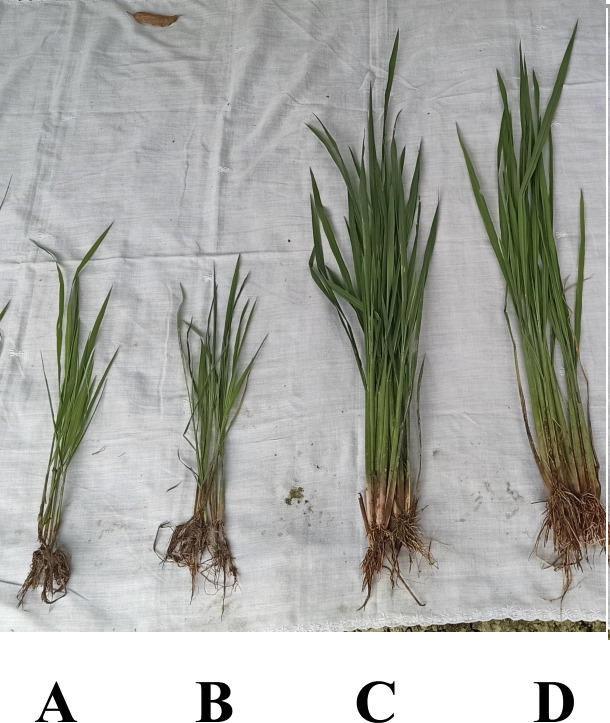 Fig 1
Fig 1| Parameter | Value |
|---|---|
| Genome size | 4.2 Mb |
| Total ungapped length | 4.2 Mb |
| Number of scaffolds | 3 |
| Scaffold N50 | 4 Mb |
| Scaffold L50 | 1 |
| No. of contigs | 3 |
| Contig N50 | 4 Mb |
| Contig L50 | 1 |
| GC % | 74.5 |
| Genome coverage | 99.95× |
| Assembly level | Contig |
Peer Reviews
No public reviews on file for this paper yet. If you reviewed it on a platform where reviews are public (OpenReview, ICLR, NeurIPS, ICML), you can paste yours below so the community can read it here.
Videos
No videos yet. Explain this paper in a talk, walkthrough, or lecture? Add one.
Taxonomy
TopicsPlant-Microbe Interactions and Immunity · Genomics and Phylogenetic Studies · Microbial Natural Products and Biosynthesis
ANNOUNCEMENT
Iris laevigata Fisch. (water iris), a rhizomatous perennial from East Asia (1), recently documented from Manipur, India, belongs to the Indo-Myanmar Biodiversity hot spot (2). Known locally as Kombirei, its rhizomes are used as a brain coolant and for treating hysteria (3). Ethnomedicinal plants host bioactive endophytes (4). From I. laevigata roots, Cellulosimicrobium cellulans strain MUKR 5 was isolated. Plant roots collected from Mayang Imphal, Manipur (24°62′11″N, 93°87′97″E) underwent five-step surface sterilization (sequential washes with NaOCl, Na_2_S_2_O_3_, C_2_H_5_OH, H_2_O, and NaHCO_3_), followed by triple sterile distilled water (SDW) rinses (5). Sterile roots were cut and plated on starch casein nitrate agar, supplemented with 100 μg/mL of cycloheximide (antifungal) and nalidixic acid (antibiotic), incubated at 30°C for 3–4 weeks until morphologically discreet bacterial colonies emerged, followed by subculturing twice at 30°C for 5 days onto fresh plates to obtain pure culture. Taxonomic identification via 16S rRNA gene sequencing involved genomic DNA extraction (Xploregen Universal gDNA Kit), PCR amplification (forward primer: GGATGAGCCCGCGGCCTA and reverse primer: CGGTGTGTACAAGGCCCGG), purification (QIAquick PCR Purification Kit), and sequencing (BigDye Terminator v3, ABI 3130xl Genetic Analyzer). SeqScape v5.2 and BLAST (vBLAST+2.16.0) analysis revealed 100% similarity to C. cellulans NEB113 (accession no. CP041694.1) in NCBI RefSeq (Release 229). Phylogeny was constructed in MEGA v11 (6) using the neighbor-joining method.
Bacteria were cultured at 30°C in nutrient broth (NB). DNA was extracted (Xploregen Universal gDNA Kit), quantified (100 ng) (Qubit 3.0 Fluorometer, dsDNA HS dye), and fragmented to 200–300 bp. A genomic DNA library was prepared using the NEBNext Ultra II DNA Library Prep Kit for Illumina (New England Biolabs) following the manufacturer’s protocol. Fragments underwent end repair, 3′ adenylation, loop adapter ligation, and USER enzyme (NEB) cleavage. Libraries were purified (AMPure beads), PCR-enriched (six cycles, NEBNext Ultra II Q5 master mix with Illumina primers), cleaned, and eluted in 0.1× TE. Libraries were quantified (Qubit) and analyzed (Agilent 2100 Bioanalyzer, DNA 7500 chip). Sequencing (2 × 150 bp) on an Illumina NovaSeq 6000 yielded 8,964,178 reads (1.35 Gbp), with a depth of 261.08×, and a mean coverage of 99.95. Reads were quality-checked (fastp v10.1) (7), trimmed (Trim Galore v0.6.10) (8), assembled (Unicycler v0.5.1) (9), scaffolded (Multi-CSAR v1.0) (10), and the resulting contigs were visualized in a circular layout using CGView v2.0.3 (11) for representation purposes. Taxonomic identity was verified using pubMLST (database updated 13 March 2025) (12), and genome annotation was completed using the NCBI Prokaryotic Genome Annotation Pipeline v6.10. Assembly statistics are summarized in Table 1. Default parameters were used for the software, except where otherwise noted.
The draft genome was assembled in three contigs (4,229,506 bp and GC 74.5%). A total of 3,832 genes were identified, including 3,727 protein-coding sequences, 57 RNA genes (one copy of the 16S and 23S rRNA genes, 52 tRNAs, and 3 ncRNAs), and 48 pseudogenes. Rice plants (var. Thoibi) grown in sterilized sandy-loam soil for 60 days in the presence of MUKR 5 in nethouse conditions showed significantly increased root length, shoot length, and biomass as compared to controls (Fig. 1).
Plant growth promotion in rice seedlings under nethouse conditions with four treatments: (A) SDW control, (B) NB control, (C) urea control, and (D) MUKR 5.
The reference list from the paper itself. Each links out to its DOI / PubMed record.
- 1Mathew B. 1981. The iris. Timber Press, Portland.
- 2Singh BH, Mao AA. 2024. Religiously associated Manipuri Kombirei (Iris laevigata Fisch.): a new addition to the Indian flora. IJTK 23:35–38. doi:10.56042/ijtk.v 23i 1.8141 · doi ↗
- 3Hijam L, Devi RY, Singh PK, Singh SS. 2023. Optimization of plantlet regeneration from leaf base derived callus of Japanese Iris (Iris ensata Thunb.): an ornamental medicinal plant. Pharma Innov 12:1449–1450.
- 4Tamreihao K, Devi AK, Langamba P, Singh HN, Kshetri P, Rajiv C, Singh TS, Langhu T, Sharma SK, Ansari MA, Roy SS. 2022. Phytostimulating potential of endophytic bacteria from ethnomedicinal plants of North-East Indian Himalayan region. J Pure Appl Microbiol 16:747–762. doi:10.22207/JPAM.16.2.05 · doi ↗
- 5Qin S, Li J, Chen HH, Zhao GZ, Zhu WY, Jiang CL, Xu LH, Li WJ. 2009. Isolation, diversity, and antimicrobial activity of rare actinobacteria from medicinal plants of tropical rain forests in Xishuangbanna, China. Appl Environ Microbiol 75:6176–6186. doi:10.1128/AEM.01034-0919648362 PMC 2753051 · doi ↗ · pubmed ↗
- 6Tamura K, Stecher G, Kumar S. 2021. MEGA 11: molecular evolutionary genetics analysis version 11. Mol Biol Evol 38:3022–3027. doi:10.1093/molbev/msab 12033892491 PMC 8233496 · doi ↗ · pubmed ↗
- 7Chen S, Zhou Y, Chen Y, Gu J. 2018. Fastp: an ultra-fast all-in-one FASTQ preprocessor. Bioinformatics 34:i 884–i 890. doi:10.1093/bioinformatics/bty 56030423086 PMC 6129281 · doi ↗ · pubmed ↗
- 8Galore KFT. 2015. A wrapper around Cutadapt and Fast QC to consistently apply quality and adapter trimming to Fast Q files. Babraham Bioinformatics. 10.5281/zenodo.5127899. · doi ↗