Delta Opioid Receptors within the Cortico‐Thalamic Circuitry Underlie Hyperactivity Induced by High‐Dose Morphine
Chun‐Yue Li, Huiqian Huang, Xiao‐Fan Shen, Ke‐Lei Cao, Di Zheng, Yi Zhu, Shi‐Ze Xie, Xiao‐Dan Yu, Hao Wang, Jia‐Dong Chen, Jie Shi, Yue Li, Min Yan, Xiao‐Ming Li

TL;DR
High-dose morphine causes hyperactivity in mice by activating a specific brain circuit involving the cingulate cortex and zona incerta, with delta opioid receptors playing a key role.
Contribution
Identifies the Cg-ZIm circuit and DORs as critical for morphine-induced hyperlocomotion, offering new targets for improving opioid therapy.
Findings
Morphine activates the Cg-ZIm pathway to drive hyperlocomotion in mice.
Inhibiting the Cg-ZIm pathway reduces morphine-induced hyperactivity without affecting pain relief.
Delta opioid receptors in the ZIm are essential for the psychomotor effects of high-dose morphine.
Abstract
Hyperactivity is a well‐documented neurobehavioral effect of morphine and other opioid drugs, predominantly observed in rodent models, yet the neural circuits and molecular mechanisms underlying this effect remain elusive. In this study, an excitatory projection from the cingulate cortex (Cg) to the intermediate rostrocaudal division of zona incerta (ZIm) is revealed that is activated by morphine in mice. Chemogenetic inhibition of the Cg‐ZIm pathway decreased high‐dose (10–15mg kg−1) morphine‐induced hyperlocomotion without affecting its analgesic effects. Activation of this pathway faithfully reproduced the motor effect of morphine. Furthermore, high‐dose morphine‐induced hyperlocomotion is quickly attenuated by microinjecting delta‐opioid receptor (DOR) antagonists into the ZI, which is not observed following the targeted knockout of the DOR in Cg‐projecting ZI neurons, indicating a…
Genes, proteins, chemicals, diseases, species, mutations and cell lines named across the full text — each resolved to its canonical identifier and authoritative record.
Click any figure to enlarge with its caption.
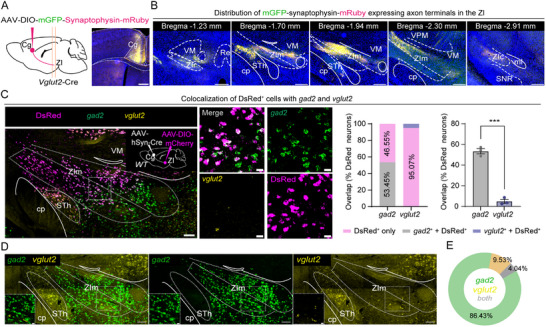 Figure 1
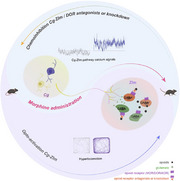 Figure 2
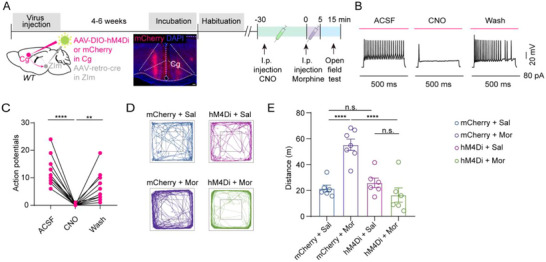 Figure 3
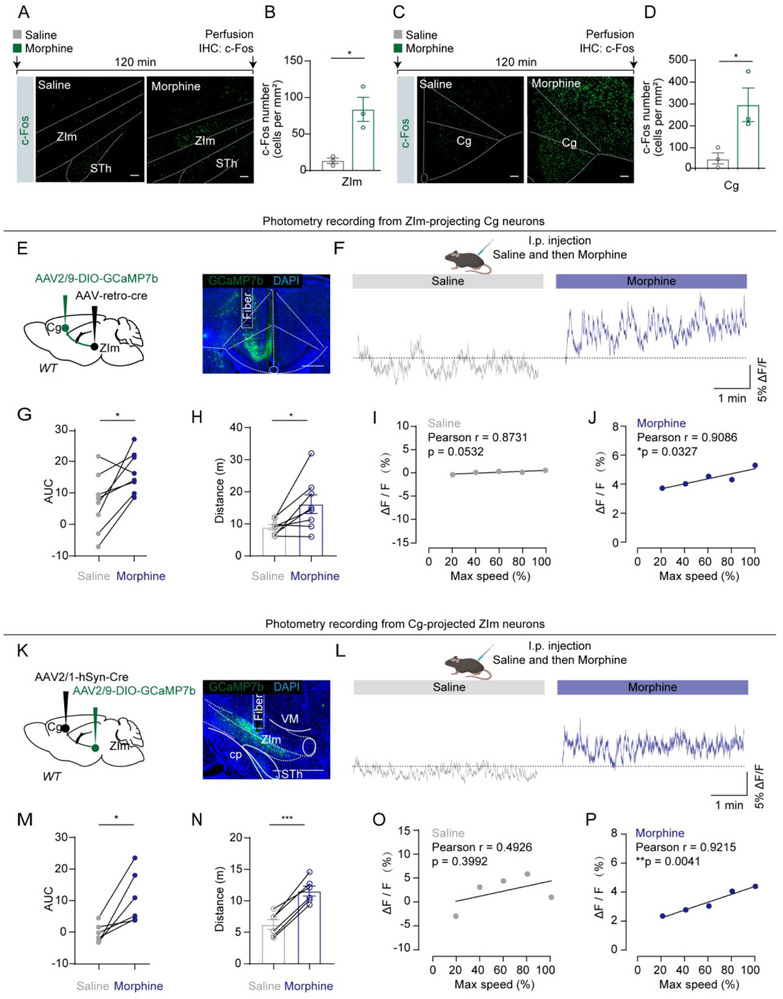 Figure 4
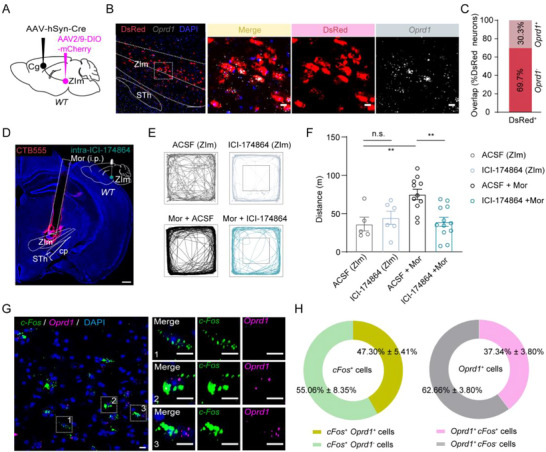 Figure 5
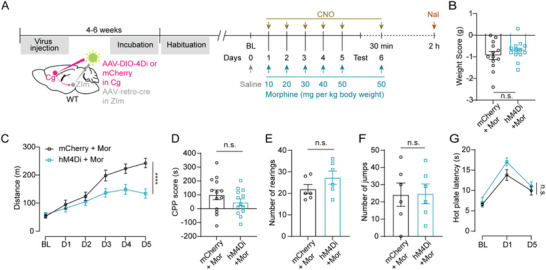 Figure 6
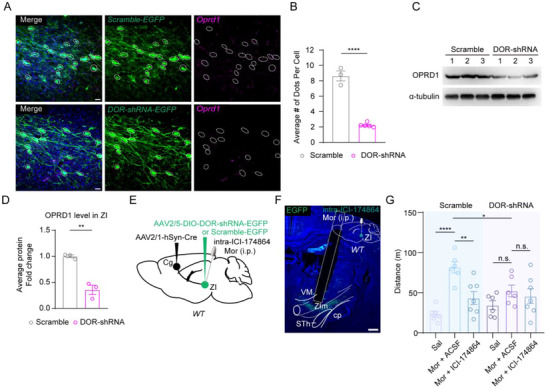 Figure 7
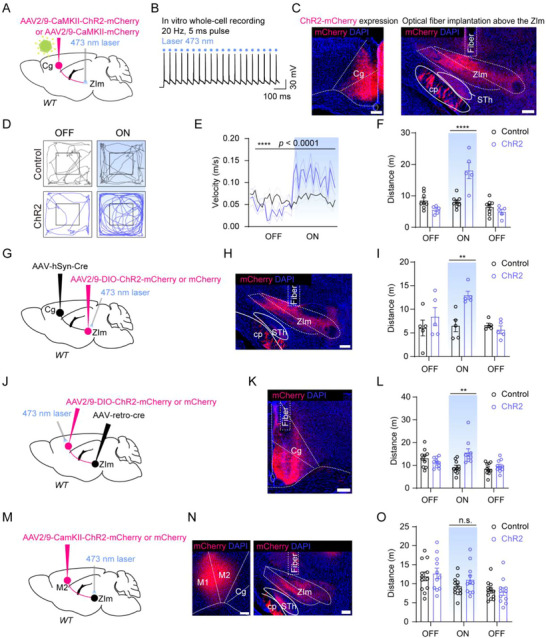 Figure 8
Peer Reviews
No public reviews on file for this paper yet. If you reviewed it on a platform where reviews are public (OpenReview, ICLR, NeurIPS, ICML), you can paste yours below so the community can read it here.
Videos
No videos yet. Explain this paper in a talk, walkthrough, or lecture? Add one.
Taxonomy
TopicsPain Mechanisms and Treatments · Neurotransmitter Receptor Influence on Behavior · Neuropeptides and Animal Physiology