Type I Interferon Pathway Activation Disrupts Monocyte Maturation and Enhances Immune Evasion in Multiple Myeloma
Jian Cui, Jingwei Wang, Xiaoyun Li, Lina Wang, Xuehan Mao, Rui Lyv, Wenqiang Yan, Jingyu Xu, Jieqiong Zhou, Chenxing Du, Shuhui Deng, Mu Hao, Yan Xu, Shuhua Yi, Dehui Zou, Tao Cheng, Xin Gao, Lugui Qiu, Gang An

TL;DR
This study shows that monocytes in multiple myeloma have an overactive interferon response, which disrupts their normal development and supports tumor growth.
Contribution
The study identifies type I interferon pathway activation as a novel driver of monocyte dysfunction and immune evasion in multiple myeloma.
Findings
MM monocytes show significant transcriptional changes, especially in the type I interferon signaling pathway.
IFN pathway activation disrupts monocyte differentiation and promotes tumor cell proliferation.
Anti-myeloma treatment reduces the excessive IFN response in BM monocytes.
Abstract
Monocyte‐derived cells, including osteoclasts, dendritic cells, and macrophages, are key components of the immunosuppressive tumor microenvironment in multiple myeloma (MM). However, the mechanisms linking monocyte dysfunction to immune evasion remain incompletely understood. In this study, single‐cell RNA sequencing (scRNA‐seq) of peripheral blood (PB) and bone marrow (BM) monocytes was performed from healthy donors (HDs) and MM patients to generate a comprehensive single‐cell transcriptional map. Although PB and BM monocytes displayed comparable cellular compositions, MM monocytes exhibited marked transcriptional alterations, most prominently within the type I interferon (IFN) signaling pathway. Trajectory analyses revealed IFN‐driven disruptions in monocyte differentiation and developmental trajectories in both PB and BM compartments. Functional co‐culture assays demonstrated that…
Genes, proteins, chemicals, diseases, species, mutations and cell lines named across the full text — each resolved to its canonical identifier and authoritative record.
Click any figure to enlarge with its caption.
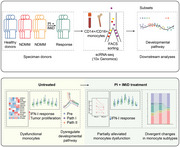 Figure 1
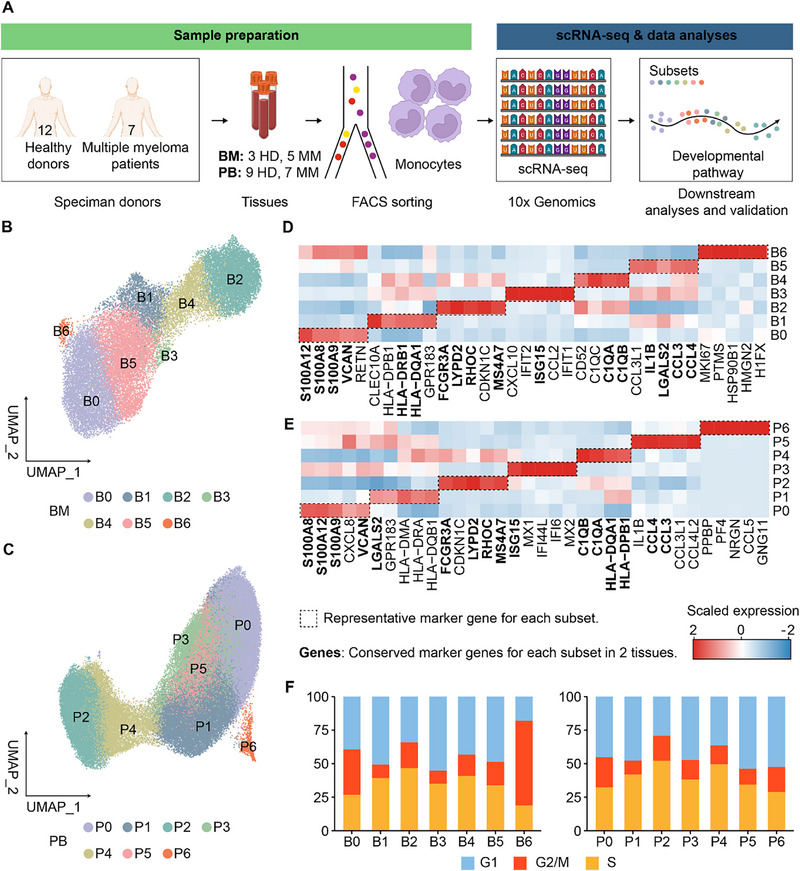 Figure 2
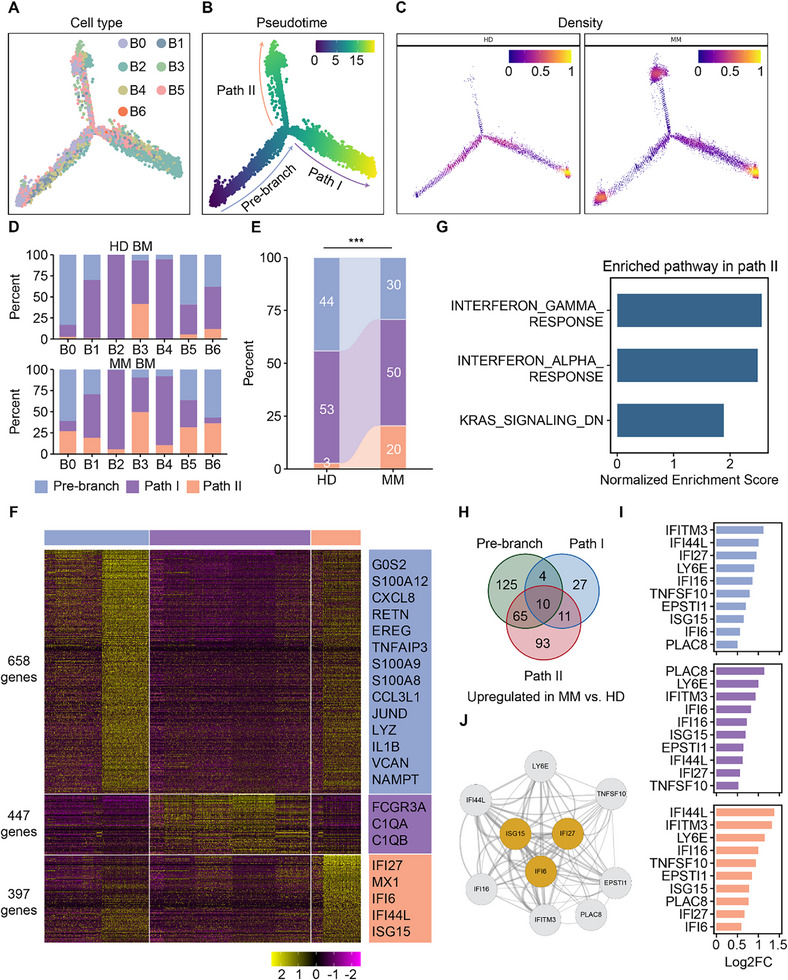 Figure 3
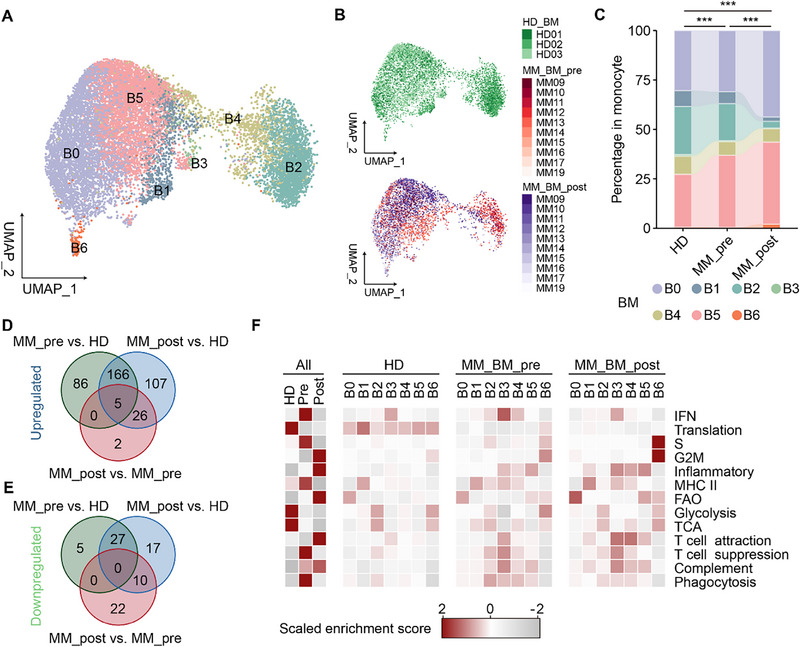 Figure 4
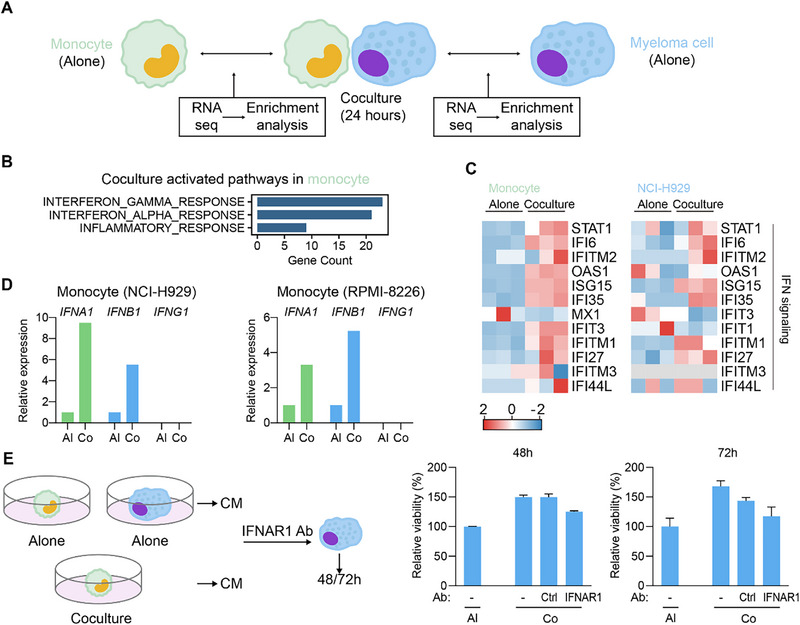 Figure 5
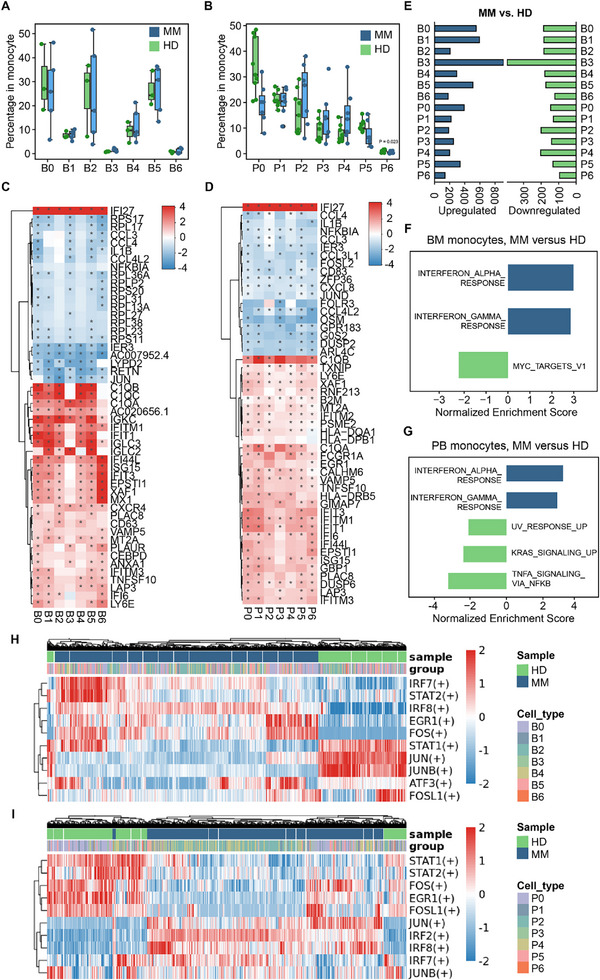 Figure 6
Peer Reviews
No public reviews on file for this paper yet. If you reviewed it on a platform where reviews are public (OpenReview, ICLR, NeurIPS, ICML), you can paste yours below so the community can read it here.
Videos
No videos yet. Explain this paper in a talk, walkthrough, or lecture? Add one.
Taxonomy
TopicsMultiple Myeloma Research and Treatments · Immune cells in cancer · Immunotherapy and Immune Responses