NADH‐Reductive Stress Induced by Dihydrolipoamide Dehydrogenase Activation Contributes to Cuproptosis
Si‐Yi Zhang, Xing‐Hua Ren, Cheng‐Hong Zhang, Zhan‐You Wang

TL;DR
This study explains how copper causes a new type of cell death called cuproptosis by creating NADH-reductive stress in neural cells.
Contribution
The study identifies NADH-reductive stress as a novel mechanism of cuproptosis triggered by copper-induced mitochondrial changes.
Findings
Copper activates DLD under alkaline mitochondrial pH, leading to NADH accumulation.
Copper-induced mPTP opening allows NADH to move to the cytosol, causing reductive stress and ATP depletion.
Pharmacological targeting of NADH-reductive stress rescues copper-induced cell death in neuroblastoma cells.
Abstract
Copper (Cu) is an essential trace element for cellular metabolism, while excessive Cu accumulation leads to neurotoxicity. Current therapeutic strategies for Cu overload remain inadequate in mitigating neurological symptoms. The recently discovered Cu‐dependent mitochondrial cell death pathway, cuproptosis, offers novel insights into Cu‐mediated neurotoxicity. In this study, the mechanistic link between mitochondrial respiration and cuproptosis is elucidated. The current study demonstrates that activated dihydrolipoamide dehydrogenase (DLD), induced by excess Cu under alkaline mitochondrial pH conditions, drives nicotinamide adenine dinucleotide (NADH) accumulation. Cu mediated mitochondrial permeability transition pore (mPTP) opening that facilitates NADH translocation to the cytosol, triggering NADH‐reductive stress. This promotes aberrant purine biosynthesis, leading to severe…
Genes, proteins, chemicals, diseases, species, mutations and cell lines named across the full text — each resolved to its canonical identifier and authoritative record.
Click any figure to enlarge with its caption.
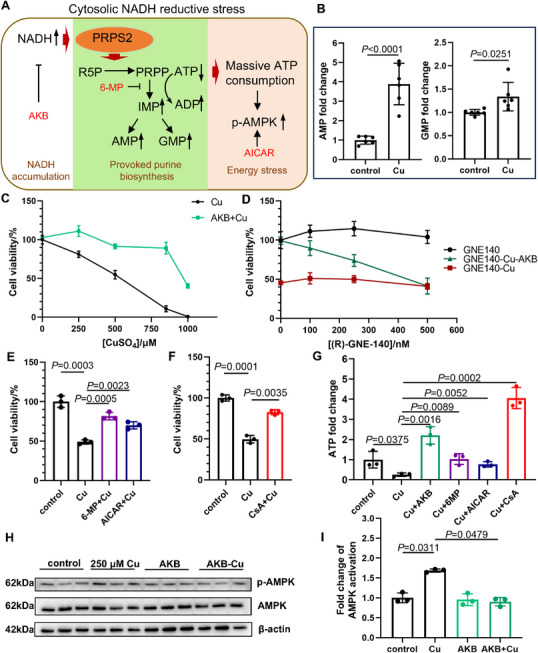 Figure 1
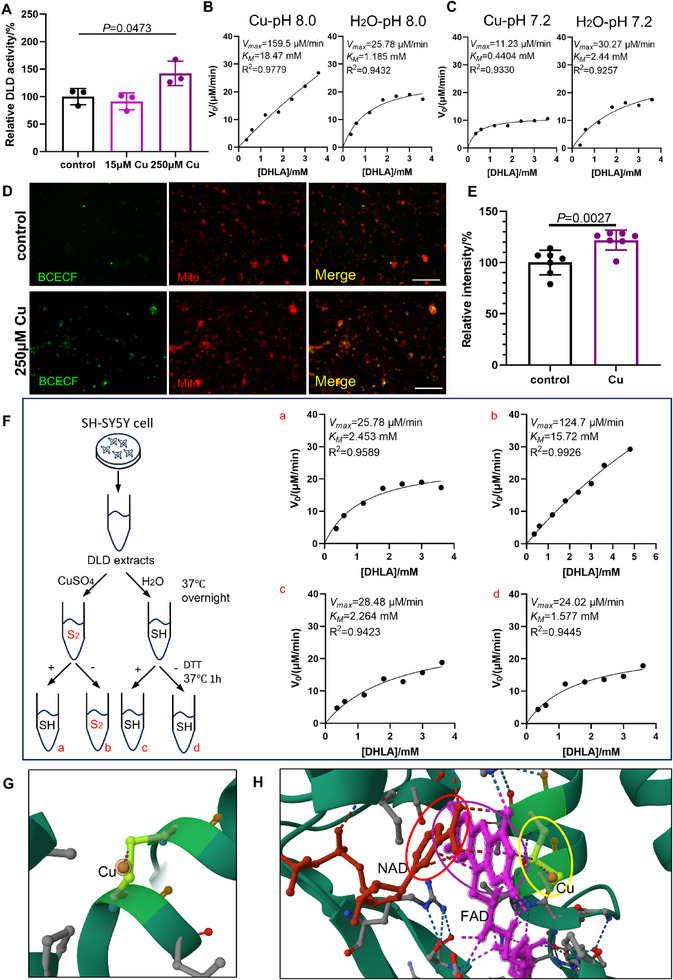 Figure 2
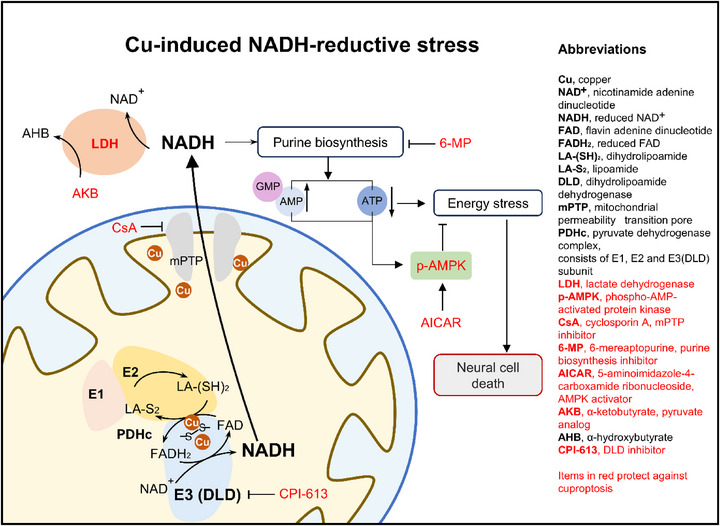 Figure 3
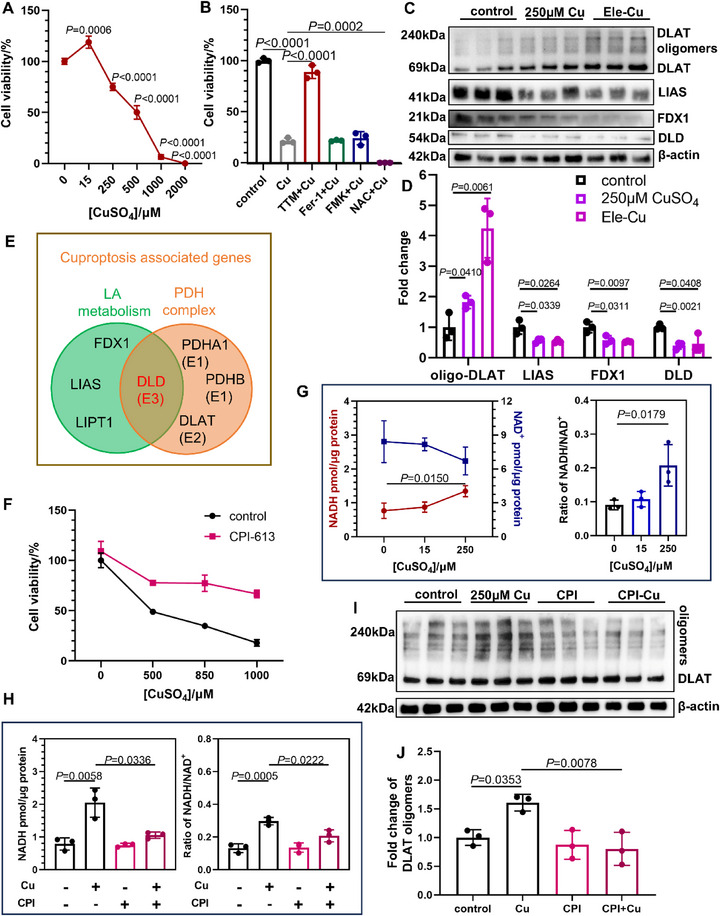 Figure 4
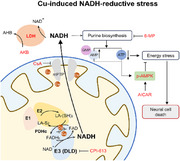 Figure 5
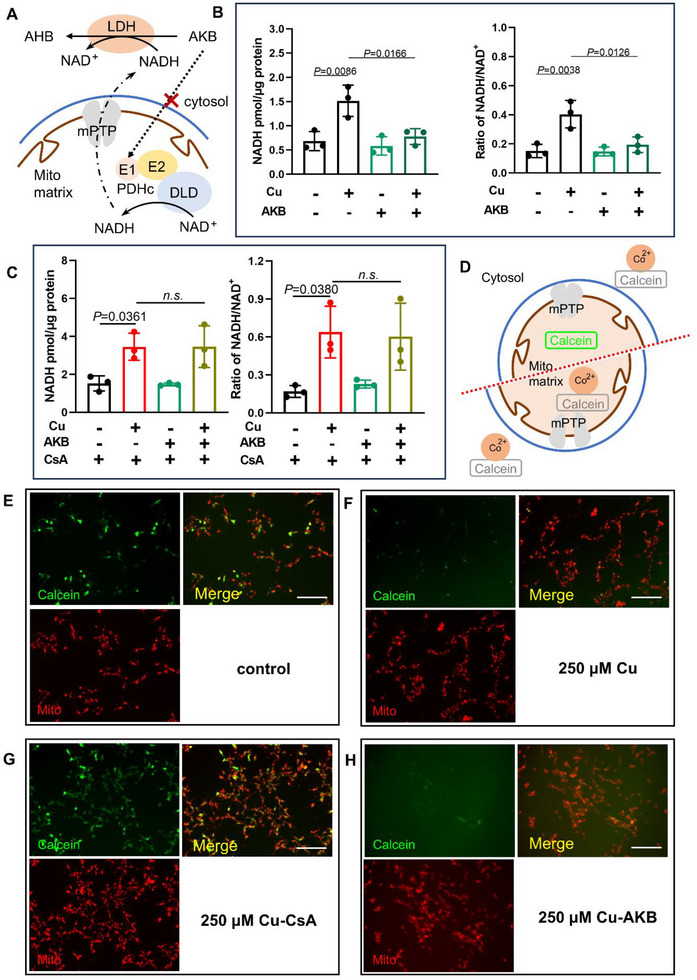 Figure 6
Peer Reviews
No public reviews on file for this paper yet. If you reviewed it on a platform where reviews are public (OpenReview, ICLR, NeurIPS, ICML), you can paste yours below so the community can read it here.
Videos
No videos yet. Explain this paper in a talk, walkthrough, or lecture? Add one.
Taxonomy
TopicsTrace Elements in Health · Mitochondrial Function and Pathology · Biochemical Acid Research Studies