Mapping the Non‐Canonical Splicing Variants: Decrypting the Hidden Genetic Architecture of Idiopathic Male Infertility
Kuokuo Li, Yuge Chen, Dongdong Tang, Yuying Sheng, Xu Han, Hao Geng, Na Zhang, Zongliu Duan, Guanxiong Wang, Yang Gao, Rui Guo, Rong Hua, Zhiming Ding, Chuan Xu, Qunshan Shen, Zhen Yu, Bing Song, Mingrong Lv, Yuping Xu, Huan Wu, Ji Wu, Yunxia Cao, Xiaojin He

TL;DR
This study reveals that non-canonical splicing variants, often ignored in genetic analysis, play a significant role in male infertility and could improve diagnosis rates.
Contribution
The study identifies novel non-canonical splicing variants in male infertility and demonstrates their clinical relevance using patient data and mouse models.
Findings
17 novel non-canonical splicing variants were identified from previously classified missense variants.
Thirteen positively validated non-canonical splicing variants were found in 12 idiopathic male infertility patients.
A pathogenic variant in TMF1 caused reduced sperm motility and morphological defects in both humans and mice.
Abstract
Canonical splicing variants (±2) contribute significantly to genetic disorders, yet the clinical significance of non‐canonical splicing variants (NCSVs) that occur outside of canonical splicing sites remains unknown in male infertility. A comprehensive evaluation of reported studies on hereditary male infertility revealed that the 2,404 pathogenic variants contained 120 canonical splicing variants and 32 NCSVs. Among the remaining 2,252 variants, the splicing variant analytical strategy identified 17 novel NCSVs that disrupt normal mRNA splicing from previously classified missense variants. This expands the contribution of NCSVs by 53.13% (17/32), with NCSVs accounting for 28.99% (49/169) of all the splicing variants. Moreover, thirteen positively validated NCSVs are identified in 12 of 718 idiopathic male infertility patients with negative results by conventional genetic analysis. The…
Genes, proteins, chemicals, diseases, species, mutations and cell lines named across the full text — each resolved to its canonical identifier and authoritative record.
Click any figure to enlarge with its caption.
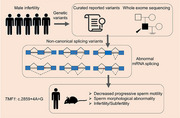 Figure 1
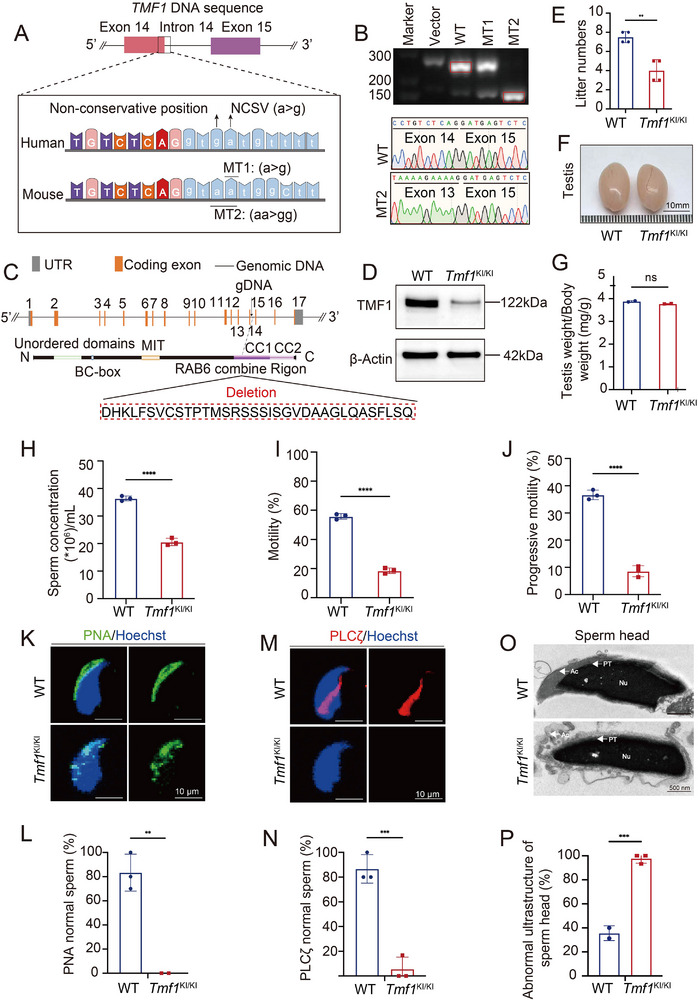 Figure 2
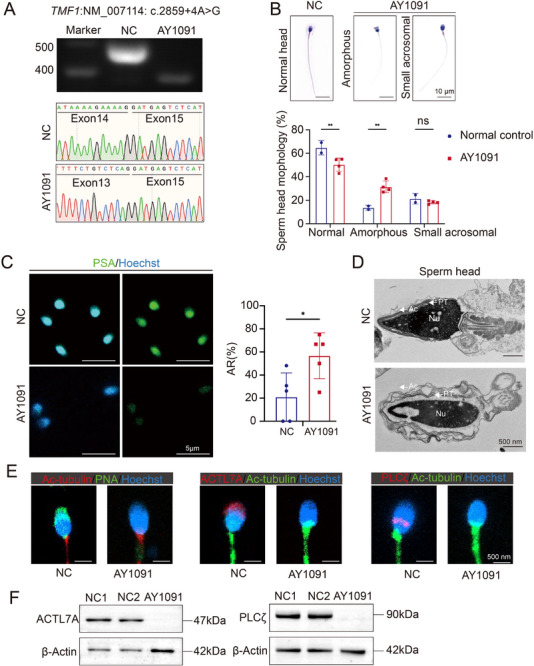 Figure 3
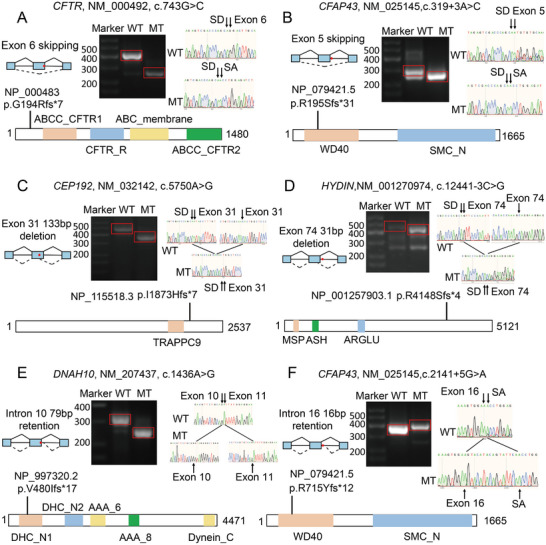 Figure 4
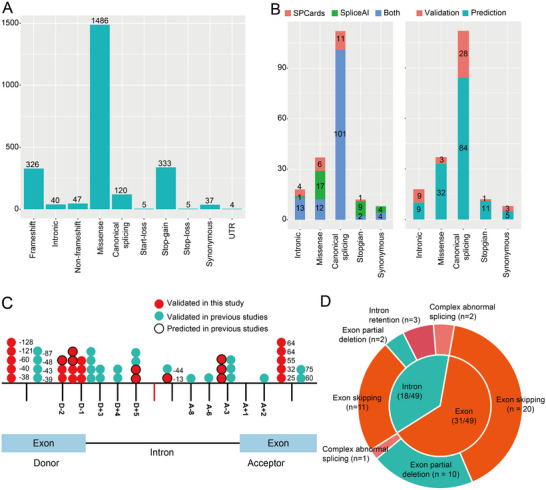 Figure 5
Peer Reviews
No public reviews on file for this paper yet. If you reviewed it on a platform where reviews are public (OpenReview, ICLR, NeurIPS, ICML), you can paste yours below so the community can read it here.
Videos
No videos yet. Explain this paper in a talk, walkthrough, or lecture? Add one.
Taxonomy
TopicsRNA Research and Splicing · Genetic Neurodegenerative Diseases · RNA regulation and disease