Disrupting Lipid Raft Microdomains to Block Polyploid Giant Cancer Cell Budding and Enhance Radiotherapy Response
Zheng Deng, Haoran Sun, Jin Cheng, Ruyi Zhao, Jianzhu Xie, Yanwei Song, Yucui Zhao, Chenwei Lin, Binjie Hu, Yanping Gong, Jun Lin, Sijia He, Yuntao Luo, Minghui Zhao, Yiwei Wang, Ming Jiao, Yuqin Yang, Jikun Li, Shujie Xia, Chuanyuan Li, Qian Huang

TL;DR
Blocking lipid raft structures in cancer cells can prevent tumor regrowth after radiation therapy and improve treatment outcomes.
Contribution
The discovery of a SNCG–FLOT2–CHMP4B signaling axis in lipid rafts regulating PGCC budding and its disruption to enhance radiotherapy.
Findings
PGCCs regenerate tumors via budding regulated by a SNCG–FLOT2–CHMP4B axis in lipid rafts.
Disrupting lipid rafts with statins or anti-PCSK9 antibodies blocks budding and improves radiotherapy response.
Lipid raft disruption suppresses tumor repopulation and increases radiosensitivity in models.
Abstract
Radiotherapy failure often arises from tumor repopulation by treatment‐resistant cancer cells. Following irradiation, cancer cells can undergo endoreplication to form polyploid giant cancer cells (PGCCs)—radiation‐persistent cells capable of generating progeny through a virus‐like asymmetric budding process. While such membrane budding is evolutionarily conserved across archaea, viruses, and eukaryotic cells, its molecular mechanism in cancer remains poorly defined. Here, a radiation‐induced SNCG–FLOT2–CHMP4B signaling axis is identified as a key regulator of PGCC budding. Mechanistically, ASAH1 and SMPD2 maintain sphingolipid metabolic balance, while FLOT2 drives germination at lipid raft–enriched membrane microdomains, followed by CHMP4B‐dependent abscission to release daughter cells. Disrupting these lipid raft structures—via statins or anti‐PCSK9 antibodies—impairs budding,…
Genes, proteins, chemicals, diseases, species, mutations and cell lines named across the full text — each resolved to its canonical identifier and authoritative record.
Click any figure to enlarge with its caption.
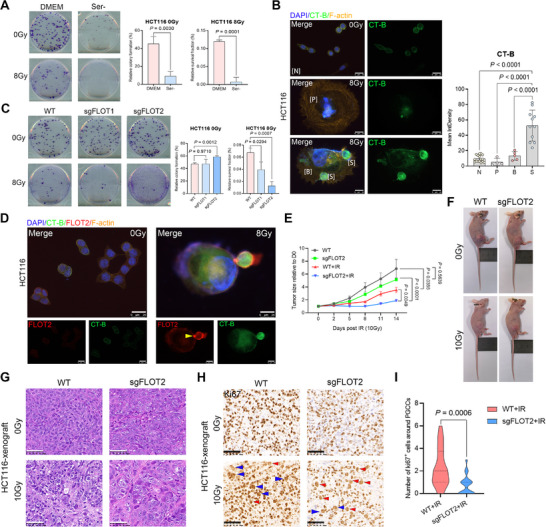 Figure 1
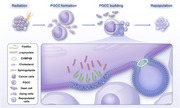 Figure 2
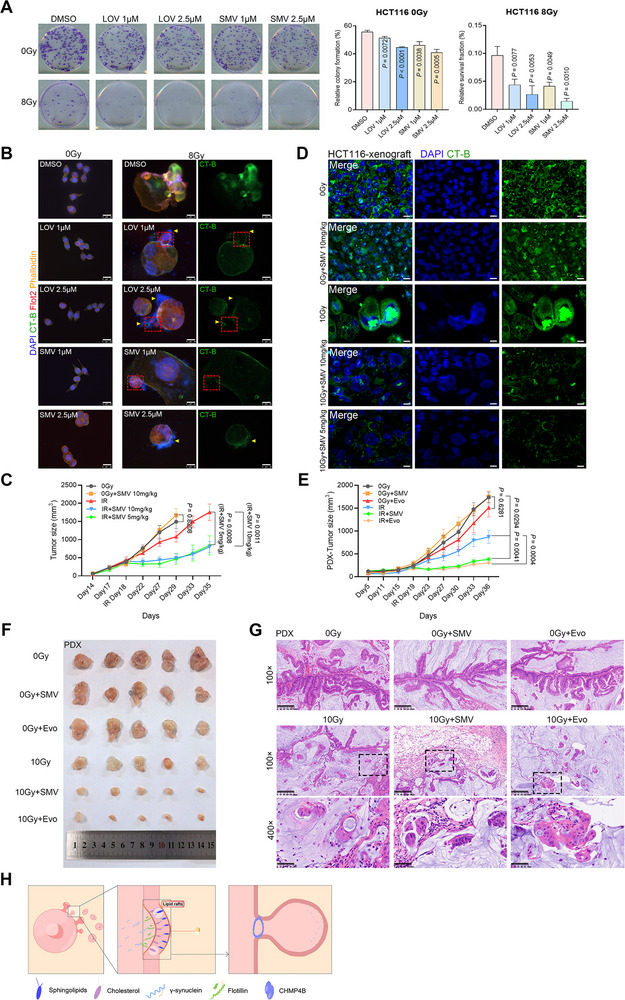 Figure 3
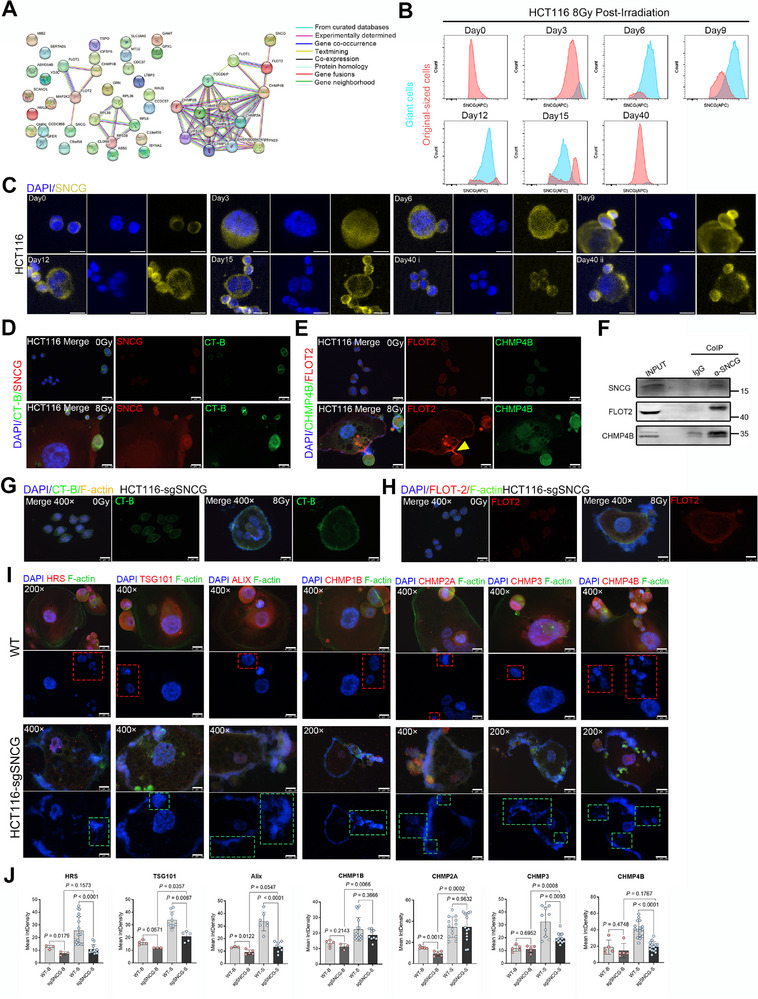 Figure 4
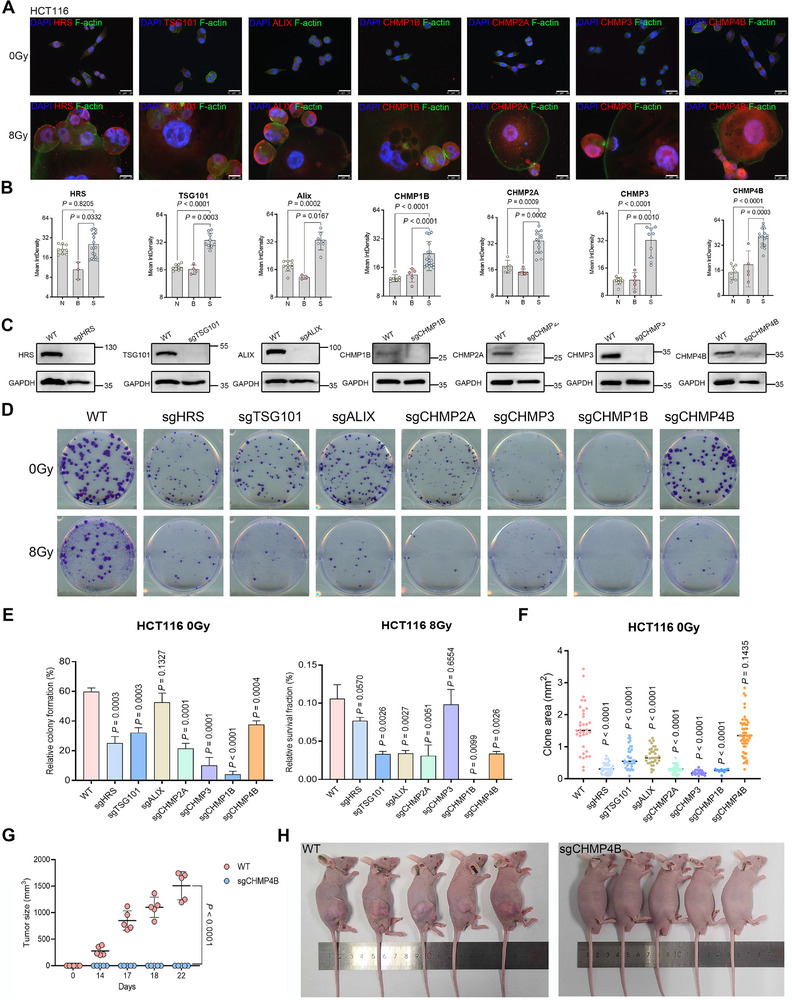 Figure 5
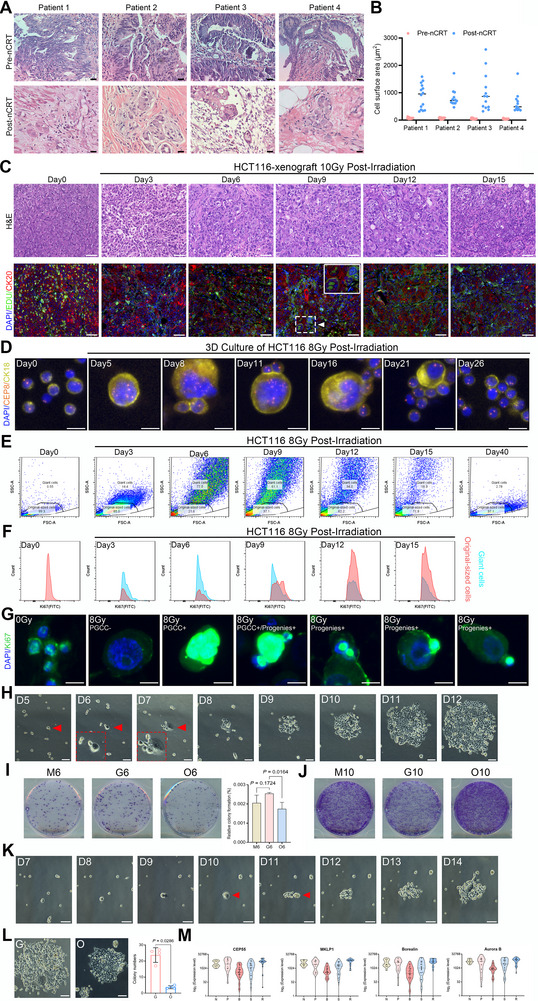 Figure 6
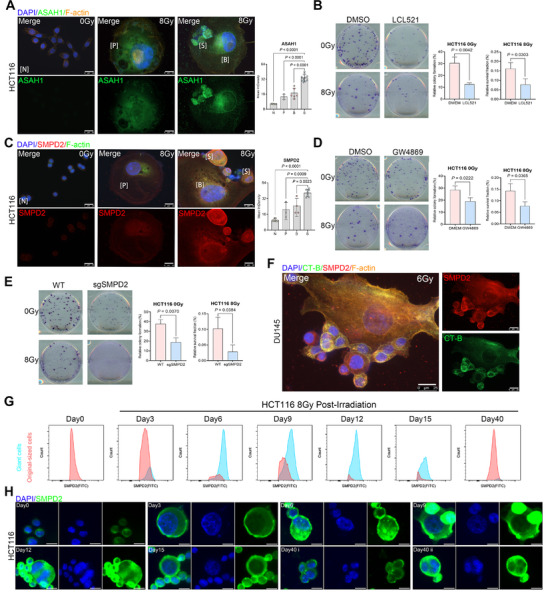 Figure 7
Peer Reviews
No public reviews on file for this paper yet. If you reviewed it on a platform where reviews are public (OpenReview, ICLR, NeurIPS, ICML), you can paste yours below so the community can read it here.
Videos
No videos yet. Explain this paper in a talk, walkthrough, or lecture? Add one.
Taxonomy
TopicsCancer Research and Treatments · Bacteriophages and microbial interactions · Lipid Membrane Structure and Behavior