5′tRF‐GlyGCC Promotes Breast Cancer Progression via LDHA‐Mediated Glycolysis and Macrophage Polarization
Cheng Yi, Yunqing Lu, Xing Chang, Ying Wang, Jiawang Zhou, Guoyou Xie, Lijun Tao, Zhaotong Wang, Yifan Tian, Lihong Wang, Feng Tang, Yijing Zheng, Xinchen Yue, Jinping Lei, Xiansong Wang, Lichen Ge, Zhuojia Chen, Hongsheng Wang

TL;DR
A small RNA fragment called 5’tRF-GlyGCC promotes breast cancer by boosting cancer cell metabolism and changing the tumor environment to support cancer growth.
Contribution
The study reveals a novel mechanism by which 5’tRF-GlyGCC promotes breast cancer through LDHA-mediated glycolysis and macrophage polarization.
Findings
5’tRF-GlyGCC binds to LDHA, enhancing glycolysis and cancer cell malignancy.
The 5’tRF-GlyGCC/LDHA axis promotes M2 macrophage polarization via CCL7, supporting tumor growth.
Targeting this axis in vivo reduces tumor growth and improves immunotherapy outcomes.
Abstract
Breast cancer (BC) progression is intricately linked to the dysregulation of transfer RNA‐derived fragments (tRFs). Through comprehensive analysis of The Cancer Genome Atlas (TCGA) data, it is demonstrated that 5′tRF‐GlyGCC is overexpressed in BC tissues and negatively associated with patients' survival. Mechanistically, 5′tRF‐GlyGCC binds to lactate dehydrogenase A (LDHA), enhancing its enzymatic activity and promoting glycolysis, which drives BC cell malignancy. This binding is mediated by the phosphorylation of LDHA at tyrosine 10, and facilitated by fibroblast growth factor receptor 1 (FGFR1), through the formation of a ternary complex that amplifies oncogenic signaling. Furthermore, 5′tRF‐GlyGCC/LDHA axis induces macrophage infiltration and polarization toward an M2 phenotype, mediated by the chemokine CCL7, thereby reshaping the tumor microenvironment. Additionally, it is…
Genes, proteins, chemicals, diseases, species, mutations and cell lines named across the full text — each resolved to its canonical identifier and authoritative record.
Click any figure to enlarge with its caption.
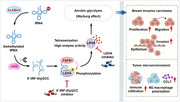 Figure 1
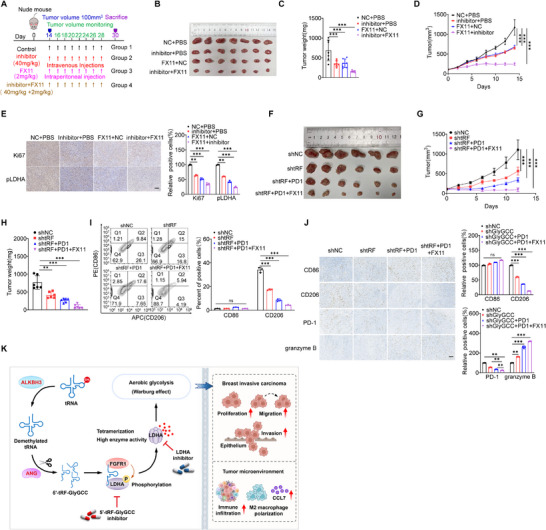 Figure 2
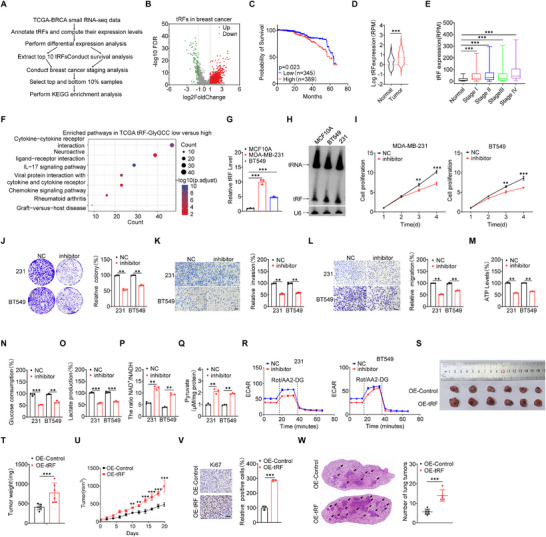 Figure 3
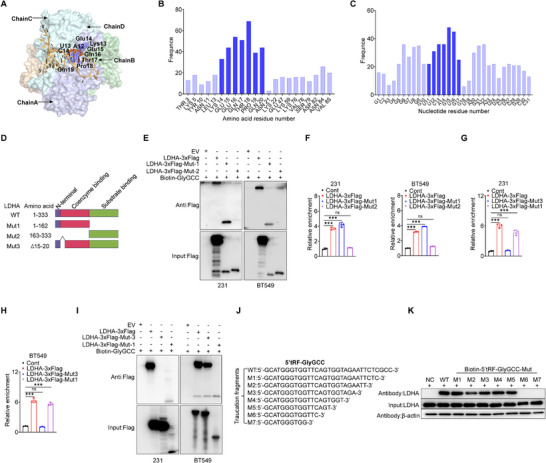 Figure 4
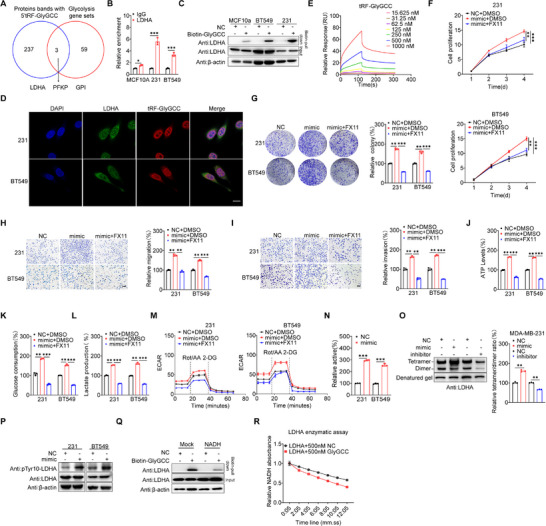 Figure 5
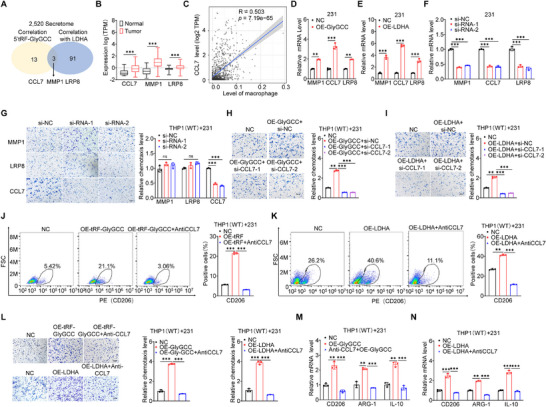 Figure 6
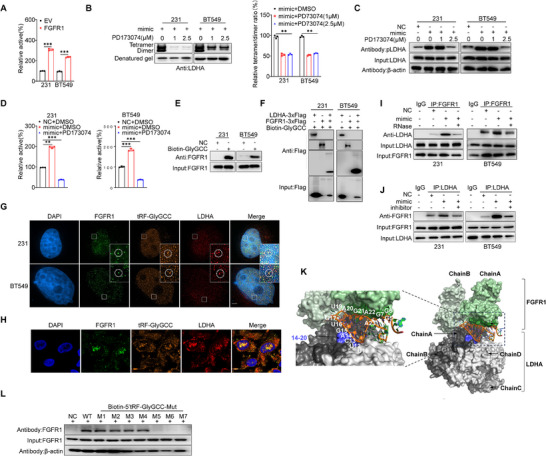 Figure 7
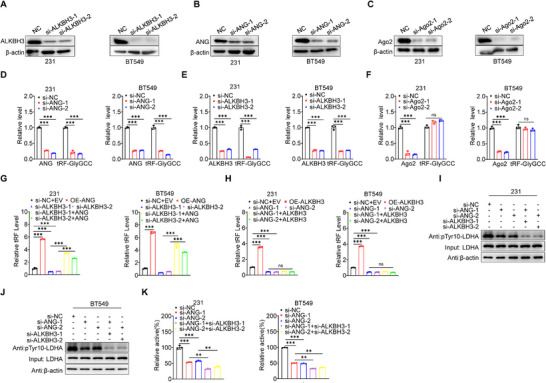 Figure 8
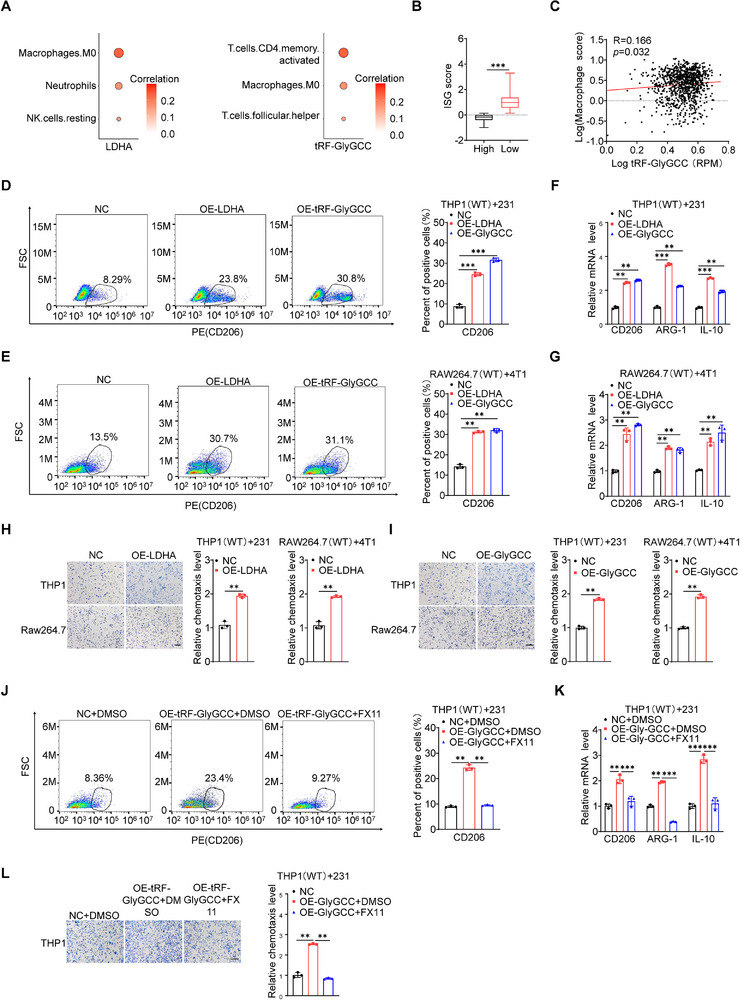 Figure 9
Peer Reviews
No public reviews on file for this paper yet. If you reviewed it on a platform where reviews are public (OpenReview, ICLR, NeurIPS, ICML), you can paste yours below so the community can read it here.
Videos
No videos yet. Explain this paper in a talk, walkthrough, or lecture? Add one.
Taxonomy
TopicsCancer, Hypoxia, and Metabolism · Immune cells in cancer · RNA Research and Splicing