Discovery of a Novel and Potent Kir4.1 Inhibitor as a Safe and Rapid‐Onset Antidepressant Agent in Mice
Sisi Wang, Xiaoyu Zhou, Mengdan Li, Chao Zhang, Haiyan Xu, Jingyi He, Li Zhan, Yueling Gu, Hao Gu, Tianyu Tu, Hanfang Liu, Taotao Lu, Yueming Zheng, Jian Li, Zhaobing Gao, Yixiang Xu

TL;DR
Researchers discovered a new compound, JX3212, that rapidly and safely reduces depression-like behaviors in mice by inhibiting the Kir4.1 potassium channel.
Contribution
The study introduces JX3212, a novel and potent Kir4.1 inhibitor with rapid antidepressant effects and good safety margins in preclinical models.
Findings
JX3212 shows strong in vitro inhibitory activity against Kir4.1 with good selectivity and brain penetration.
A single dose of JX3212 rapidly reduces depression-like behaviors in mice within one hour.
JX3212 has better safety margins than ketamine and imipramine in behavioral tests.
Abstract
Major depressive disorder is a serious psychiatric disorder for which novel and fast‐acting antidepressants are required. Targeted inhibition of the astrocytic inwardly rectifying potassium channel 4.1 (Kir4.1) in the lateral habenula could rapidly alleviate depression‐like behaviors. A previous study identified Kir4.1 as a promising target for achieving rapid‐onset antidepressant effects. The aim of this study is to identify novel Kir4.1 inhibitors with good druggability through structural modification of the lead compound EHop‐016, resulting in fifty derivatives. Among these, JX3212 exhibits the most potent in vitro inhibitory activity against Kir4.1, with acceptable selectivity and excellent brain exposure. Notably, a single administration of JX3212 results in rapid‐onset antidepressant effects within 1 h in multiple rodent models of depression, with comparable efficacy to…
Genes, proteins, chemicals, diseases, species, mutations and cell lines named across the full text — each resolved to its canonical identifier and authoritative record.
Click any figure to enlarge with its caption.
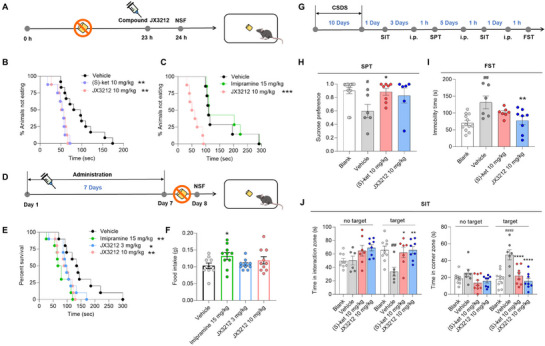 Figure 1
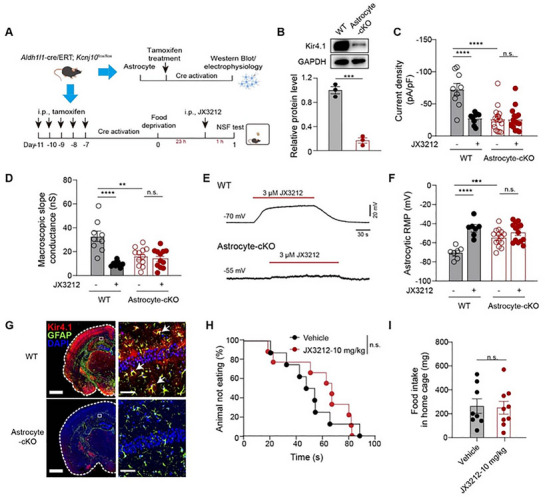 Figure 2
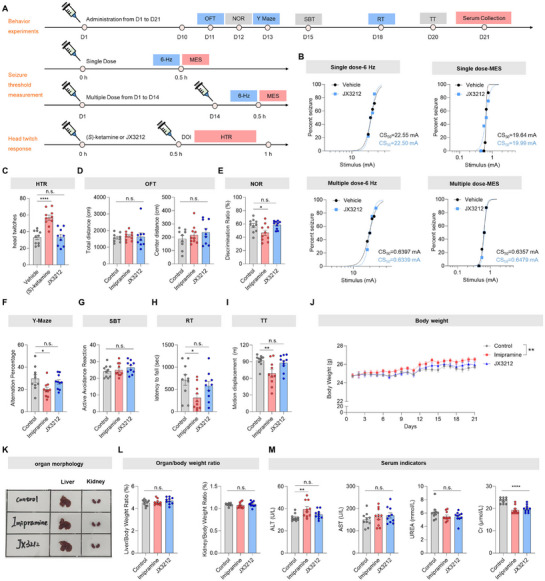 Figure 3
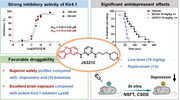 Figure 4
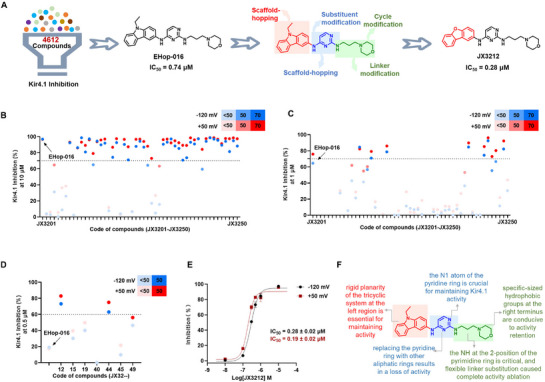 Figure 5
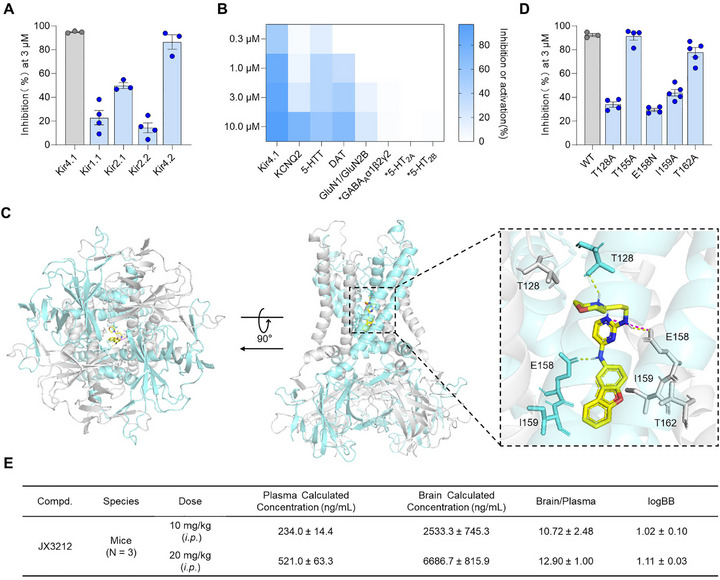 Figure 6
Peer Reviews
No public reviews on file for this paper yet. If you reviewed it on a platform where reviews are public (OpenReview, ICLR, NeurIPS, ICML), you can paste yours below so the community can read it here.
Videos
No videos yet. Explain this paper in a talk, walkthrough, or lecture? Add one.
Taxonomy
TopicsTryptophan and brain disorders · Treatment of Major Depression · Cancer, Stress, Anesthesia, and Immune Response