Molecular Cluster‐Controlled Quasi‐Epitaxial CZTSSe/CdS Heterojunction Enables 12.3% Efficiency of Flexible Solar Cells
Weihao Xie, Yifan Li, Quanzhen Sun, Weihuang Wang, Renjie Wang, Caixia Zhang, Jionghua Wu, Hui Deng, Shuying Cheng

TL;DR
A new method for making flexible solar cells using CZTSSe and CdS materials improves efficiency to 12.3% by reducing defects at the material interface.
Contribution
A quasi-epitaxial CZTSSe/CdS heterojunction is constructed via controlled CdS molecular clusters during chemical bath deposition.
Findings
Controlling CdS molecular clusters suppresses interface defects and increases open-circuit voltage to 503 mV.
Flexible CZTSSe solar cells achieve 12.3% power conversion efficiency with high mechanical stability.
Ultrathin buffer layers enhance short-wavelength transmittance and increase short-circuit current density by 15%.
Abstract
Flexible Cu2ZnSn(S,Se)4 (CZTSSe) solar cells have garnered significant attention in photovoltaics. Interface defects in CZTSSe/CdS heterojunctions drive carrier recombination, leading to substantial open‐circuit voltage (VOC ) loss. Herein, a deposition strategy is proposed to achieve quasi‐epitaxial heterojunctions by controlling the CdS molecular clusters during the chemical bath deposition (CBD) process. The nucleation rate and size of clusters are regulated by manipulating the stirring process and a sealed NH3 atmosphere. Small‐sized CdS molecular clusters, densely adsorbed onto the CZTSSe surface at a controlled low rate, pair with dangling bonds to form the quasi‐epitaxial heterojunction structure. This effectively suppresses interface defects and mitigates tunnel‐enhanced recombination, resulting in an increased VOC of 503 mV. The epitaxial growth of CdS thin films facilitates…
Genes, proteins, chemicals, diseases, species, mutations and cell lines named across the full text — each resolved to its canonical identifier and authoritative record.
Click any figure to enlarge with its caption.
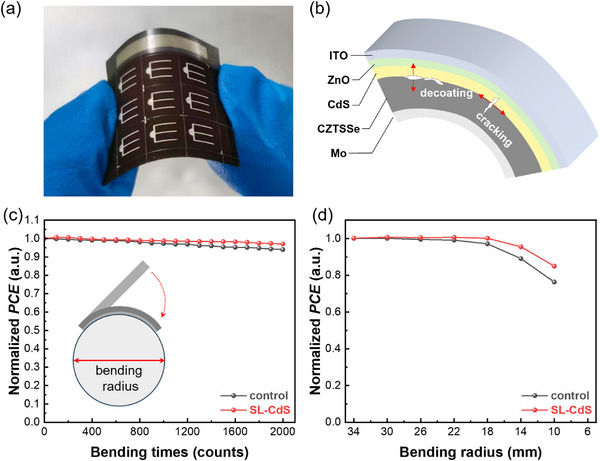 Figure 1
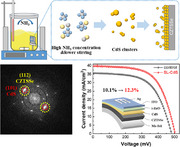 Figure 2
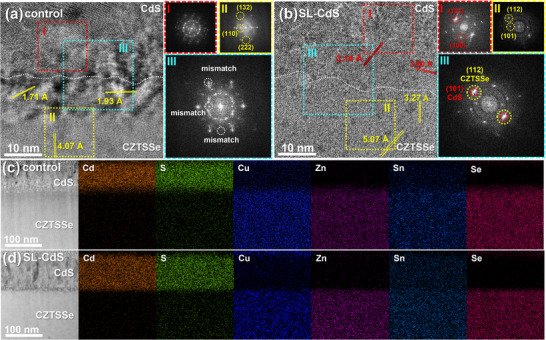 Figure 3
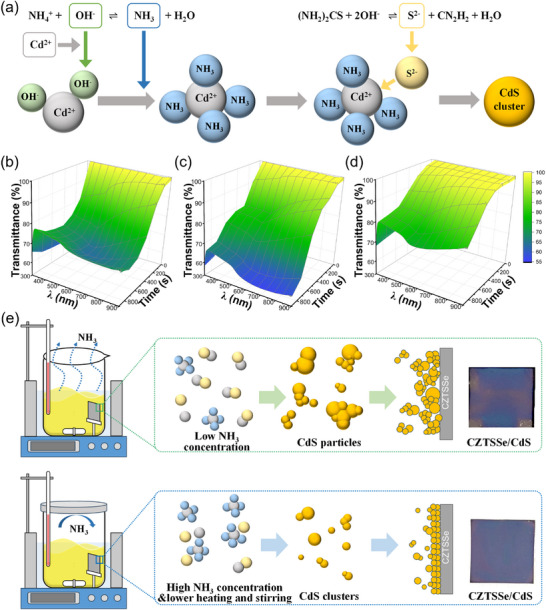 Figure 4
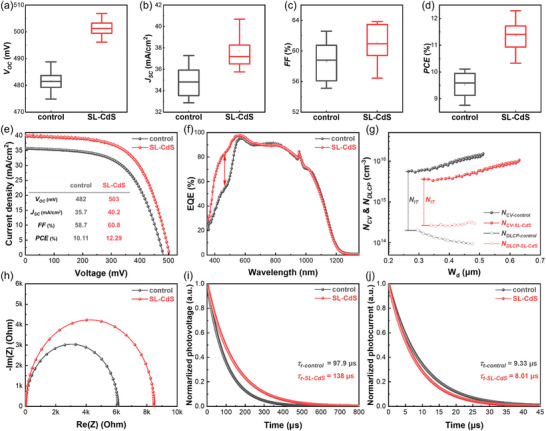 Figure 5
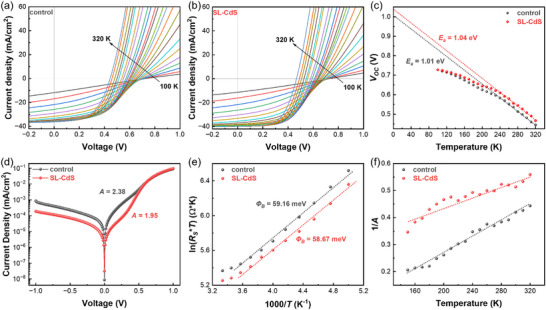 Figure 6
Peer Reviews
No public reviews on file for this paper yet. If you reviewed it on a platform where reviews are public (OpenReview, ICLR, NeurIPS, ICML), you can paste yours below so the community can read it here.
Videos
No videos yet. Explain this paper in a talk, walkthrough, or lecture? Add one.
Taxonomy
TopicsQuantum Dots Synthesis And Properties · Chalcogenide Semiconductor Thin Films · TiO2 Photocatalysis and Solar Cells