Pseudomonas virulence factor SaxA detoxifies plant glucosinolate hydrolysis products, rescuing a commensal that suppresses virulence gene expression
Kerstin Unger, Rebecca Ruiter, Michael Reichelt, Jonathan Gershenzon, Matthew T Agler

TL;DR
A bacterial enzyme detoxifies plant toxins, allowing a commensal microbe to thrive and reduce pathogen virulence in plant environments.
Contribution
Discovery that Pseudomonas SaxA detoxifies plant isothiocyanates, enabling commensal survival and suppressing pathogen virulence.
Findings
Plantibacter sp. requires Pseudomonas-produced SaxA to survive high isothiocyanate concentrations.
Commensal presence suppresses Pseudomonas biofilm formation and virulence gene expression.
SaxA-mediated detoxification alters microbial interactions and community dynamics in plant environments.
Abstract
Plants produce a plethora of specialized metabolites that often play important roles in their defence against pathogenic microbes or herbivorous insects. Exposure of leaf-colonizing microbes to these metabolites influences their growth, and we hypothesize that it also has consequences for microbe–microbe interactions. In Brassicaceae plants like the model plant Arabidopsis thaliana, glucosinolates and their biologically active derivatives, the isothiocyanates, are major defence metabolites. Adapted plant pathogens like Pseudomonas spp. use the hydrolase SaxA to convert the antimicrobial isothiocyanate sulforaphane to a non-toxic amine, whereas non-adapted commensal microbes are inhibited by this plant toxin. We used Plantibacter sp. 2H11-2 as a model commensal in co-culture with either Pseudomonas viridiflava 3D9 wildtype or a saxA-knock-out mutant. Both strains were isolated from the…
Genes, proteins, chemicals, diseases, species, mutations and cell lines named across the full text — each resolved to its canonical identifier and authoritative record.
Click any figure to enlarge with its caption.
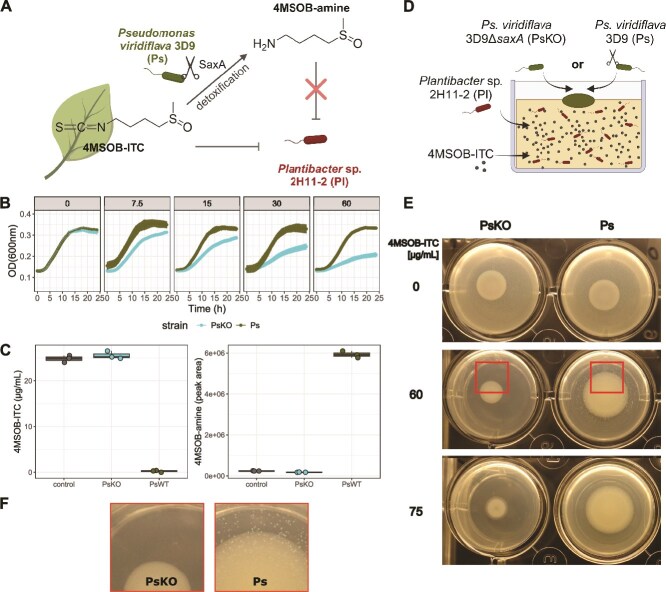 Figure 1
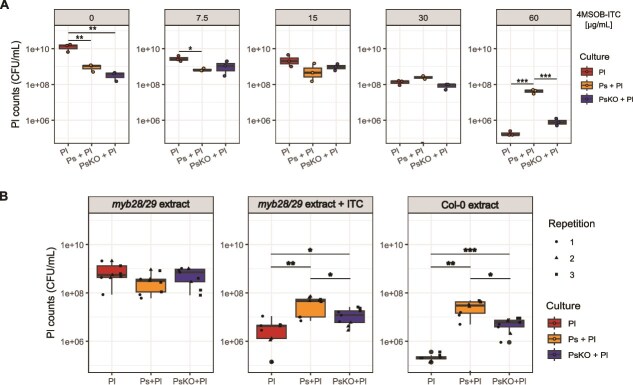 Figure 2
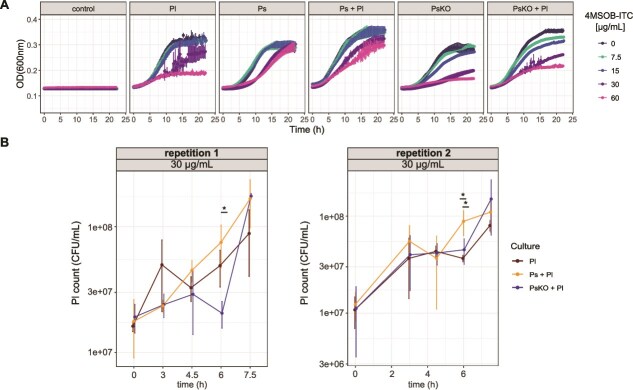 Figure 3
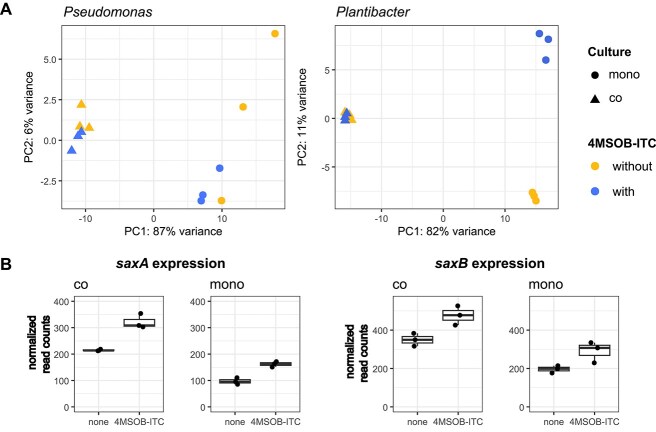 Figure 4
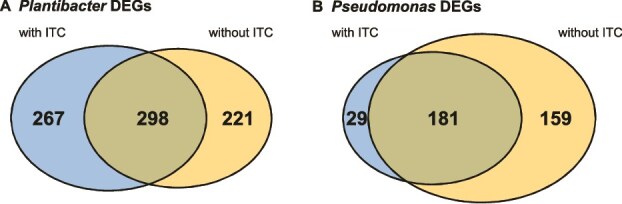 Figure 5
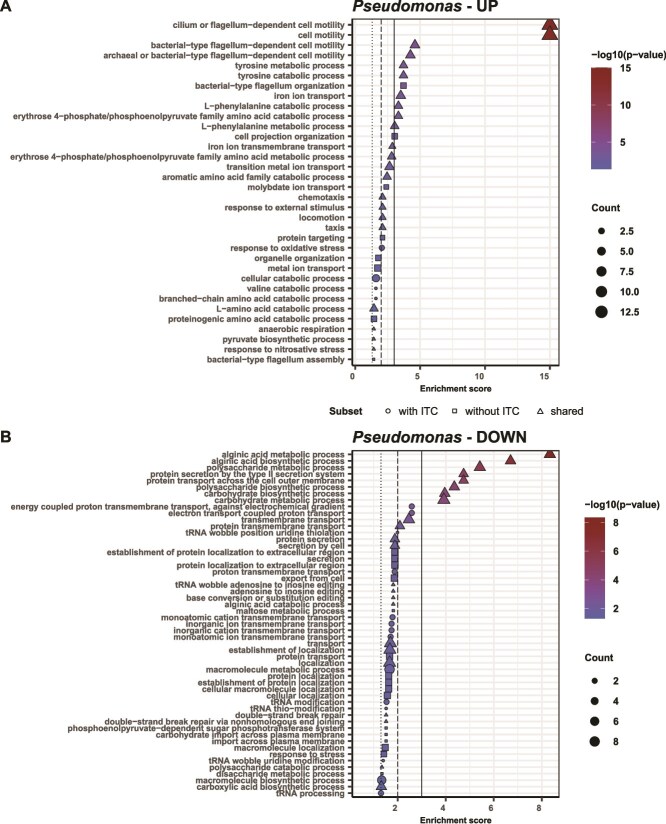 Figure 6
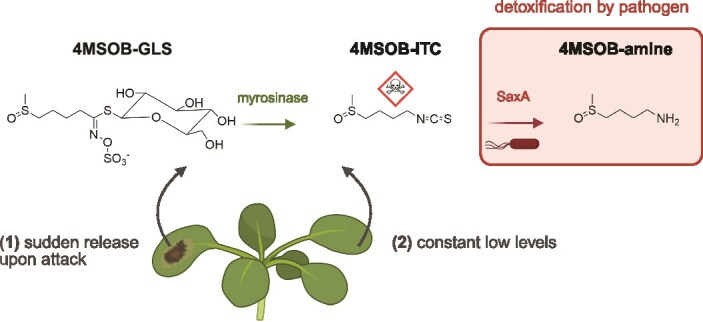 Figure 7
Peer Reviews
No public reviews on file for this paper yet. If you reviewed it on a platform where reviews are public (OpenReview, ICLR, NeurIPS, ICML), you can paste yours below so the community can read it here.
Videos
No videos yet. Explain this paper in a talk, walkthrough, or lecture? Add one.
Taxonomy
TopicsGenomics, phytochemicals, and oxidative stress · Plant-Microbe Interactions and Immunity · Plant pathogens and resistance mechanisms