Contrasting physiological adaptation strategies to natural environmental change in two Red Sea coral holobionts
Bianca M Thobor, Claudia E L Hill, Gordon F Custer, Neus Garcias-Bonet, Michael D Fox, Yusuf C El-Khaled, Eva Aylagas, Francisco Dini-Andreote, Ulrich Struck, Arjen Tilstra, Raquel Peixoto, Susana Carvalho, Christian Wild, Benjamin Mueller

TL;DR
This study compares how two Red Sea corals adapt to seasonal environmental changes through different strategies involving their symbiotic relationships and bacterial communities.
Contribution
The paper empirically identifies contrasting physiological adaptation strategies in two coral species based on their elemental and bacterial community dynamics.
Findings
Stylophora pistillata maintains stable C/N cycling and bacterial communities, suggesting a regulator strategy.
Millepora dichotoma shows variable C/N cycling and flexible bacterial communities, indicating a conformer strategy.
Winter months see enriched bacterial metabolic functions for C, N, and sulfur cycling in M. dichotoma.
Abstract
Coral holobionts acquire energy and nutrients from heterotrophic feeding, Symbiodiniaceae symbiosis, and additional metabolic functions (e.g. nitrogen (N) fixation) from associated bacterial communities. Since symbioses often require stable environmental conditions, corals in environments with seasonal variability have likely evolved adaptation strategies by either maintaining (i.e. regulating) or shifting (i.e. conforming) key functional traits, but empirical data is needed. We investigated carbon (C) and N elemental and stable isotope ratios alongside bacterial community composition in the hydrocoral Millepora dichotoma and the scleractinian coral Stylophora pistillata every two months over one year. These data were integrated with environmental parameters to investigate potential adaptation strategies of the coral holobionts over a seasonal cycle. S. pistillata showed temporal…
Genes, proteins, chemicals, diseases, species, mutations and cell lines named across the full text — each resolved to its canonical identifier and authoritative record.
Click any figure to enlarge with its caption.
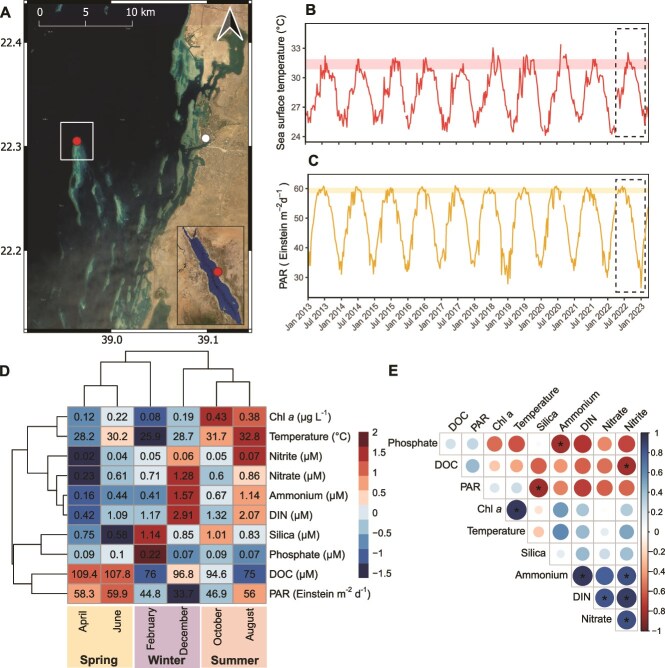 Figure 1
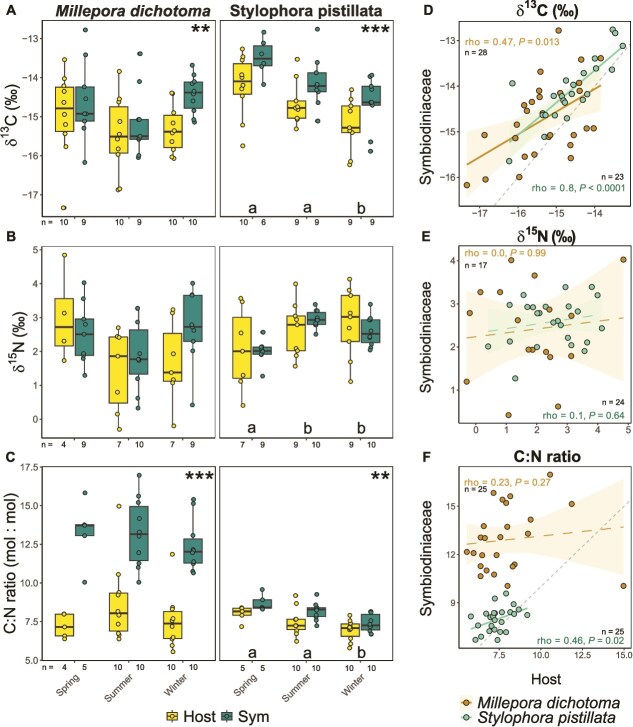 Figure 2
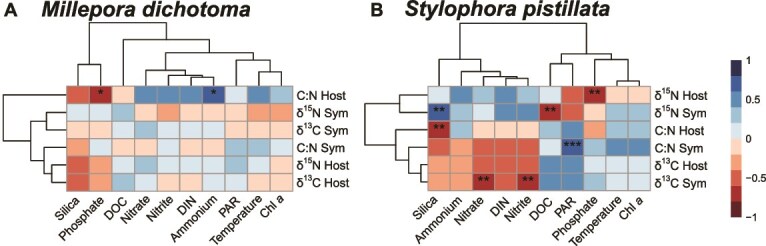 Figure 3
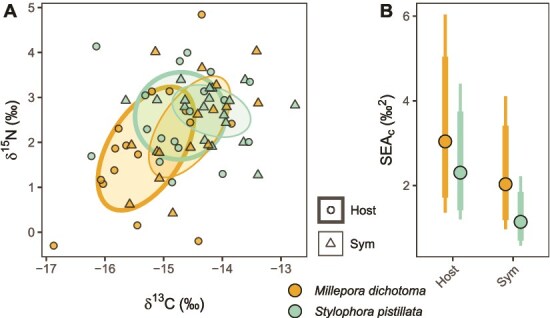 Figure 4
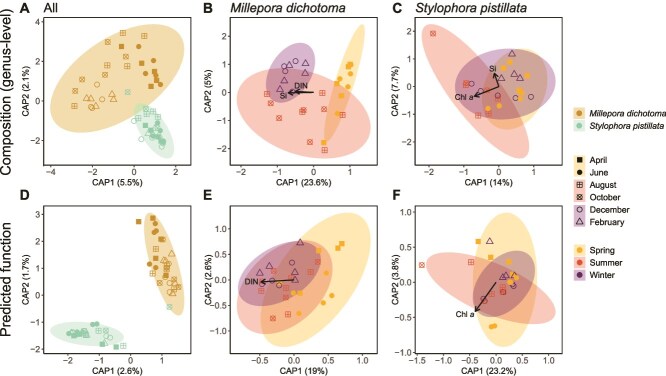 Figure 5
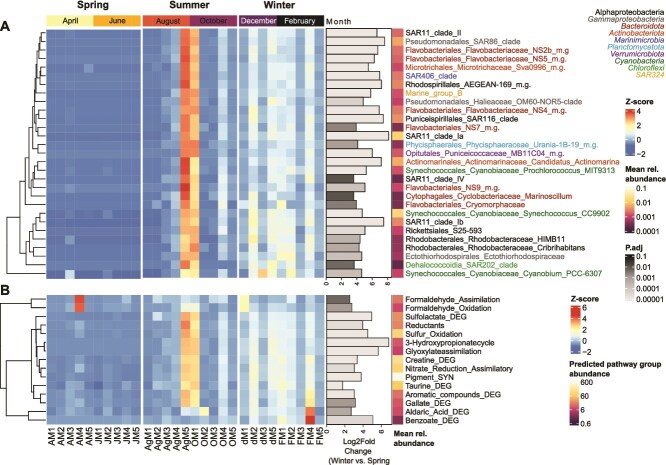 Figure 6
Peer Reviews
No public reviews on file for this paper yet. If you reviewed it on a platform where reviews are public (OpenReview, ICLR, NeurIPS, ICML), you can paste yours below so the community can read it here.
Videos
No videos yet. Explain this paper in a talk, walkthrough, or lecture? Add one.
Taxonomy
TopicsCoral and Marine Ecosystems Studies · Marine Biology and Ecology Research · Ocean Acidification Effects and Responses