Long-Term Correction of Nasolabial Folds Using Poly-L-Lactic Acid Microspheres: A Multicenter, Double-Blinded, Randomized Trial
Zhaojian Wang, Wenyun Ting, Hongyi Zhao, Lei Huang, Jianming Ma, Hongwei Liu, Yanjun Liang, Maoguo Shu, Lin Jin, Nanze Yu, Xiao Long

TL;DR
A study compared PLLA microspheres and HA fillers for correcting nasolabial folds, finding PLLA provides longer-lasting results but requires more initial treatments.
Contribution
Demonstrates that PLLA microspheres offer durable correction of nasolabial folds over 48 weeks compared to hyaluronic acid.
Findings
PLLA showed a 92.4% effective correction ratio at 48 weeks versus 59.3% for HA.
PLLA required more early treatments but provided sustained improvement from week 36 onward.
Adverse events were mild and transient in both groups.
Abstract
Correction of moderate-to-severe nasolabial folds (NLFs) is a key concern in aesthetic medicine. Poly-L-lactic acid (PLLA) microspheres, with biostimulatory properties, potentially offer longer-lasting results compared with hyaluronic acid (HA), the current standard of care. The aim of this study was to evaluate the efficacy and safety of PLLA microspheres vs HA for the correction of moderate-to-severe NLFs. In this multicenter, randomized, double-blind, parallel-controlled trial, 252 participants were enrolled across 8 centers in China and assigned to receive either PLLA or HA filler. The primary endpoint was the effective correction ratio of the Wrinkle Severity Rating Scale (WSRS) at 48 weeks, assessed by blinded independent reviewers. Secondary endpoints included WSRS change, Global Aesthetic Improvement Scale (GAIS) scores (investigator- and participant-assessed), treatment…
Genes, proteins, chemicals, diseases, species, mutations and cell lines named across the full text — each resolved to its canonical identifier and authoritative record.
Click any figure to enlarge with its caption.
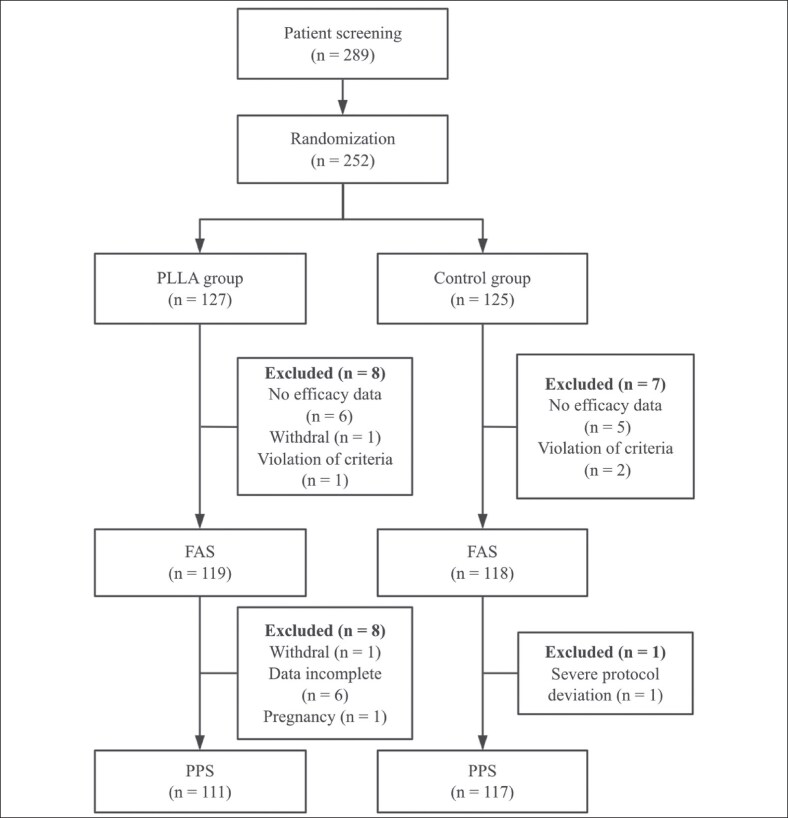 Figure 1
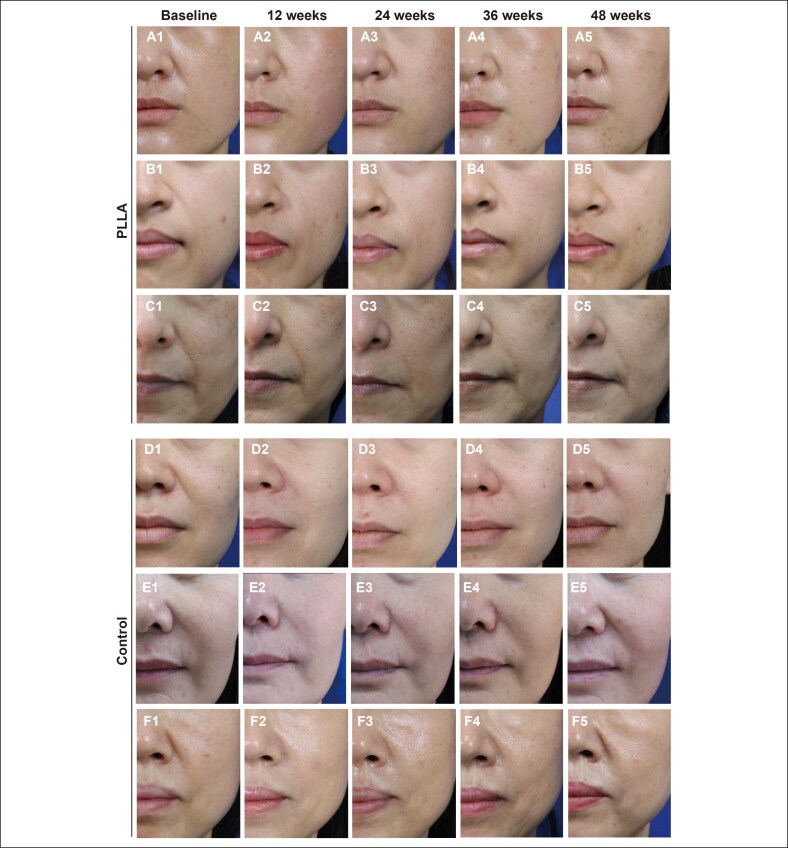 Figure 2
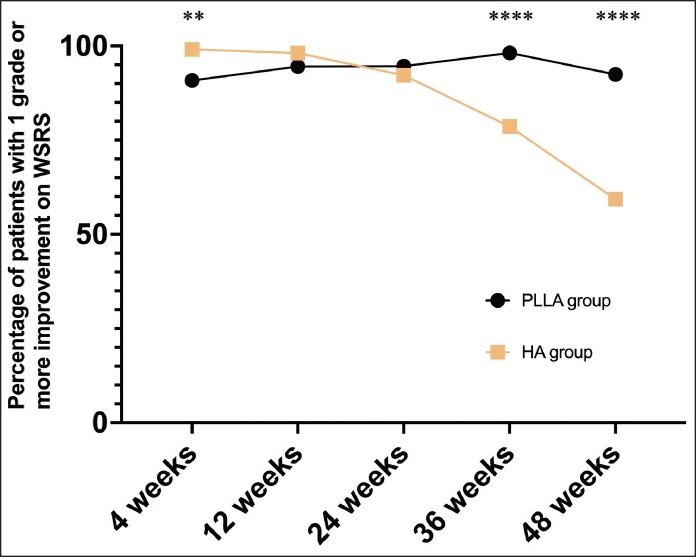 Figure 3
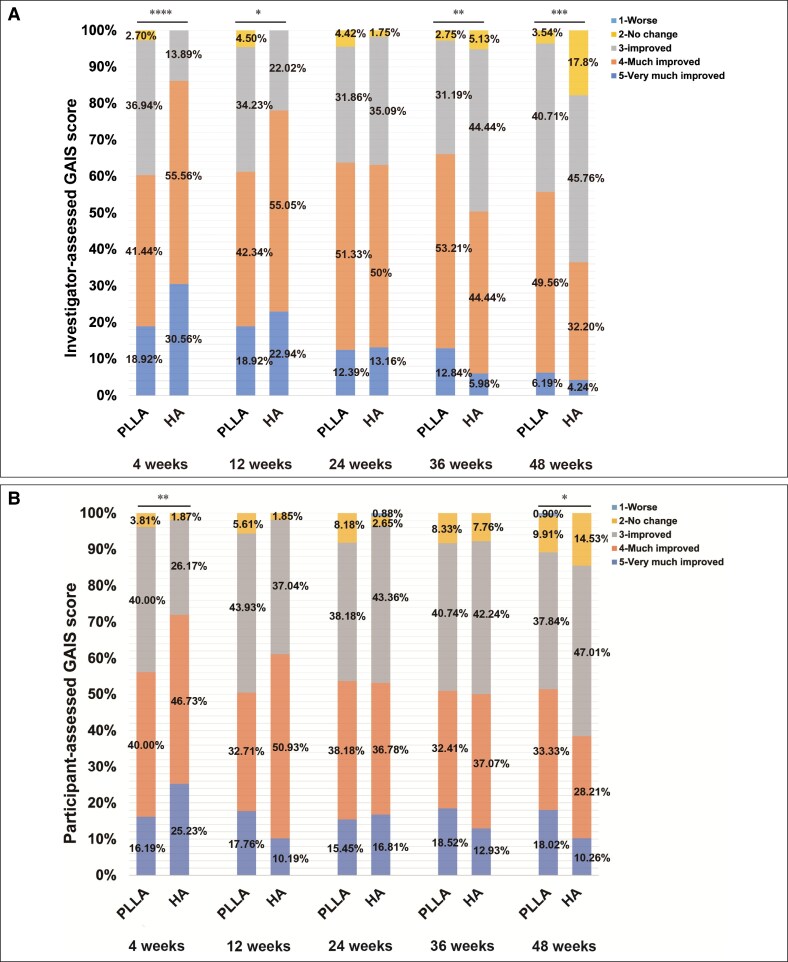 Figure 4
 Figure 5
Peer Reviews
No public reviews on file for this paper yet. If you reviewed it on a platform where reviews are public (OpenReview, ICLR, NeurIPS, ICML), you can paste yours below so the community can read it here.
Videos
No videos yet. Explain this paper in a talk, walkthrough, or lecture? Add one.
Taxonomy
TopicsFacial Rejuvenation and Surgery Techniques · Botulinum Toxin and Related Neurological Disorders · Dermatologic Treatments and Research