Accurate monitoring of substrate-dependent growth reveals ecotypic differentiation among marine yeasts
Berin Sena Arslan-Gatz, Mikkel Schultz-Johansen, Tom-Niklas Hollwedel, Sofie Niggemeier, Daniel Bartosik, Sreelakshmi Lakshmanan, Rolf Nimzyk, Antje Wichels, Gunnar Gerdts, Jan-Hendrik Hehemann, Tilmann Harder, Marlis Reich

TL;DR
This study shows how marine yeasts break down phytoplankton-derived sugars and contribute to carbon cycling in the ocean.
Contribution
A novel protocol was developed to study marine yeast growth on specific substrates with high temporal resolution.
Findings
Four distinct yeast ecotypes were identified based on their substrate utilization patterns.
Yeast degradation of laminarin produces diverse short-chained intermediates, increasing chemical complexity.
Yeast ecotypes match abundant OTUs in marine mycoplankton datasets, indicating their ecological importance.
Abstract
Phytoplankton-derived dissolved organic matter (DOM) sustains complex marine microbial communities, yet the role of marine fungi—particularly yeasts—remains understudied regarding their substrate preferences, enzymatic strategies, and ecological relevance. We developed a novel protocol to investigate substrate-specific growth of marine fungal isolates under defined conditions and high temporal resolution. Using the β-1,3-glucan laminarin—a major marine storage polysaccharide of phytoplankton—and its oligomeric and monomeric breakdown products, we characterized growth and substrate utilization profiles of eleven marine yeast isolates from the epipelagic zone at Helgoland Roads, North Sea. Statistical analyses of growth kinetics distinguished four ecotypes with distinct substrate utilization patterns, quantified via phenol–sulfuric acid assays. Fluorophore-assisted carbohydrate…
Genes, proteins, chemicals, diseases, species, mutations and cell lines named across the full text — each resolved to its canonical identifier and authoritative record.
Click any figure to enlarge with its caption.
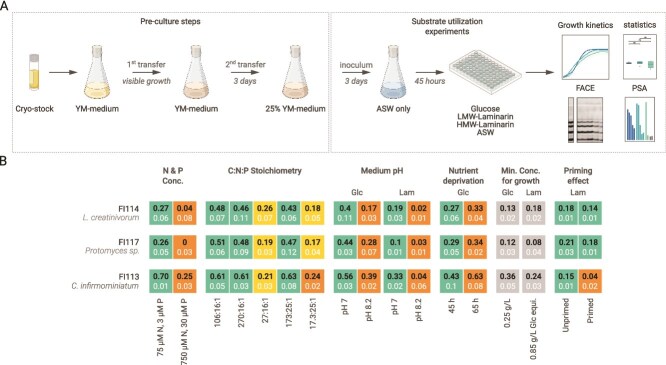 Figure 1
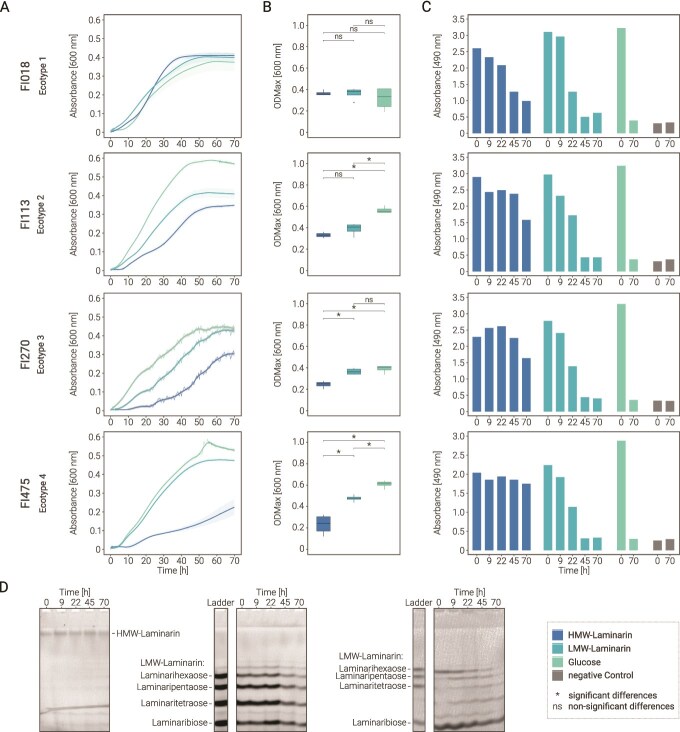 Figure 2
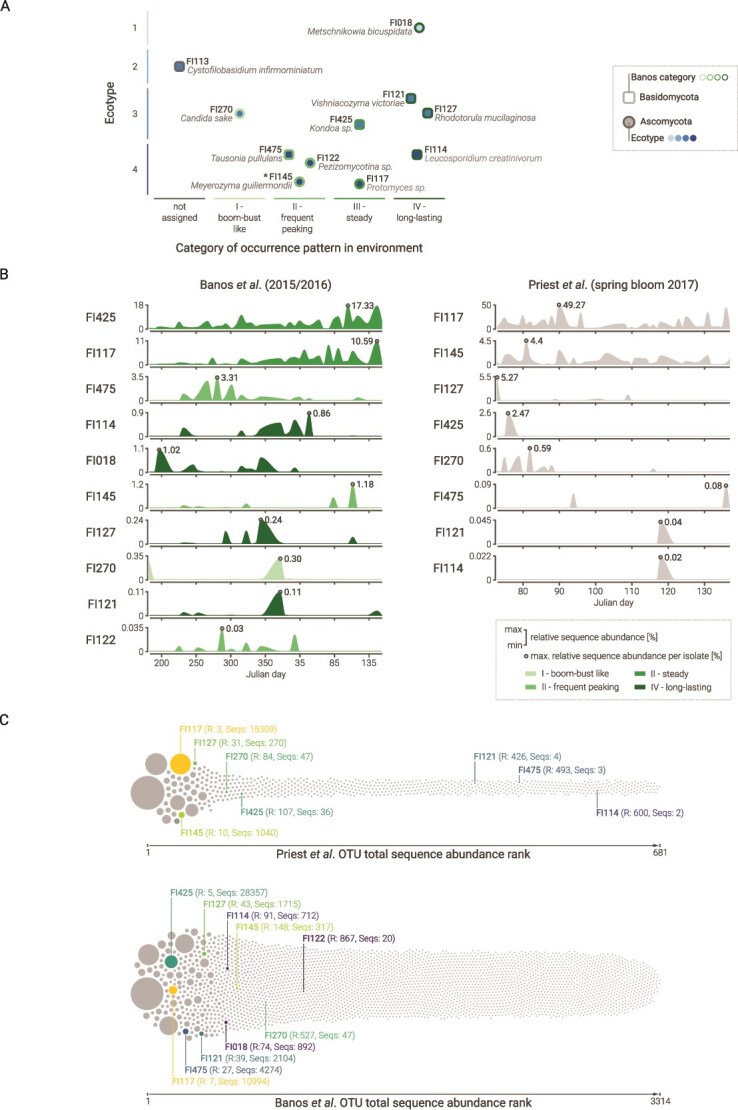 Figure 3
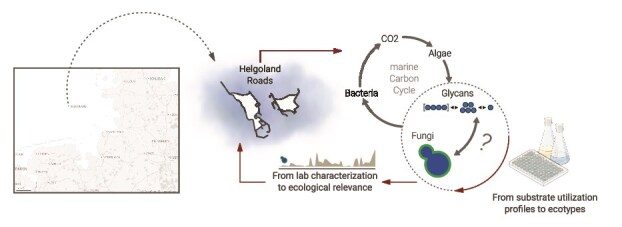 Figure 4
Peer Reviews
No public reviews on file for this paper yet. If you reviewed it on a platform where reviews are public (OpenReview, ICLR, NeurIPS, ICML), you can paste yours below so the community can read it here.
Videos
No videos yet. Explain this paper in a talk, walkthrough, or lecture? Add one.
Taxonomy
TopicsMicrobial Community Ecology and Physiology · Yeasts and Rust Fungi Studies · Marine and coastal plant biology