Using qualitative risk assessment to re-evaluate the veterinary fence paradigm within the Kavango Zambezi Transfrontier Conservation Area
Laura E. Rosen, Shirley J. Atkinson, Nlingisisi D. Babayani, Mokganedi Mokopasetso, Mary-Louise Penrith, Nidhi Ramsden, Janine Sharpe, Thompson Shuro, Odireleng I. Thololwane, Jacques van Rooyen, Steven A. Osofsky

TL;DR
This study evaluates the risk of removing veterinary fences in Botswana to improve wildlife connectivity while managing animal disease risks.
Contribution
The paper introduces a new approach to livestock disease control by integrating fence removal with risk mitigation measures to enhance wildlife movement.
Findings
Hypothetical removal of fence sections did not increase transboundary animal disease risks.
Risk mitigation measures could lower disease risks compared to the current fence status quo.
Opening low-risk fence sections could restore wildlife connectivity and reduce human-wildlife conflict.
Abstract
Habitat connectivity in southern Africa’s Kavango Zambezi Transfrontier Conservation Area (KAZA TFCA, or KAZA) is hindered by the presence of veterinary fences put in place to prevent transboundary animal disease transmission. In northern Botswana’s Ngamiland, much of the fencing infrastructure is in disrepair due to ineffective maintenance in the face of increased elephant damage, but specific sections of some fences still restrict critical wildlife movements. We undertook qualitative risk assessments for sections of the Northern Buffalo fence near the Okavango Delta and the Zambezi Border and Western Border fences along the Botswana-Namibia borders. We assessed multiple risk pathways for three main transboundary animal diseases (foot and mouth disease, contagious bovine pleuropneumonia and peste des petits ruminants) under three different scenarios: (1) the status quo (fences as they…
Genes, proteins, chemicals, diseases, species, mutations and cell lines named across the full text — each resolved to its canonical identifier and authoritative record.
Click any figure to enlarge with its caption.
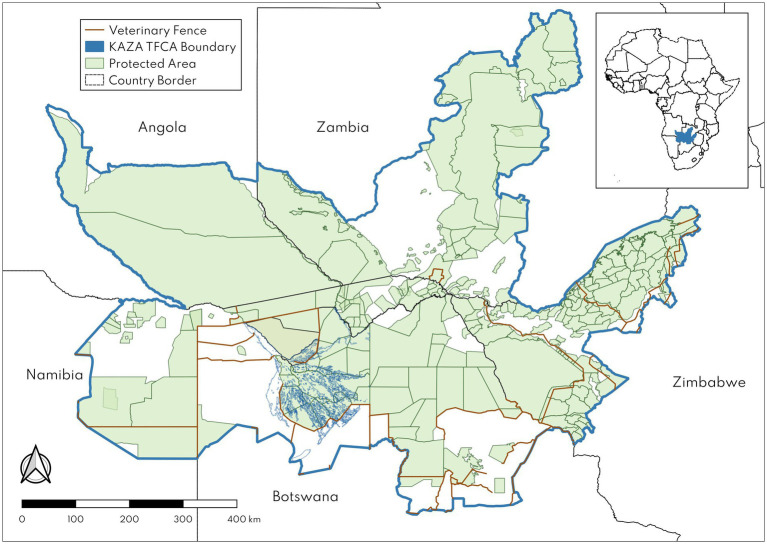 Figure 1
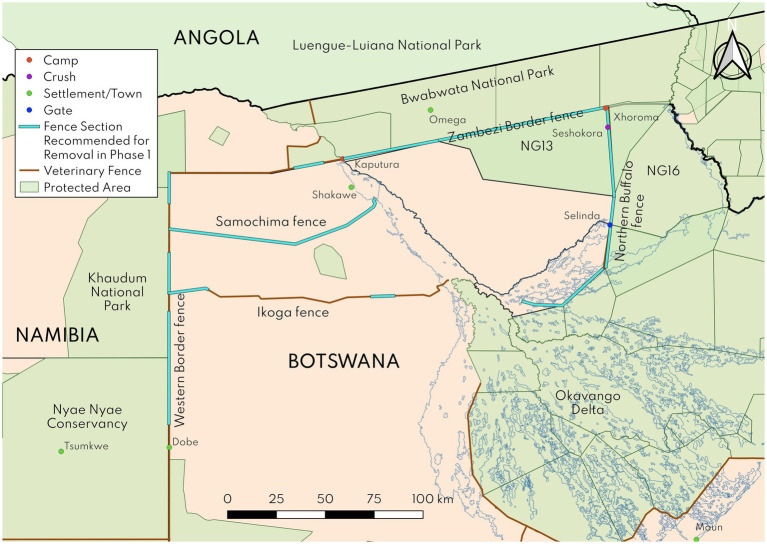 Figure 2
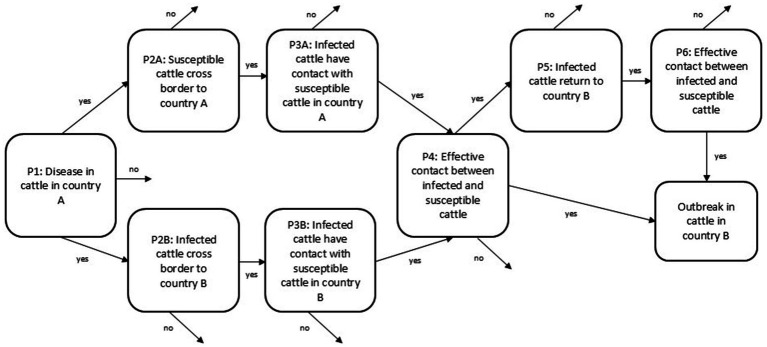 Figure 3
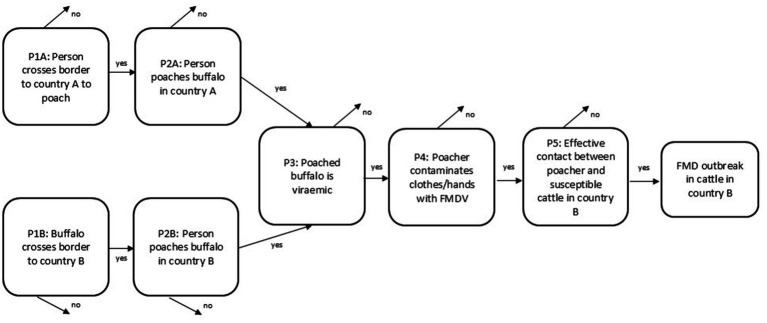 Figure 4
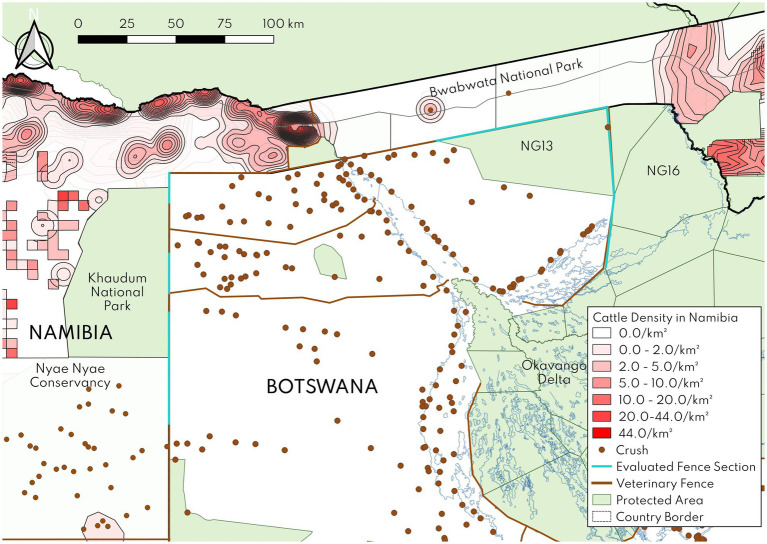 Figure 5
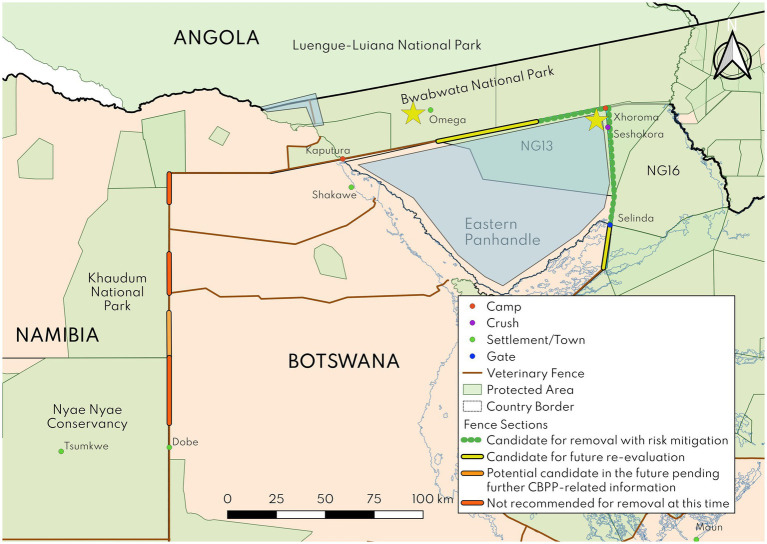 Figure 6
Peer Reviews
No public reviews on file for this paper yet. If you reviewed it on a platform where reviews are public (OpenReview, ICLR, NeurIPS, ICML), you can paste yours below so the community can read it here.
Videos
No videos yet. Explain this paper in a talk, walkthrough, or lecture? Add one.
Taxonomy
TopicsAnimal Disease Management and Epidemiology · Zoonotic diseases and public health · Viral Infections and Vectors