Inverse design of frustrated Lewis pairs for direct catalytic CO2 hydrogenation: refining and expanding design rules
Shubhajit Das, Ruben Laplaza, Thanapat Worakul, Clémence Corminboeuf

TL;DR
This paper uses genetic algorithms to optimize FLP catalysts for CO2 hydrogenation, refining design rules and discovering new active motifs.
Contribution
A genetic algorithm workflow is introduced to refine and expand FLP design principles for CO2 hydrogenation.
Findings
Top FLP candidates for CO2 hydrogenation were identified using a genetic algorithm and activity maps.
New active FLP motifs were discovered that were not previously reported.
Design principles for FLPs were refined and extended based on the analysis of Pareto fronts.
Abstract
Frustrated Lewis pairs (FLPs), composed of reactive combinations of Lewis acids (LAs) and bases (LBs) offer a metal-free platform for catalyzing a wide range of chemical transformations. Designing the optimal FLP active site for a particular chemical reaction is a challenging task due to the lack of rigorous principles and countless chemical possibilities. We recently designed principles, which outline the relative disposition (i.e., distance and angle) and chemical composition of the LA and LB centers that maximize activity in B- and N-based FLPs. These criteria were already used to screen 25 000 FLP active sites built on N-containing linkers extracted from the CoRE MOF dataset, but in such an enormous multifunctional catalyst space, inverse design approaches provide a more efficient mean to explore all possible combinations. Here, we use the NaviCatGA genetic algorithm to…
Genes, proteins, chemicals, diseases, species, mutations and cell lines named across the full text — each resolved to its canonical identifier and authoritative record.
Click any figure to enlarge with its caption.
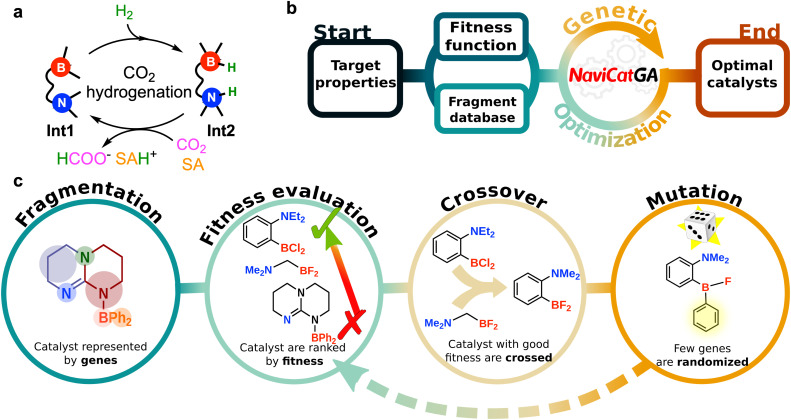 Figure 1
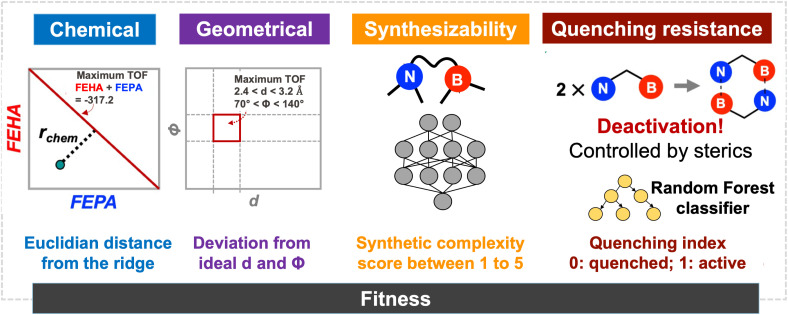 Figure 2
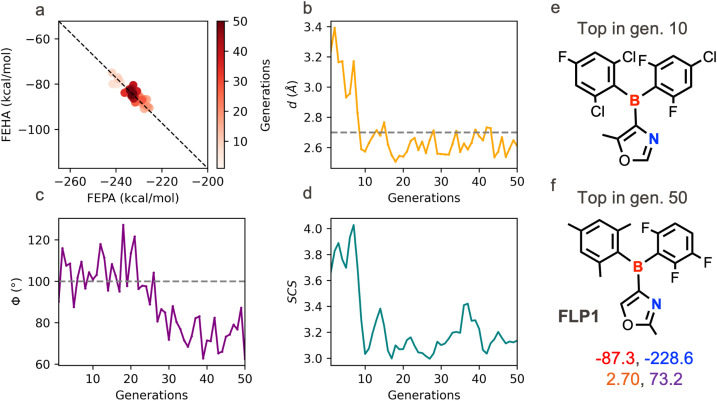 Figure 3
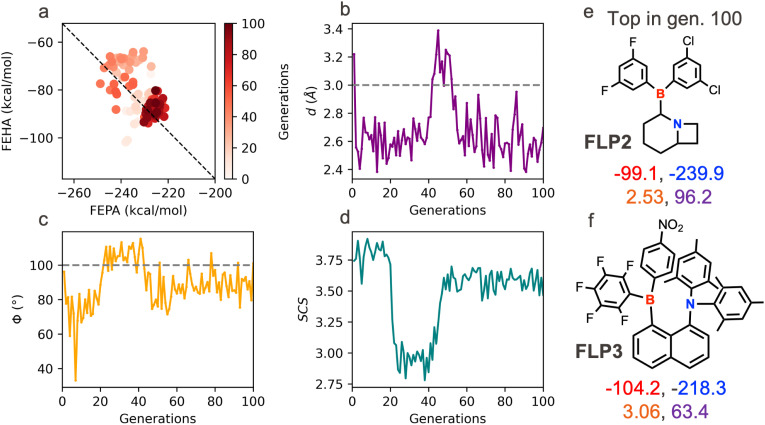 Figure 4
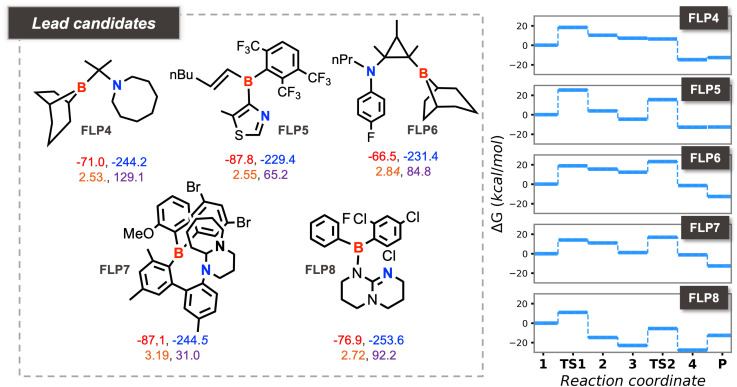 Figure 5
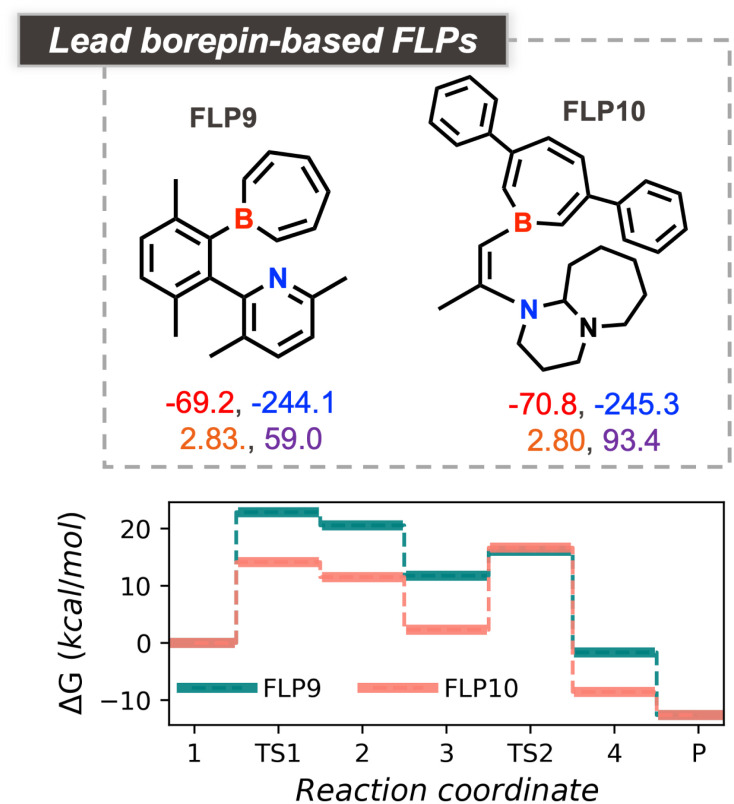 Figure 6
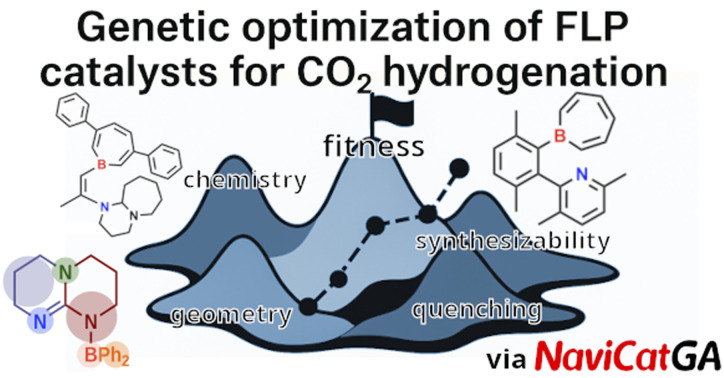 Figure 7
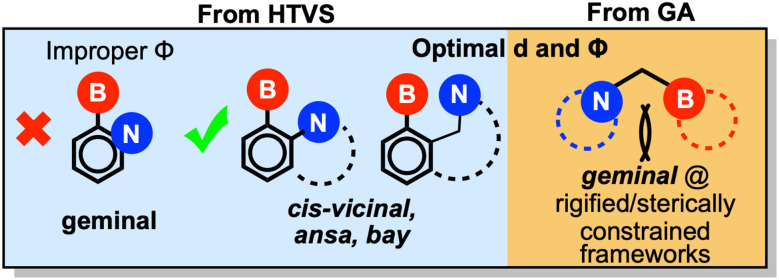 Figure 8
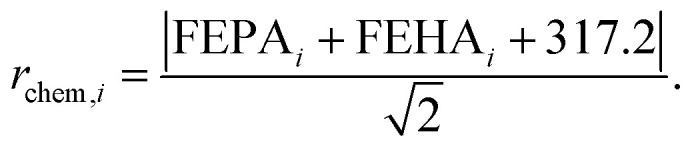 Figure 9
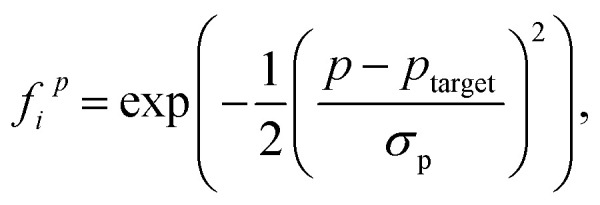 Figure 10
Peer Reviews
No public reviews on file for this paper yet. If you reviewed it on a platform where reviews are public (OpenReview, ICLR, NeurIPS, ICML), you can paste yours below so the community can read it here.
Videos
No videos yet. Explain this paper in a talk, walkthrough, or lecture? Add one.
Taxonomy
TopicsOrganoboron and organosilicon chemistry · Carbon dioxide utilization in catalysis · N-Heterocyclic Carbenes in Organic and Inorganic Chemistry