Enzymatic Metal–Hydrogen Atom Transfer with a Cobalt Protoporphyrin Cofactor
Carly L. Masonheimer, Michael J. Rourke, Reece S. Gardner, Ryan L. Hall, Lydia J. Perkins, Thomas C. Brunold, Andrew R. Buller

TL;DR
Researchers introduced a non-natural cobalt cofactor into an enzyme to enable a new type of chemical reaction called metal–hydrogen atom transfer, which could expand the range of biochemical transformations.
Contribution
The study demonstrates the first enzymatic metal–hydrogen atom transfer using a cobalt hydride intermediate in a P450 enzyme.
Findings
Directed evolution produced 80 active site variants of CYP119 capable of catalyzing MHAT.
Some enzyme variants unexpectedly reduced aromatic rings via radical-mediated reductive dearomatization.
The MHAT reactivity was shown to occur efficiently under aerobic conditions on specific nitrophenyl ethers.
Abstract
Introduction of unnatural cofactors in biocatalysis may open the door to new reactive enzymatic intermediates, and in turn, new biochemical reactions. Here, we employed a de novo biosynthesized, non-natural cofactor, cobalt protoporphyrin IX (CoPPIX), to generate a mononuclear cobalt hydride in the active site of CYP119, a model P450 enzyme. We show that this cobalt hydride intermediate engages in metal–hydrogen atom transfer (MHAT) reactivity, a well-studied and highly utilized reactivity pattern in synthetic chemistry, but which is not known to operate in Nature. We paired convenient in vivo CoPPIX biosynthesis with a colorimetric screen to enable rapid directed evolution. Thus, we engineered CYP119 for MHAT-mediated deallylation of nitrophenols, with the goal of generating not one prolific catalysis, but a diverse set of MHAT-compatible enzymes. Because many silanes hydrolyze…
Genes, proteins, chemicals, diseases, species, mutations and cell lines named across the full text — each resolved to its canonical identifier and authoritative record.
Click any figure to enlarge with its caption.
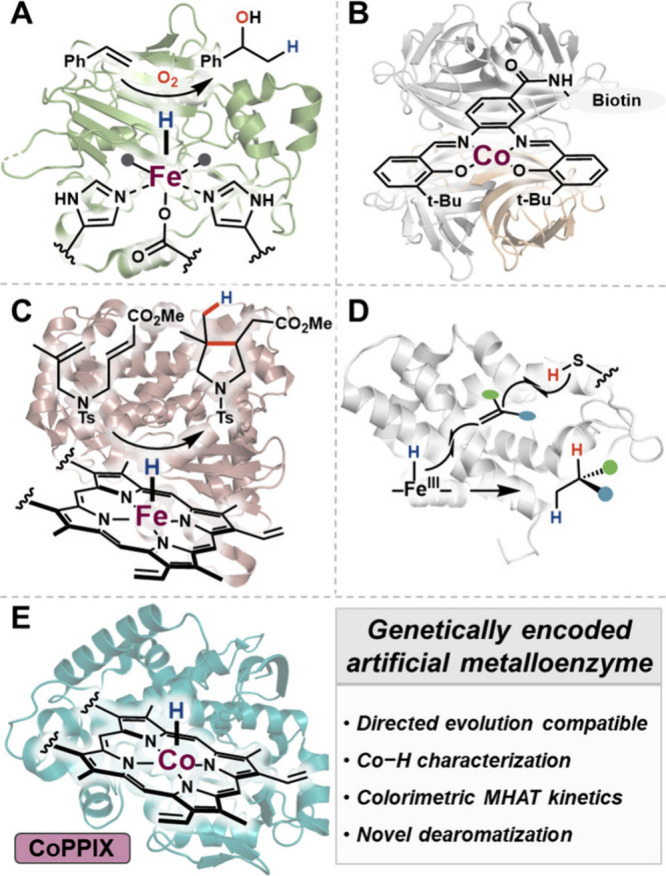 Figure 1
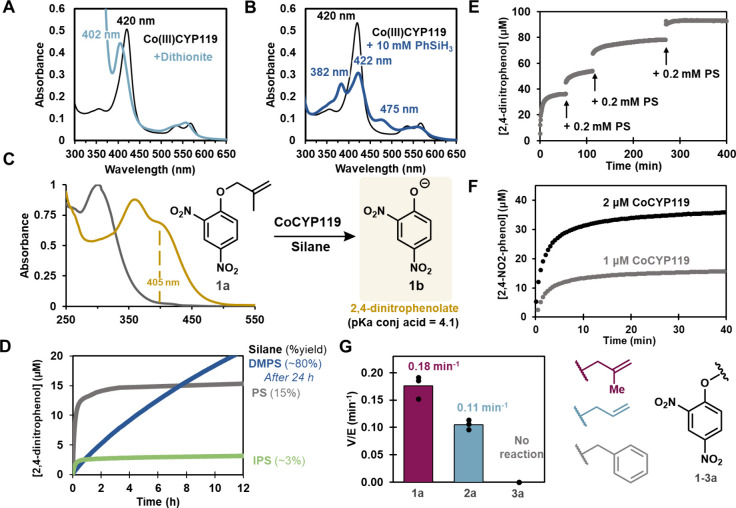 Figure 2
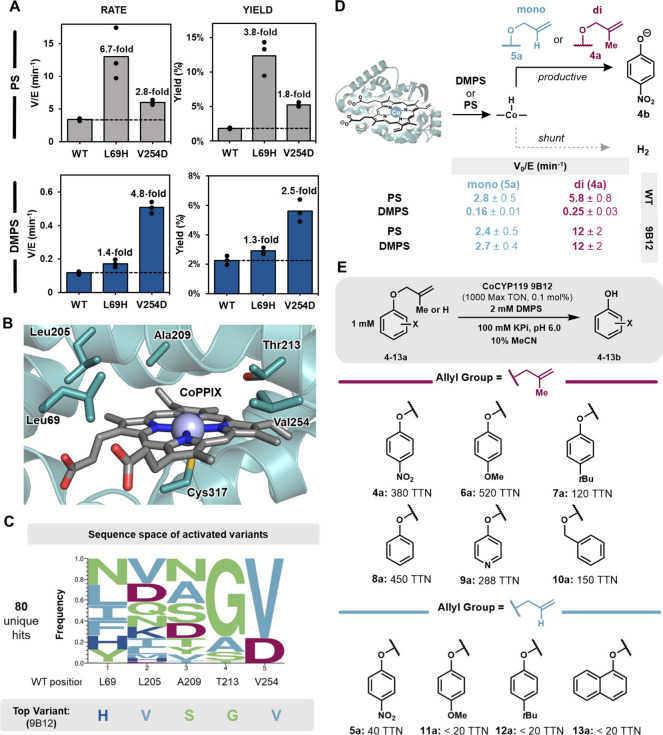 Figure 3
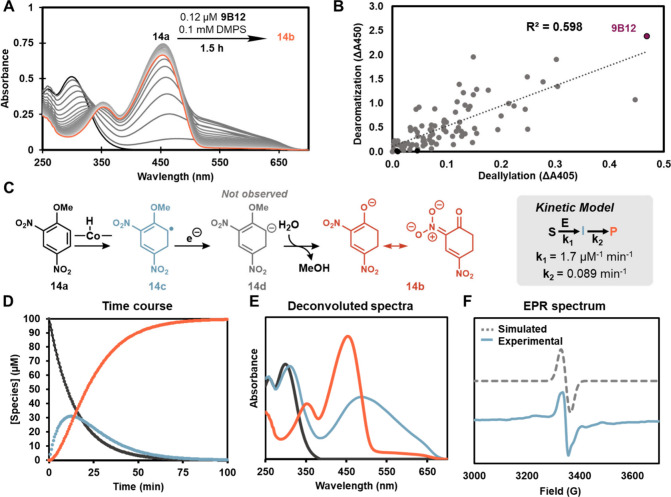 Figure 4
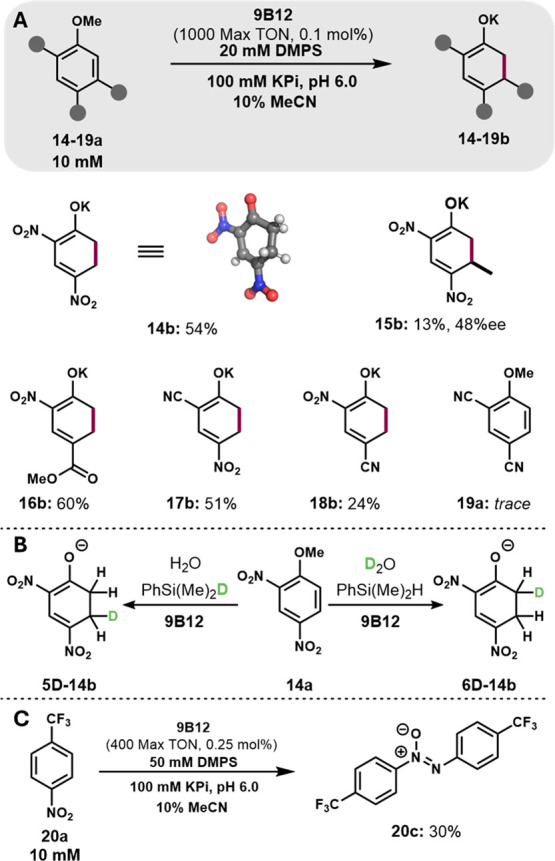 Figure 5
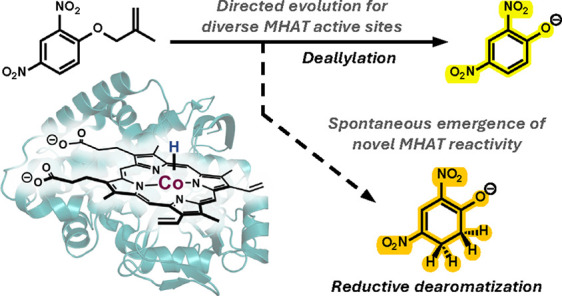 Figure 6
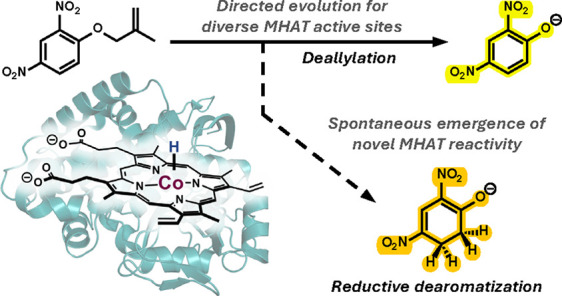 Figure 7
Peer Reviews
No public reviews on file for this paper yet. If you reviewed it on a platform where reviews are public (OpenReview, ICLR, NeurIPS, ICML), you can paste yours below so the community can read it here.
Videos
No videos yet. Explain this paper in a talk, walkthrough, or lecture? Add one.
Taxonomy
TopicsCyclopropane Reaction Mechanisms · Metal-Catalyzed Oxygenation Mechanisms · Enzyme Catalysis and Immobilization