De Novo Design of Glycan Foldamers with Programmable Tertiary Structure
Yadiel Vázquez-Mena, Nishu Yadav, Martin Rosenthal, Yu Ogawa, Martina Delbianco

TL;DR
Scientists designed glycans that can form rigid 3D structures, showing glycans can be programmed for specific shapes and functions.
Contribution
First de novo design of glycans with programmable tertiary structures using first-principles and experimental validation.
Findings
A rigid trisaccharide turn unit directs backbone directionality into antiparallel geometry.
Combining the turn unit with cellulose-like strands forms stable sheet-like tertiary structures.
SAXS and NMR confirmed the designed glycans adopt rigid 3D conformations in solution.
Abstract
De novo molecular design has yielded proteins and peptides with structures and functions beyond those found in nature. Despite the potential for glycans to form a broader scope of well-defined tertiary architectures, owing to the numerous conjugation sites and stereocenters, no one has yet built glycans with targeted structures and functions from scratch. Here, we designed glycan sequences that fold into programmable 3D architectures. Starting from first-principles, we create a linear glycan that spontaneously adopts a rigid tertiary structure not reported for natural glycans. Considering stereochemical and spatial orientation, we identify a rigid trisaccharide turn unit that programs backbone directionality, driving folding into antiparallel geometry. The combination of this turn unit with multiple cellulose-like strands completes our design, stabilizing a tertiary sheet-like folding,…
Genes, proteins, chemicals, diseases, species, mutations and cell lines named across the full text — each resolved to its canonical identifier and authoritative record.
Click any figure to enlarge with its caption.
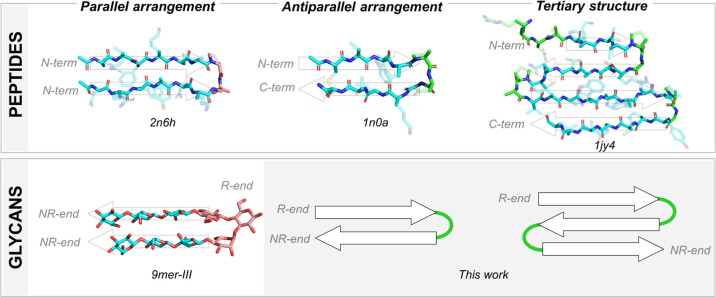 Figure 1
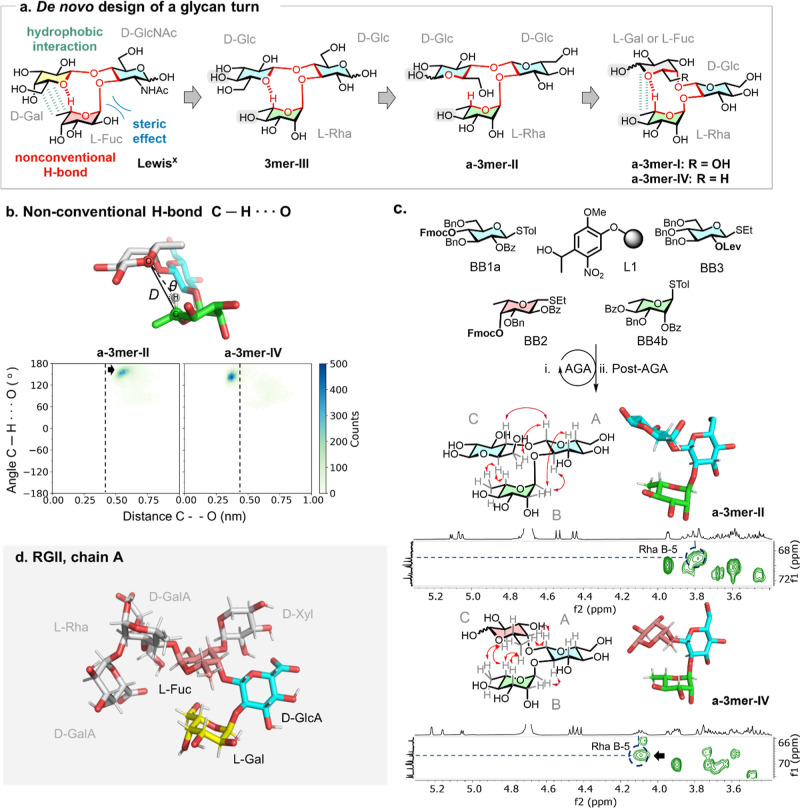 Figure 2
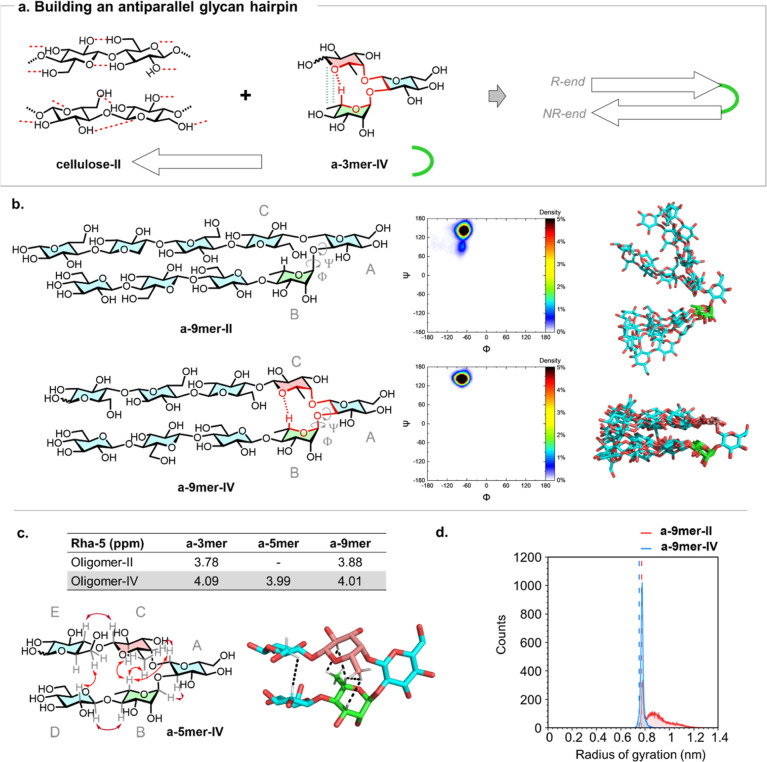 Figure 3
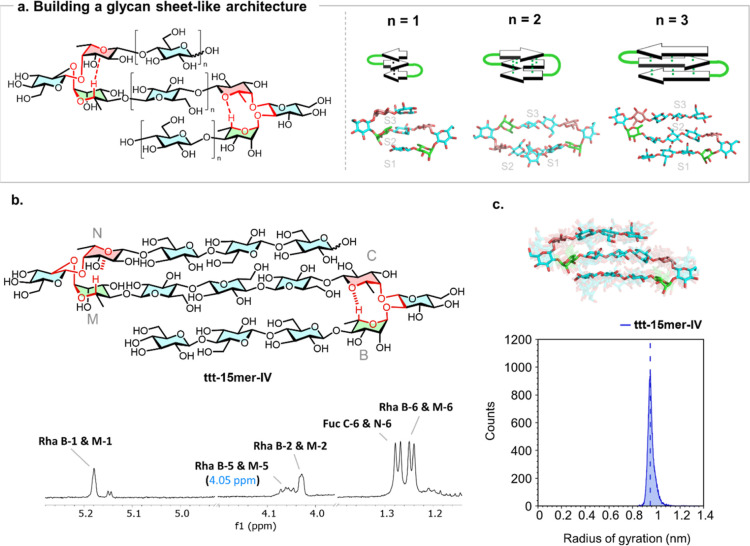 Figure 4
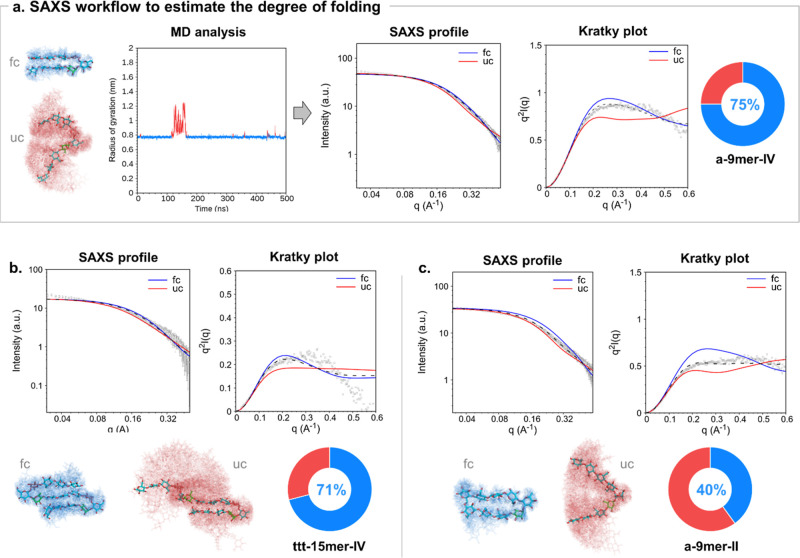 Figure 5
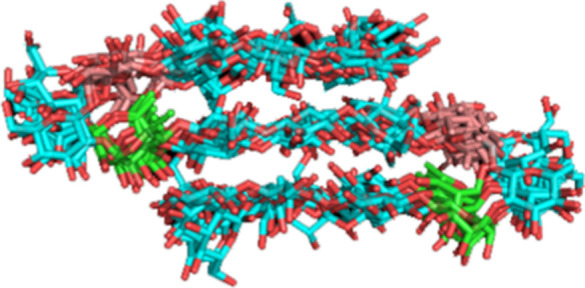 Figure 6
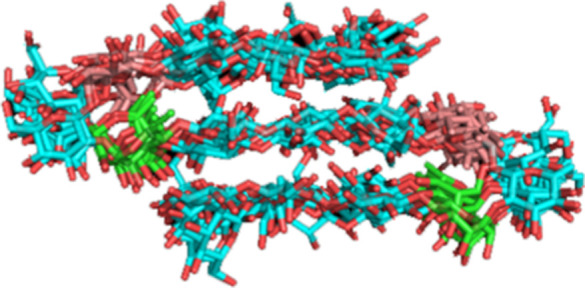 Figure 7
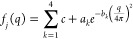 Figure 8
Peer Reviews
No public reviews on file for this paper yet. If you reviewed it on a platform where reviews are public (OpenReview, ICLR, NeurIPS, ICML), you can paste yours below so the community can read it here.
Videos
No videos yet. Explain this paper in a talk, walkthrough, or lecture? Add one.
Taxonomy
TopicsSupramolecular Self-Assembly in Materials · Carbohydrate Chemistry and Synthesis · Glycosylation and Glycoproteins Research