Modulation of the 14-3-3σ/C-RAF “Auto”inhibited Complex by Molecular Glues
Markella Konstantinidou, Holly R. Vickery, Marloes A. M. Pennings, Johanna M. Virta, Shu Yue Luo, Emira J. Visser, Sean D. Bannier, Mrudula Srikanth, Sabine Z. Cismoski, Lucy C. Young, Maxime C. M. van den Oetelaar, Frank McCormick, Christian Ottmann, Luc Brunsveld

TL;DR
Scientists designed molecular glues that stabilize a protein complex involved in cancer and developmental disorders, offering new drug discovery opportunities.
Contribution
A fragment-merging approach was used to design molecular glues that stabilize the 14-3-3/C-RAFpS259 complex with high selectivity and efficacy.
Findings
Molecular glues stabilized the 14-3-3/C-RAFpS259 complex up to 300-fold.
Compounds showed excellent selectivity among 80 14-3-3 clients and reduced RAF dimerization and ERK phosphorylation in cells.
The glues enabled chemical biology studies of an intrinsically disordered C-RAF site previously untargeted.
Abstract
Molecular glues, compounds that bind cooperatively at protein–protein interfaces (PPIs), are revolutionizing chemical biology and drug discovery, allowing the modulation of traditional “undruggable” targets. Here, we focus on a native regulatory PPI between the scaffolding protein 14-3-3 and C-RAF, a key component of the MAPK signaling pathway. Extensive drug discovery efforts have focused on the MAPK pathway due to its central role in oncology and developmental disorders (RASopathies). However, the modulation of its protein complexes is underexplored. C-RAF activity is regulated on multiple levels including dimerization, phosphorylation, and complex formation with 14-3-3, which prevents C-RAF activation by binding to a C-RAF sequence centered on phospho-serine 259. We used a fragment-merging approach to design molecular glues that bound to the composite surface of this…
Genes, proteins, chemicals, diseases, species, mutations and cell lines named across the full text — each resolved to its canonical identifier and authoritative record.
Click any figure to enlarge with its caption.
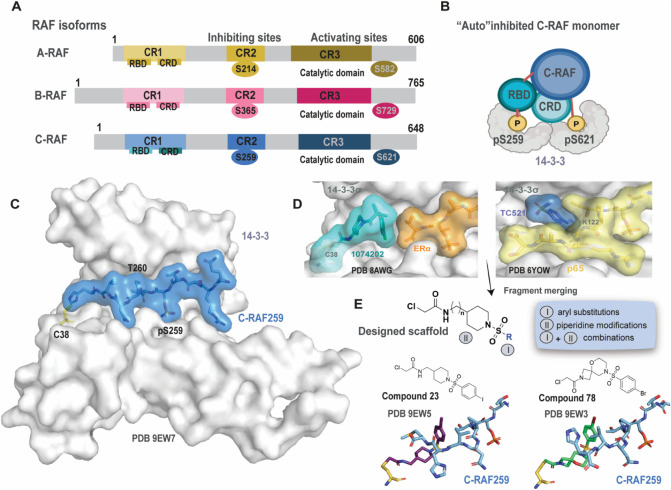 Figure 1
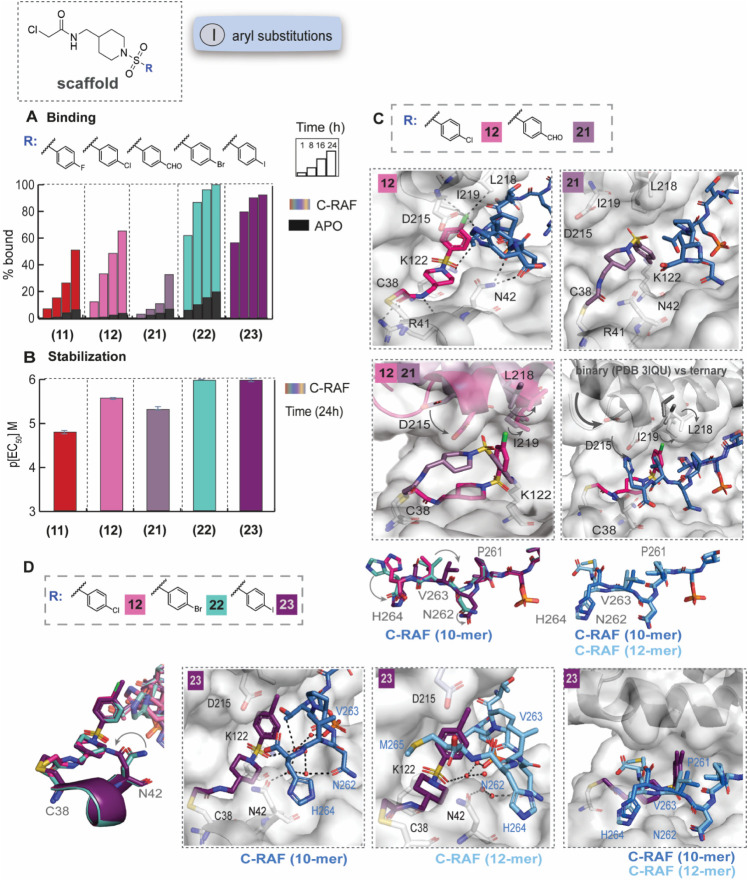 Figure 2
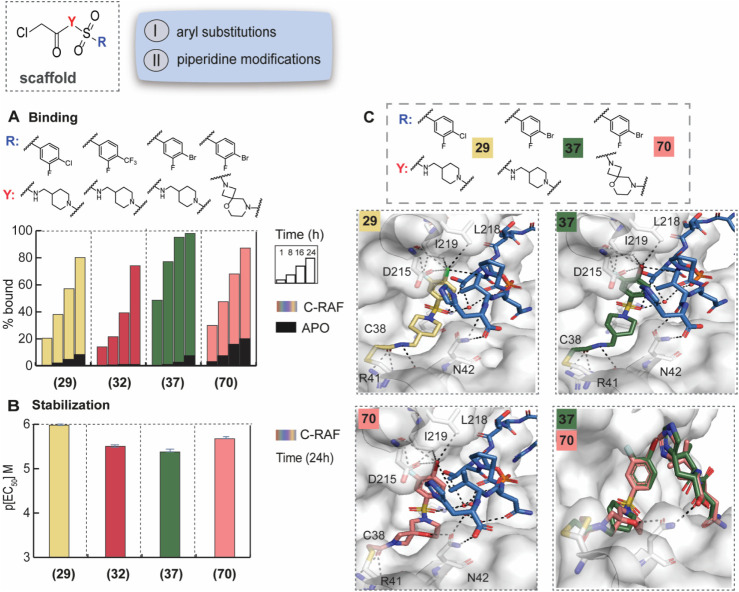 Figure 3
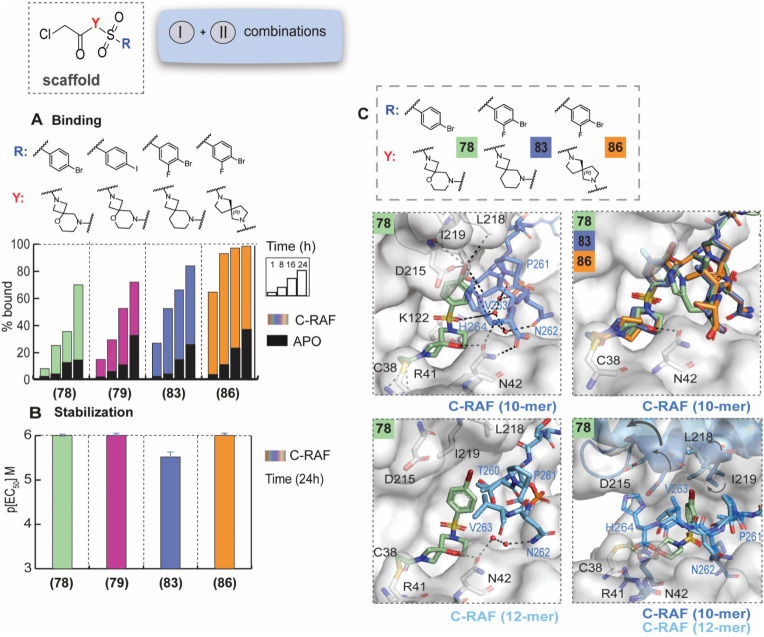 Figure 4
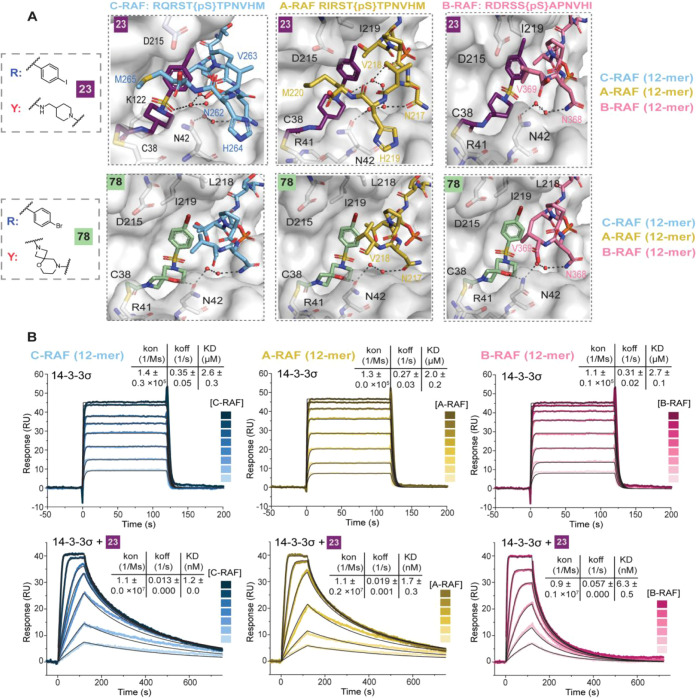 Figure 5
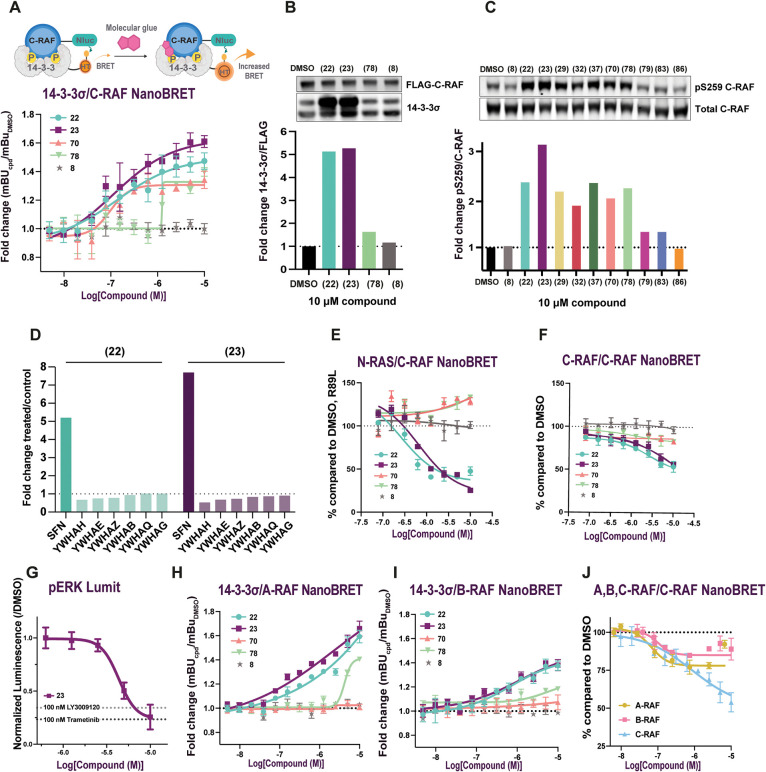 Figure 6
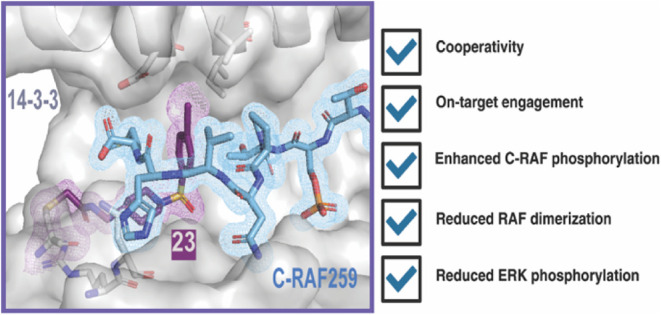 Figure 7
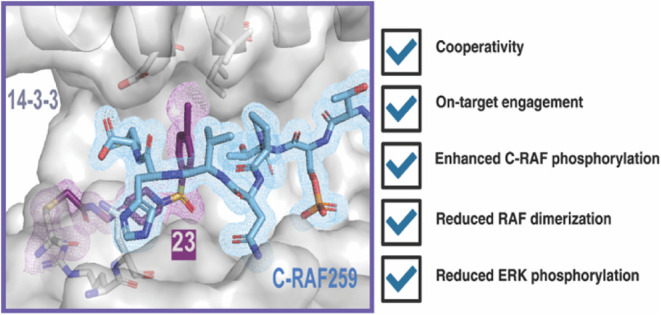 Figure 8
Peer Reviews
No public reviews on file for this paper yet. If you reviewed it on a platform where reviews are public (OpenReview, ICLR, NeurIPS, ICML), you can paste yours below so the community can read it here.
Videos
No videos yet. Explain this paper in a talk, walkthrough, or lecture? Add one.
Taxonomy
Topics14-3-3 protein interactions · Protein Tyrosine Phosphatases · Microtubule and mitosis dynamics