Atomistic Insights into Anomeric and Stereochemical Effects on Glucose Transport by GLUTs
Brian Wiley, Leonardo Cirqueira, Richard J. Naftalin, Carmen Domene

TL;DR
This study reveals how glucose transporters prefer different glucose forms, showing that their binding sites have complex interactions that affect transport rates.
Contribution
The study provides new mechanistic insights into the anomeric and stereochemical preferences of GLUT1 and GLUT3 for glucose transport.
Findings
GLUT3 residues prefer α-d-glucose in extracellular regions and β-d-glucose in inward-facing regions.
Anomeric stereoselectivity involves multiple extramembranous residues, not just the central binding site.
Allosteric interactions contribute to cooperative transport behavior in mixed glucose simulations.
Abstract
Although β-glucose is more abundant than α-glucose in aqueous solution, GLUT3 preferentially binds α-glucose due to favorable interactions and conformational complementarity within the protein binding site. This study explores the anomeric preferences of glucose transporters GLUT1 and GLUT3 for α- and β-glucose using classical MD, providing mechanistic insight into previously reported differences in anomer-specific transport rates during net influx, efflux, and exchange flux, as well as asymmetric binding of glucose anomer derivatives. Analysis of hydrogen-bonding frequencies between glucose anomers and transporter residues, combined with root mean squared fluctuations (RMSF) of these residues during flooding simulations, using either mixed α/β-glucose trajectories or single-anomer trajectories, reveals distinct residue preferences along the transport pathway. GLUT3 residues exposed to…
Genes, proteins, chemicals, diseases, species, mutations and cell lines named across the full text — each resolved to its canonical identifier and authoritative record.
Click any figure to enlarge with its caption.
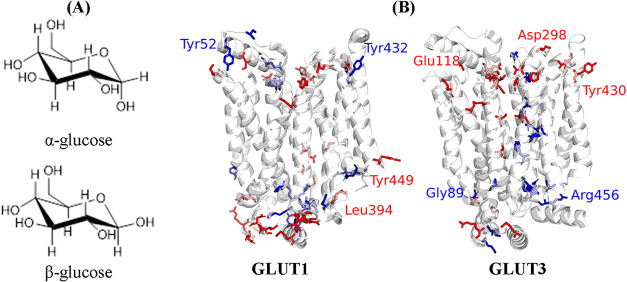 Figure 1
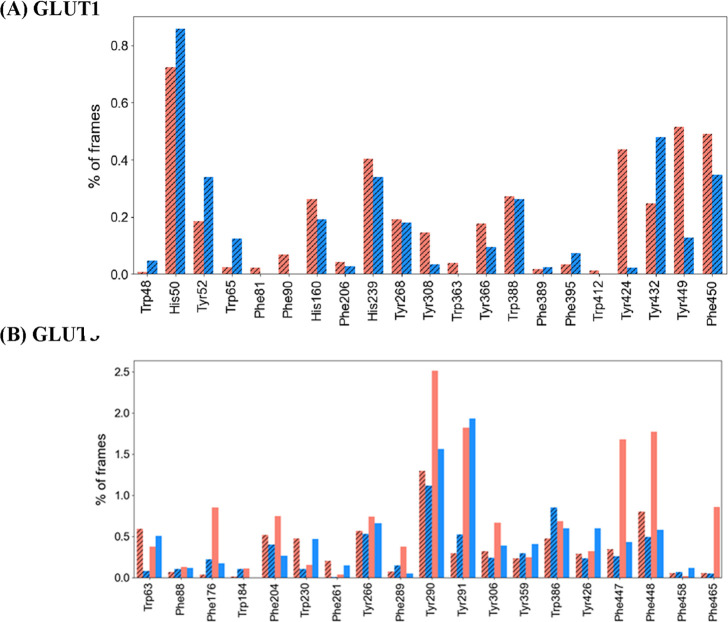 Figure 2
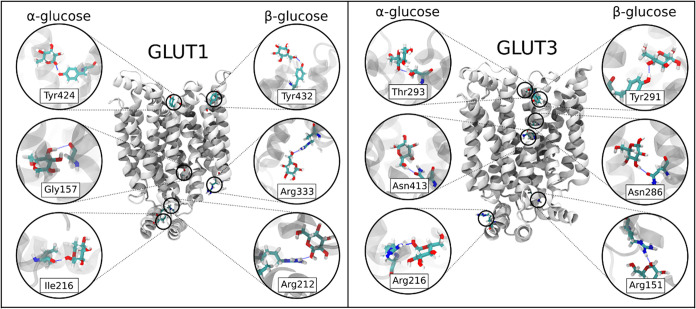 Figure 3
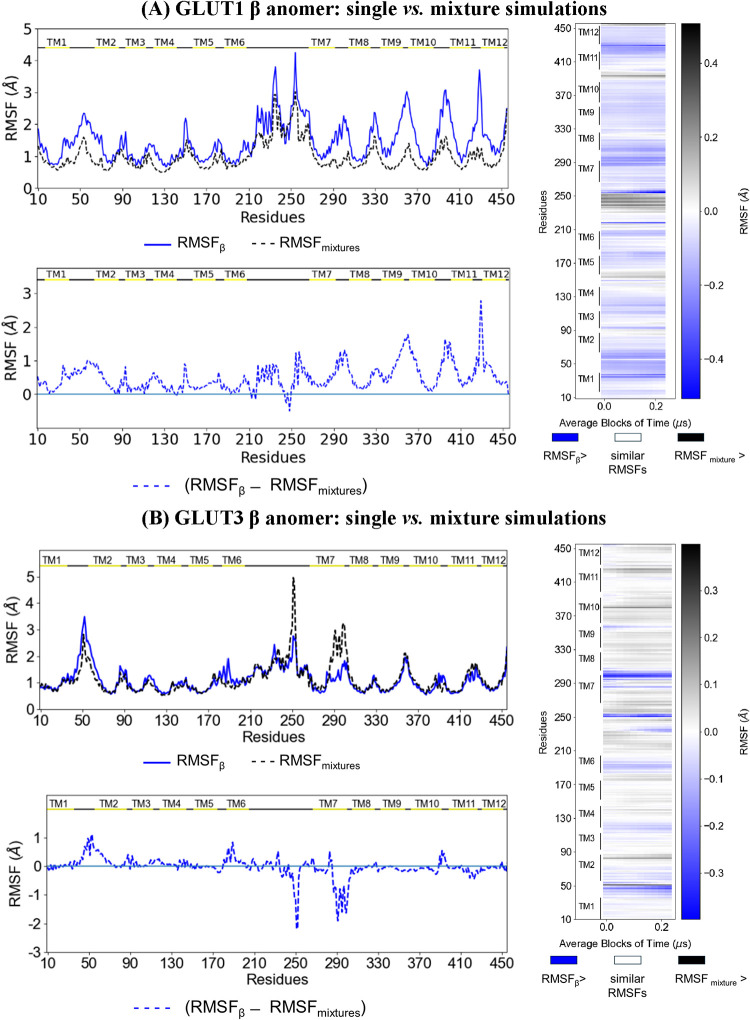 Figure 4
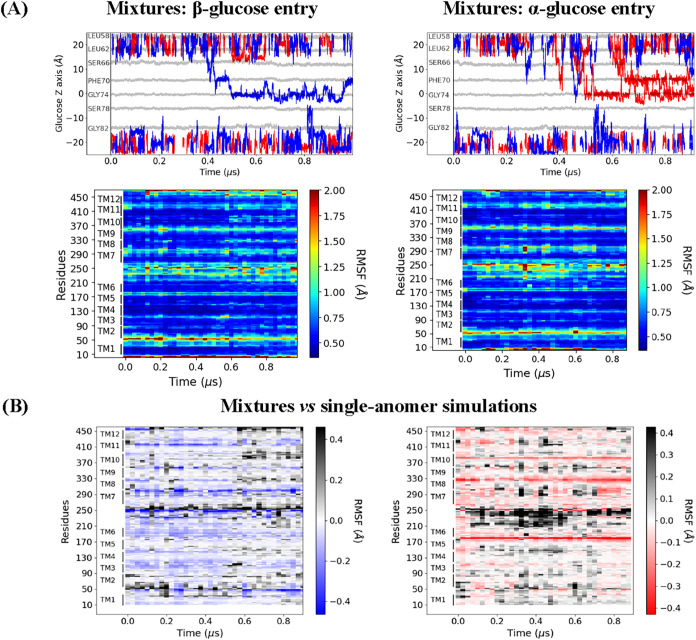 Figure 5
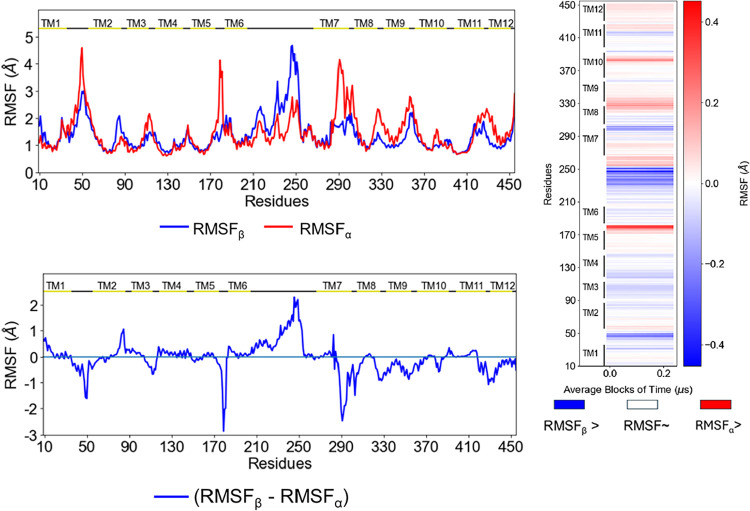 Figure 6
 Figure 7
 Figure 8
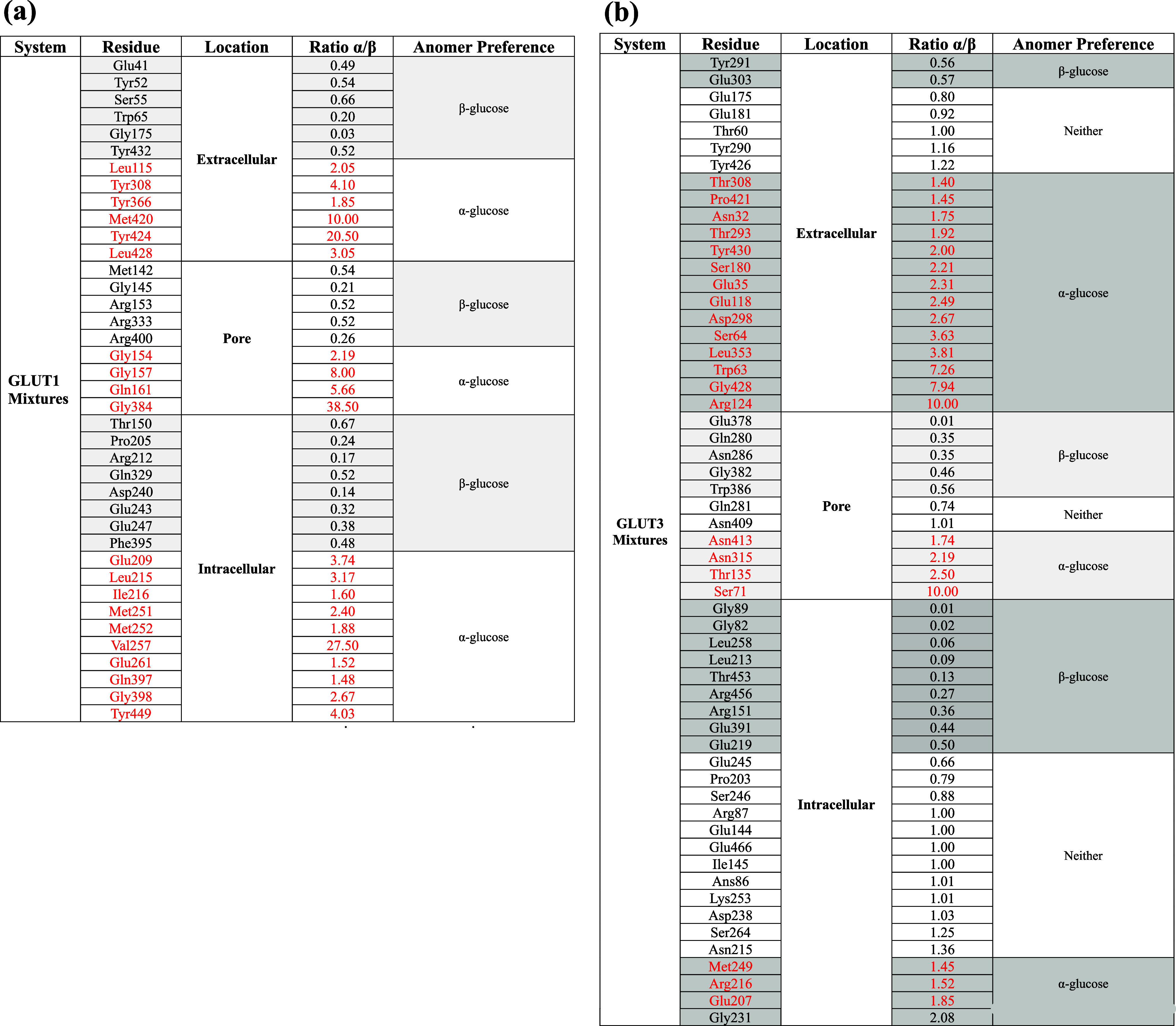 Figure 9
Peer Reviews
No public reviews on file for this paper yet. If you reviewed it on a platform where reviews are public (OpenReview, ICLR, NeurIPS, ICML), you can paste yours below so the community can read it here.
Videos
No videos yet. Explain this paper in a talk, walkthrough, or lecture? Add one.
Taxonomy
TopicsMetabolism, Diabetes, and Cancer · Diabetes Treatment and Management · Pancreatic function and diabetes