A prospective randomized crossover trial investigating melatonin versus sleep deprivation for sleep induction in nap electroencephalography
Valentina De Giorgis, Costanza Varesio, Massimiliano Celario, Carlo Alberto Quaranta, Francesca Ferraro, Ludovica Pasca, Guido Fedele, Grazia Papalia, Michela Palmisani, Cinzia Fattore, Paola Rota, Valentina Franco

TL;DR
This study compares melatonin and sleep deprivation for inducing sleep during EEGs in children with epilepsy, finding melatonin to be a safe and effective alternative.
Contribution
The study demonstrates that melatonin is non-inferior to sleep deprivation for sleep induction in pediatric EEGs with a favorable tolerability profile.
Findings
Melatonin resulted in a mean sleep onset latency of 10.1 minutes, non-inferior to sleep deprivation's 8.5 minutes.
Melatonin was shown to be safe, effective, and well-tolerated in children with epilepsy.
Melatonin levels were adequately absorbed in the treated group, confirming its effectiveness.
Abstract
Electroencephalography (EEG) plays a fundamental role in the diagnosis and classification of epilepsy, and inducing sleep during EEG can improve patient cooperation and enhance the detection of epileptiform activity. Despite its importance, there is currently no standardized approach for sleep induction in pediatric EEG recordings. Consequently, practices such as melatonin administration and sleep deprivation are commonly utilized. This study aimed to compare the effectiveness of 5 mg melatonin versus partial sleep deprivation in inducing sleep during nap‐time EEGs in children with epilepsy. A randomized crossover trial was conducted involving 33 participants (mean age 14.5 years), each undergoing EEG following either melatonin administration or partial sleep deprivation. In the melatonin arm, participants received an oral dose 30 min before the recording, while in the sleep…
Genes, proteins, chemicals, diseases, species, mutations and cell lines named across the full text — each resolved to its canonical identifier and authoritative record.
Click any figure to enlarge with its caption.
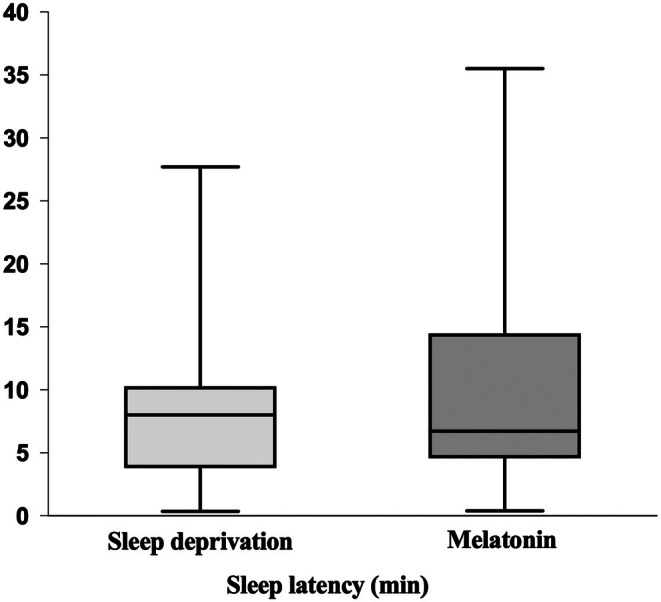 Figure 1
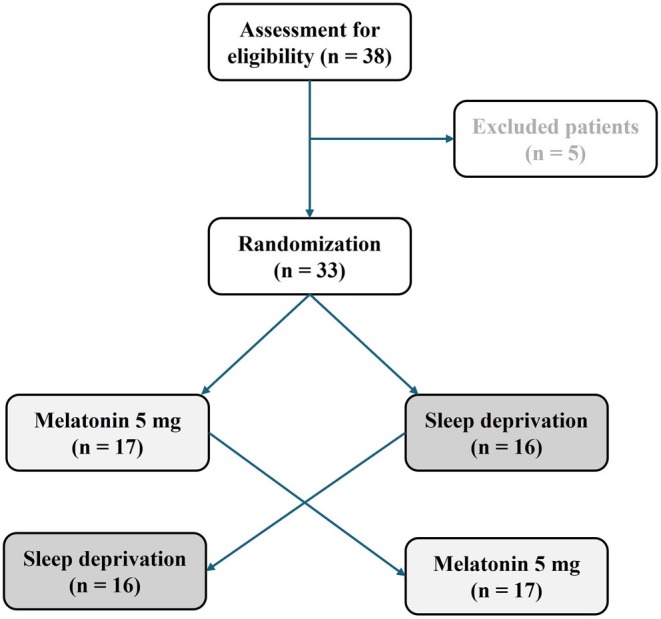 Figure 2
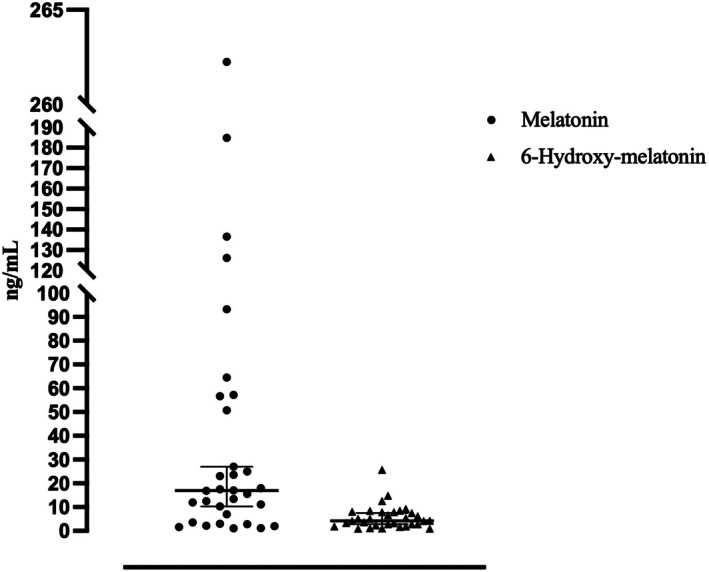 Figure 3
Peer Reviews
No public reviews on file for this paper yet. If you reviewed it on a platform where reviews are public (OpenReview, ICLR, NeurIPS, ICML), you can paste yours below so the community can read it here.
Videos
No videos yet. Explain this paper in a talk, walkthrough, or lecture? Add one.
Taxonomy
TopicsSleep and Wakefulness Research · Sleep and related disorders · EEG and Brain-Computer Interfaces