The importance of comprehensive diagnostic work-up and genetic testing to reveal Andersen–Tawil syndrome—a case report
Dorte Stavnem, Priya Bhardwaj, Jacob Tfelt-Hansen, Carl Johann Hansen, Bo Gregers Winkel

TL;DR
A case report shows how genetic testing helped diagnose a rare syndrome after a cardiac arrest, highlighting the importance of thorough diagnostics.
Contribution
Highlights the critical role of genetic testing in diagnosing Andersen–Tawil syndrome despite non-specific clinical presentations.
Findings
Genetic testing confirmed Andersen–Tawil syndrome in a patient with cardiac arrest and ambiguous symptoms.
The case demonstrates the syndrome's variable presentation and the need for comprehensive diagnostic work-up.
Pharmacological management remains uncertain, with unclear efficacy of beta-blockers and flecainide.
Abstract
Andersen–Tawil syndrome is characterized by a symptom triad of cardiac electrical abnormalities, periodic muscular paralysis, and distinct dysmorphic manifestations. A history of unexplained syncope has been associated with a more serious phenotype with increased risk of life-threatening arrhythmia. Due to the syndrome’s rarity and highly variable clinical presentation, diagnosis remains challenging. This report highlights the importance of comprehensive diagnostic workup following a sudden cardiac arrest, particularly emphasizing the value of genetic testing. We present a 61-year-old male hypertensive patient who initially presented with a first-time syncopal episode. Initial investigations revealed ventricular ectopy exceeding 12 000 premature ventricular contractions, occasional QT prolongation of >500 ms, and mildly reduced left ventricular ejection fraction (50%). Outpatient…
Genes, proteins, chemicals, diseases, species, mutations and cell lines named across the full text — each resolved to its canonical identifier and authoritative record.
Click any figure to enlarge with its caption.
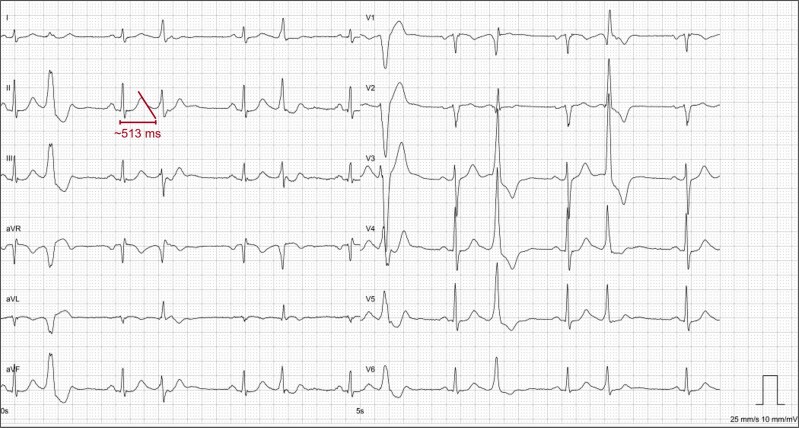 Figure 1
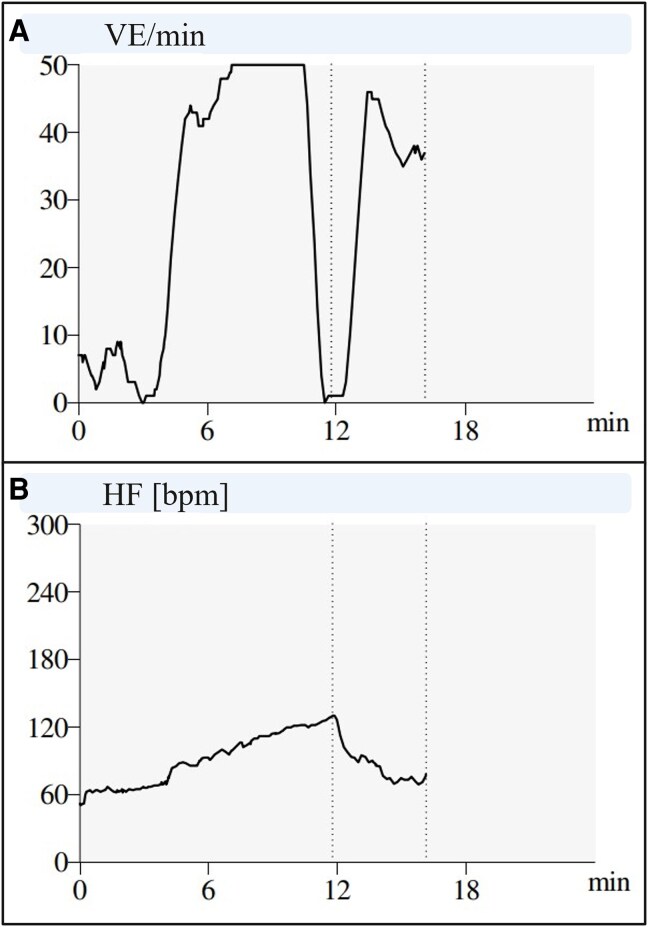 Figure 2
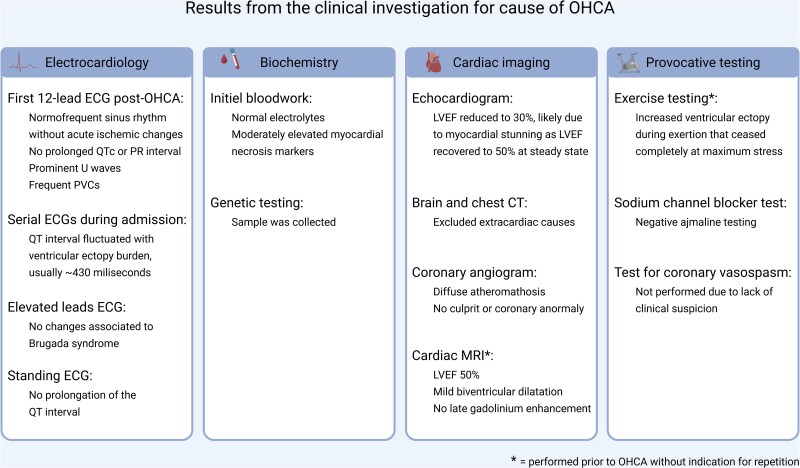 Figure 3
 Figure 4
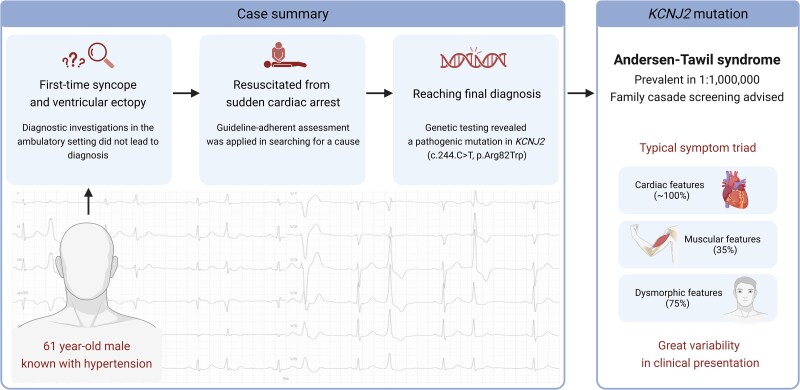 Figure 5
Peer Reviews
No public reviews on file for this paper yet. If you reviewed it on a platform where reviews are public (OpenReview, ICLR, NeurIPS, ICML), you can paste yours below so the community can read it here.
Videos
No videos yet. Explain this paper in a talk, walkthrough, or lecture? Add one.
Taxonomy
TopicsCardiac electrophysiology and arrhythmias · Cardiomyopathy and Myosin Studies · Cardiac Arrhythmias and Treatments