Neural mechanisms during role-playing in music psychodrama: an fNIRS Hyperscanning study
Ying Wang, Yueqing Zhang, Yuqin Jiang, Yuan Yao, Fupei Zhao, Zhen Zhang, Maoping Zheng

TL;DR
This study explores brain activity during music psychodrama role-playing and finds changes in brain regions linked to emotion and social interaction.
Contribution
The study is among the first to use fNIRS hyperscanning to investigate neural mechanisms during music psychodrama role-playing.
Findings
Music psychodrama role-playing reduced negative emotion scores compared to pre-intervention levels.
Role-playing increased brain activation in the right dorsolateral prefrontal cortex and right frontopolar area.
Inter-brain synchrony significantly increased in the right frontopolar area during role-playing.
Abstract
The mechanism of inter-brain synchrony (IBS) during role-playing in music psychodrama has received limited empirical attention. To address this gap, the present study employed functional near-infrared spectroscopy (fNIRS) hyperscanning to examine IBS in 46 participant pairs during music psychodrama role-playing. Behavioral results showed that negative emotion questionnaire scores were significantly lower following the intervention compared with pre-intervention levels. Neural results revealed that, relative to the resting state, music psychodrama role-playing significantly enhanced activation in the right dorsolateral prefrontal cortex (R-DLPFC) and the right frontopolar area (R-FT), and also produced a significant increase in IBS within the R-FT. These findings shed light on the neural mechanisms underlying role-playing in music psychodrama and provide empirical support for future…
Genes, proteins, chemicals, diseases, species, mutations and cell lines named across the full text — each resolved to its canonical identifier and authoritative record.
Click any figure to enlarge with its caption.
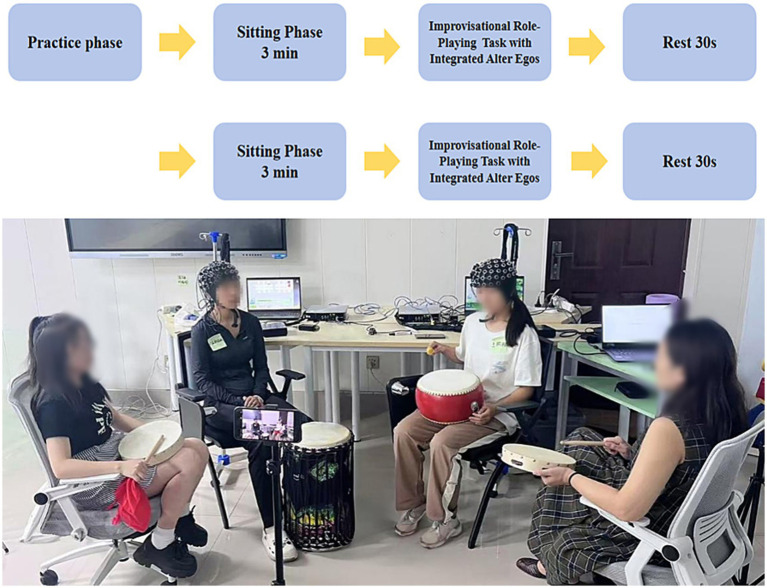 Figure 1
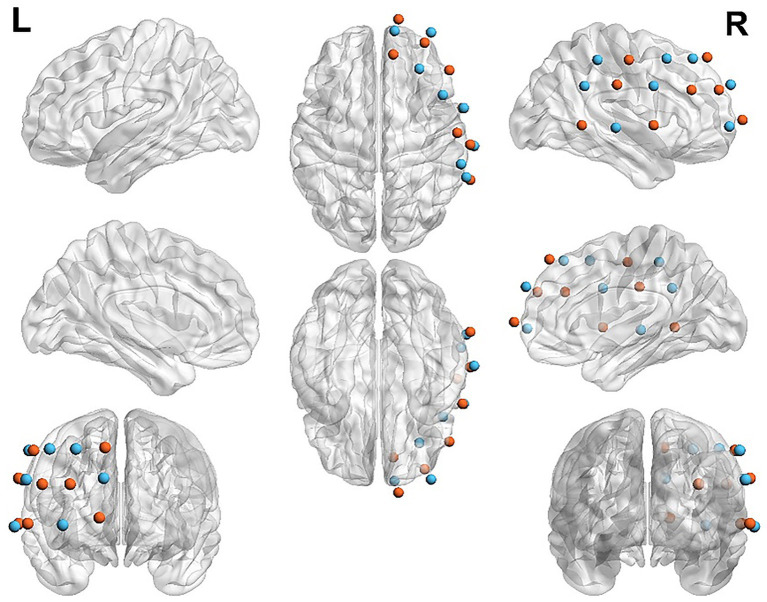 Figure 2
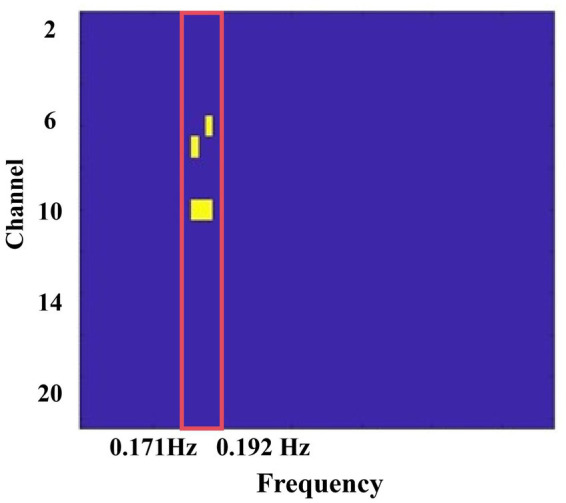 Figure 3
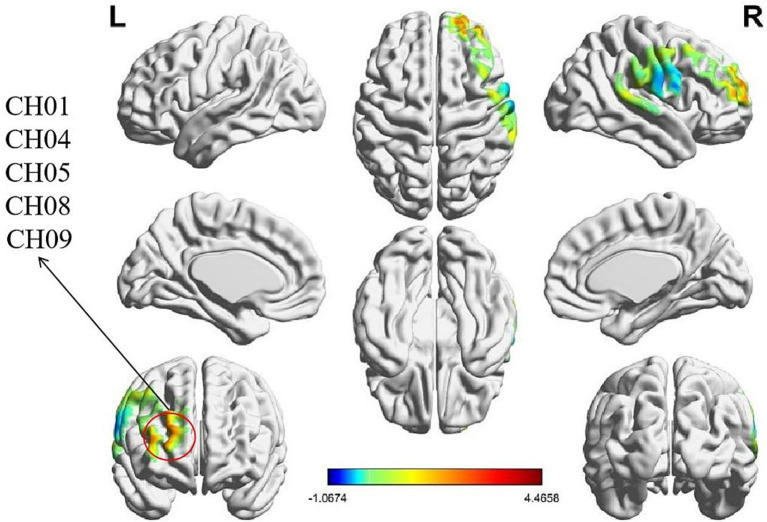 Figure 4
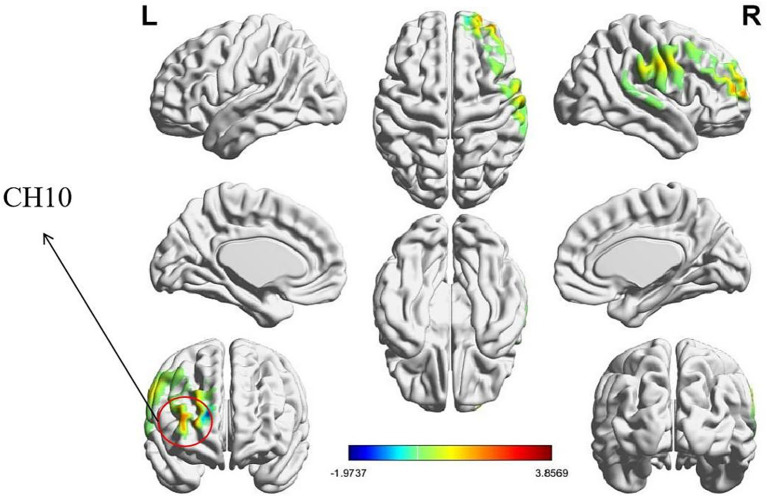 Figure 5
Peer Reviews
No public reviews on file for this paper yet. If you reviewed it on a platform where reviews are public (OpenReview, ICLR, NeurIPS, ICML), you can paste yours below so the community can read it here.
Videos
No videos yet. Explain this paper in a talk, walkthrough, or lecture? Add one.
Taxonomy
TopicsAction Observation and Synchronization · Neuroscience and Music Perception · Music Therapy and Health