New mitochondrial genomes of parasites belonging to the Leucocytozoon toddi and Haemoproteus nisi groups (Haemosporida, Apicomplexa)
Josef Harl, Tanja Himmel, M. Andreína Pacheco, Herbert Weissenböck

TL;DR
Researchers sequenced new mitochondrial genomes of two rare bird parasites, revealing insights into their evolutionary relationships.
Contribution
A new nested PCR method enabled sequencing of complete mitochondrial genomes from Haemoproteus nisi and Leucocytozoon toddi parasites.
Findings
Ten new lineages of Leucocytozoon toddi were identified in accipitriform raptors.
Phylogenetic analysis showed L. toddi lineages cluster within Leucocytozoon but not Haemoproteus monophyly.
The new PCR approach successfully sequenced genomes even in mixed infection samples.
Abstract
Avian haemosporidians are single-celled eukaryotic parasites of vertebrates that require dipteran vectors for transmission. The genera Plasmodium, Haemoproteus and Leucocytozoon currently comprise over 5000 parasite lineages based on a 478-bp section of the mitochondrial cytochrome b gene, which is the standard DNA barcode for avian haemosporidians. The mitochondrial genomes of apicomplexan parasites are highly condensed, with a length of approximately 6000 bp, containing three coding genes (cytochrome c oxidase subunit I, cytochrome c oxidase subunit III and cytochrome b) and dispersed fragments of the small and large ribosomal RNA (rRNA) genes. Since the mitochondrial genomes are relatively conserved, they are valuable markers for studying the phylogenetic relationships between haemosporidian parasites. However, until recently, mitochondrial genomes were unavailable for parasites of…
Genes, proteins, chemicals, diseases, species, mutations and cell lines named across the full text — each resolved to its canonical identifier and authoritative record.
Click any figure to enlarge with its caption.
 Figure 1
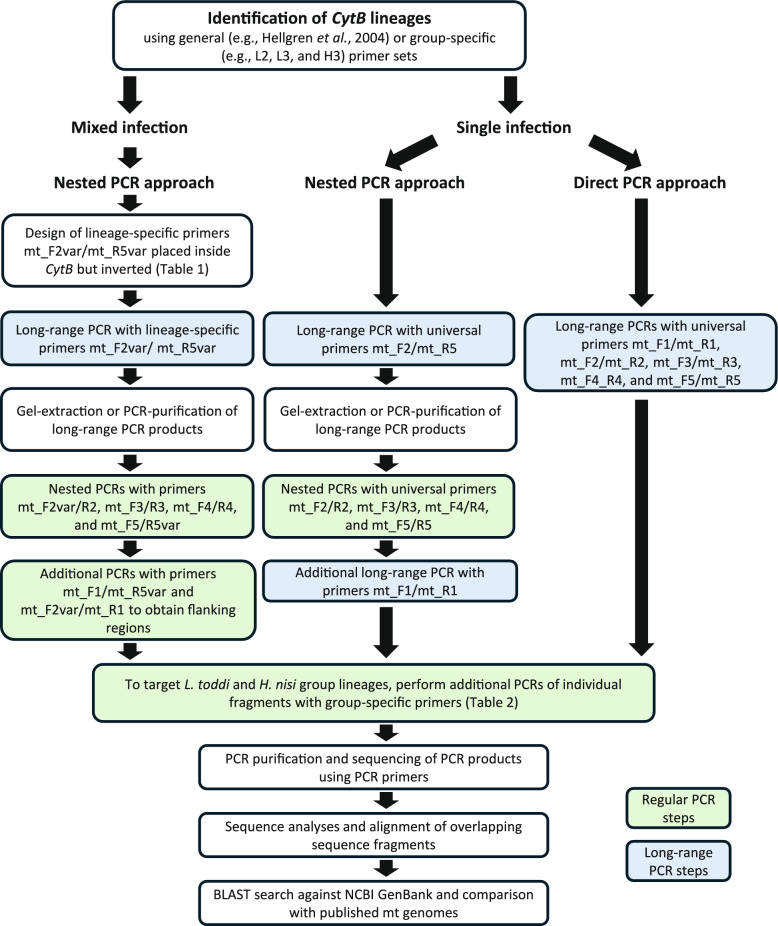 Figure 2
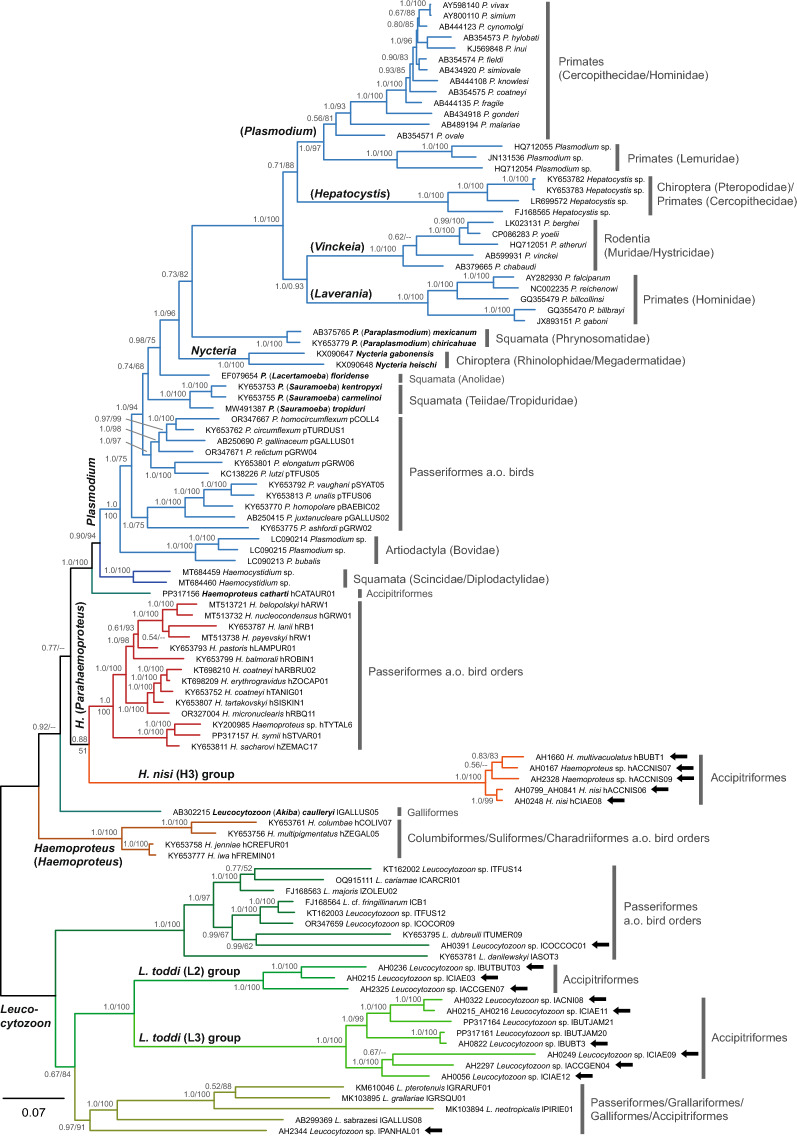 Figure 3
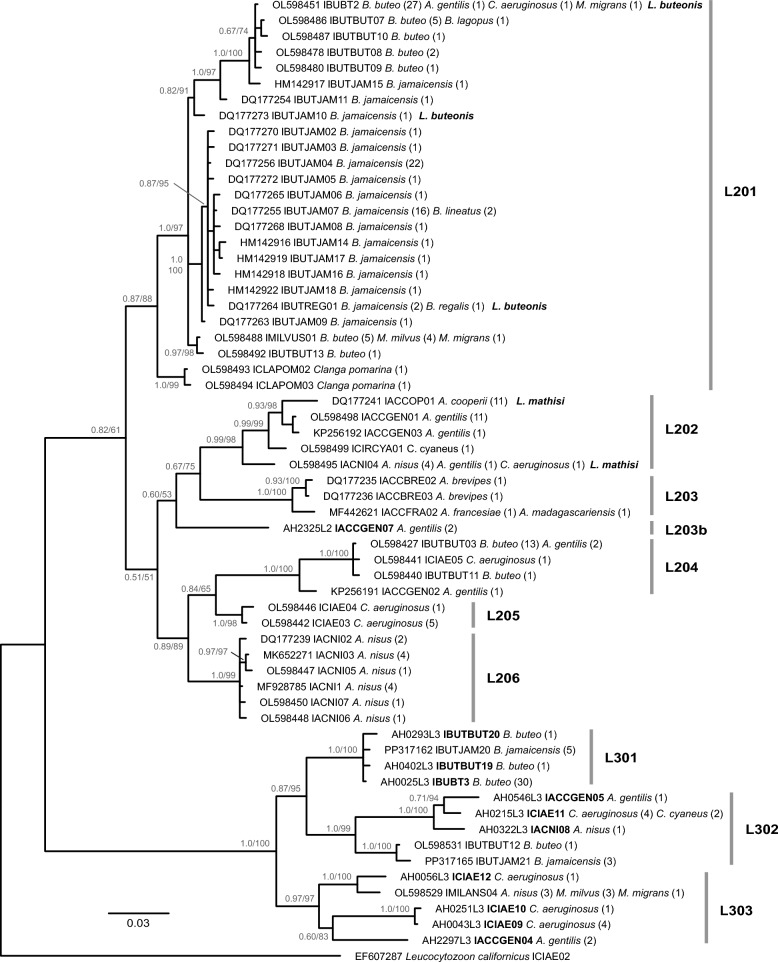 Figure 4
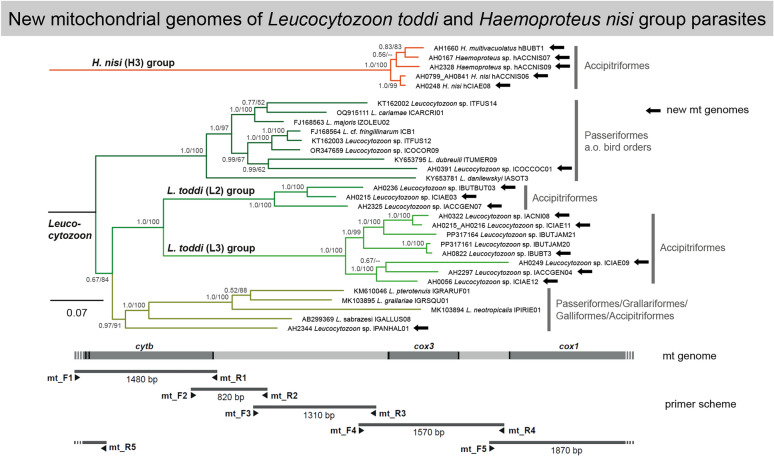 Figure 5
Peer Reviews
No public reviews on file for this paper yet. If you reviewed it on a platform where reviews are public (OpenReview, ICLR, NeurIPS, ICML), you can paste yours below so the community can read it here.
Videos
No videos yet. Explain this paper in a talk, walkthrough, or lecture? Add one.
Taxonomy
TopicsBird parasitology and diseases · Coccidia and coccidiosis research · Vector-borne infectious diseases