Premenstrual syndrome–related quality of life: associations with ultra-processed food consumption, mindful eating, well-being, and social media addiction in women
Fatma Elif Eroğlu, Büşra Açıkalın Göktürk, Neslihan Arslan, Fatma Kılıç

TL;DR
This study explores how eating habits, social media use, and well-being affect the quality of life for women with premenstrual syndrome.
Contribution
The study reveals new multidimensional associations between ultra-processed food consumption, social media addiction, and premenstrual syndrome-related quality of life.
Findings
Higher ultra-processed food consumption and social media addiction are linked to poorer premenstrual syndrome-related quality of life.
Mindful eating and higher well-being are associated with better premenstrual syndrome-related quality of life.
Regression analyses show significant associations between PMS-QoL and factors like BMI, UPF consumption, and social media addiction.
Abstract
This cross-sectional study aimed to examine the associations between premenstrual syndrome–related quality of life (PMS-QoL), ultra-processed food (UPF) consumption, mindful eating, well-being, and social media addiction (SMA) among women. This study was conducted with 1,741 women aged 18–49 years (mean age: 24.86 ± 8.4). Data were collected via a web-based survey distributed through social media using snowball sampling. Premenstrual Syndrome Quality of Life Scale (PMS-QoL), Screening Questionnaire of Highly Processed Food Consumption (sQ-HPF), Mindful Eating Inventory (MEI), WHO-5 Well-Being Index (WHO-5), and Social Media Addiction Scale (SMAS) were used. PMS-QoL was significantly correlated with social media addiction SMAS (r =-0.448,p < 0.001), sQ-HPF (r=-0.196, p < 0.001), and well-being (WHO-5)(r = 0.129, p < 0.001). MEI was positively correlated with WHO-5 (r = 0.179, p <…
Genes, proteins, chemicals, diseases, species, mutations and cell lines named across the full text — each resolved to its canonical identifier and authoritative record.
Click any figure to enlarge with its caption.
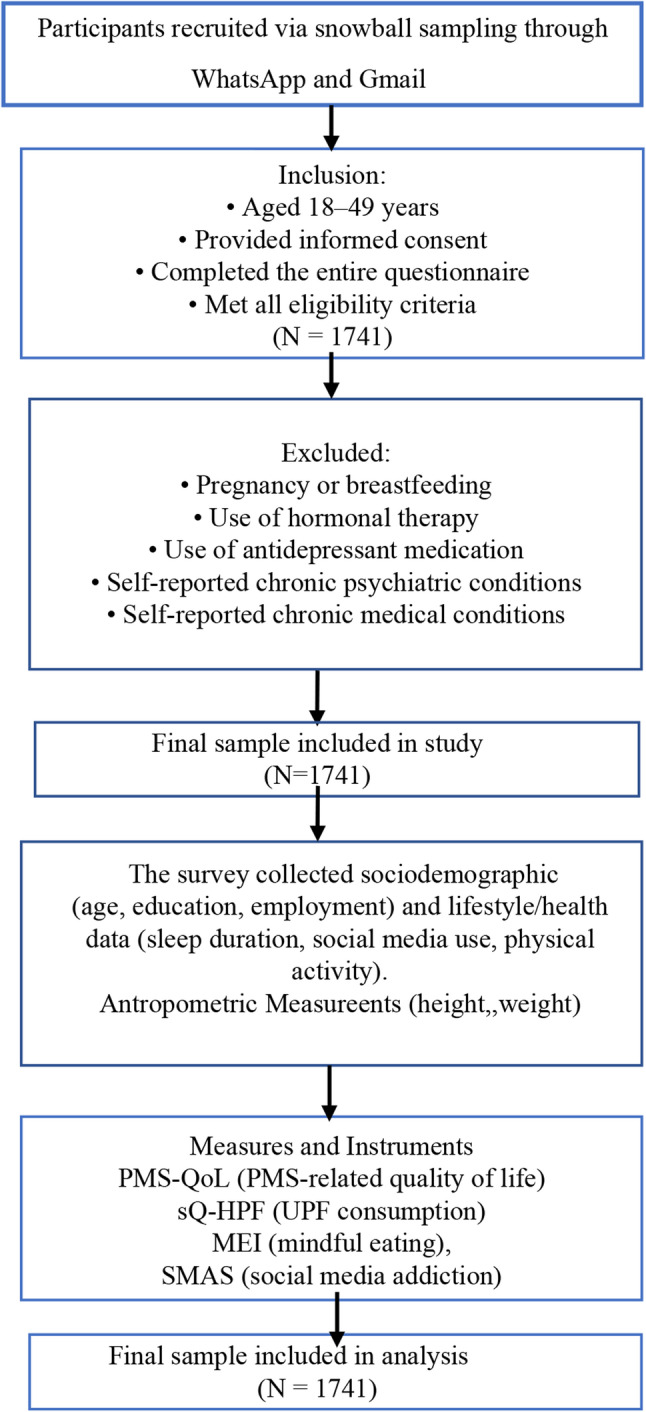 Figure 1
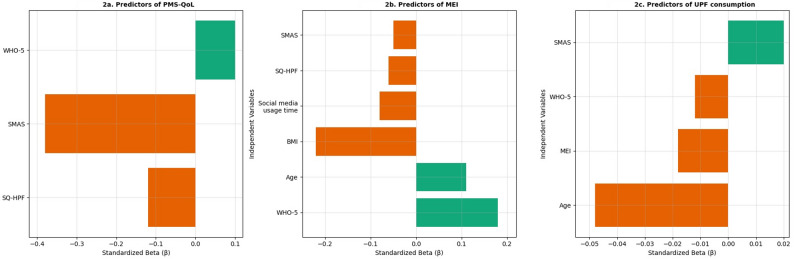 Figure 2
Peer Reviews
No public reviews on file for this paper yet. If you reviewed it on a platform where reviews are public (OpenReview, ICLR, NeurIPS, ICML), you can paste yours below so the community can read it here.
Videos
No videos yet. Explain this paper in a talk, walkthrough, or lecture? Add one.
Taxonomy
TopicsMenstrual Health and Disorders · Eating Disorders and Behaviors · Biochemical effects in animals