Rapid and Accurate Diagnosis of Breast Cancer by Fine‐Needle Aspiration Biopsy Using the “Click‐to‐Sense” Method
Yuri Kitahara, Tomonori Tanei, Takaaki Hatano, Ambara R. Pradipta, Koji Morimoto, Tadasuke Nagatomo, Kaori Abe, Nanae Masunaga, Chieko Mishima, Tetsuhiro Yoshinami, Masami Tsukabe, Yoshiaki Sota, Tomohiro Miyake, Masafumi Shimoda, Yuichi Motoyama, Eiichi Morii, Katsunori Tanaka

TL;DR
A new method called 'click-to-sense' is as accurate as traditional staining for diagnosing breast cancer using fine-needle aspiration biopsies.
Contribution
The 'click-to-sense' assay is introduced as a simpler and more reliable alternative to Papanicolaou staining for breast cancer diagnosis.
Findings
The CTS assay achieved 94.4% diagnostic accuracy with 0% insufficiency rate.
Papanicolaou staining had 94.2% accuracy but a 4% insufficiency rate.
CTS is simpler, less labor-intensive, and has potential for future cytopathology use.
Abstract
We have previously demonstrated the value of the “click‐to‐sense” (CTS) assay, in which a fluorescent probe targeting acrolein can detect cancer cells and differentiate between malignant and benign lesions in breast tissue. In this study, we assessed the usefulness of the CTS assay for diagnosis of breast tumors by fine‐needle aspiration biopsy (FNAB). A total of 126 FNABs were performed on live tissue samples obtained by surgery (63 breast cancers, 31 benign breast tumors, and 32 normal breast glands). CTS reagents (CTS probe and Hoechst dye mixed with encapsulating agents) were added to the aspirated cells and placed on slides, which were then cover‐slipped and imaged under a fluorescence microscope. Another FNAB slide was prepared for each of the same live tissue samples, fixed in ethanol, and subjected to Papanicolaou (PAP) staining. The diagnostic accuracy of the CTS assay was…
Genes, proteins, chemicals, diseases, species, mutations and cell lines named across the full text — each resolved to its canonical identifier and authoritative record.
Click any figure to enlarge with its caption.
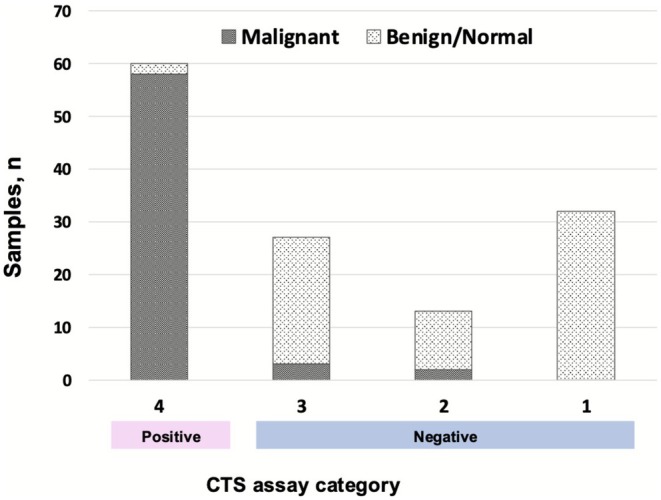 Figure 1
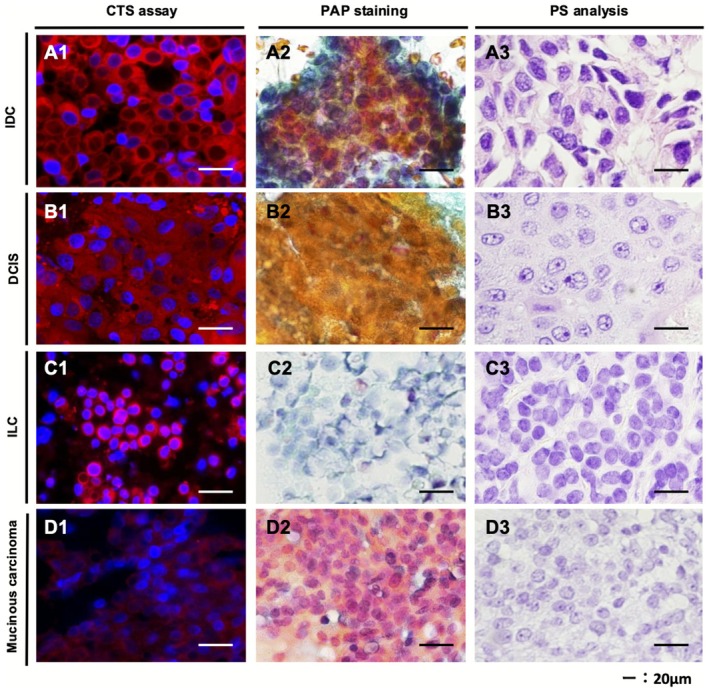 Figure 2
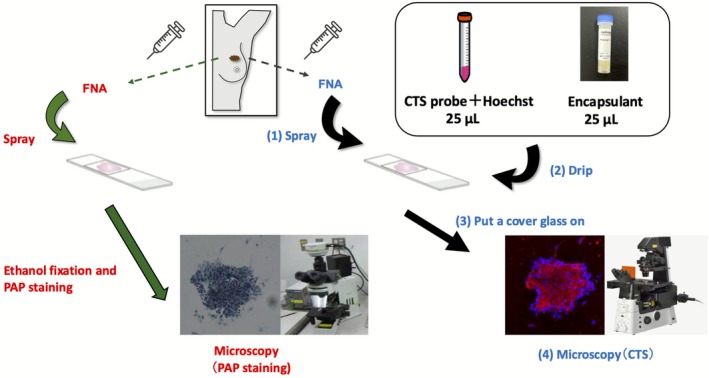 Figure 3
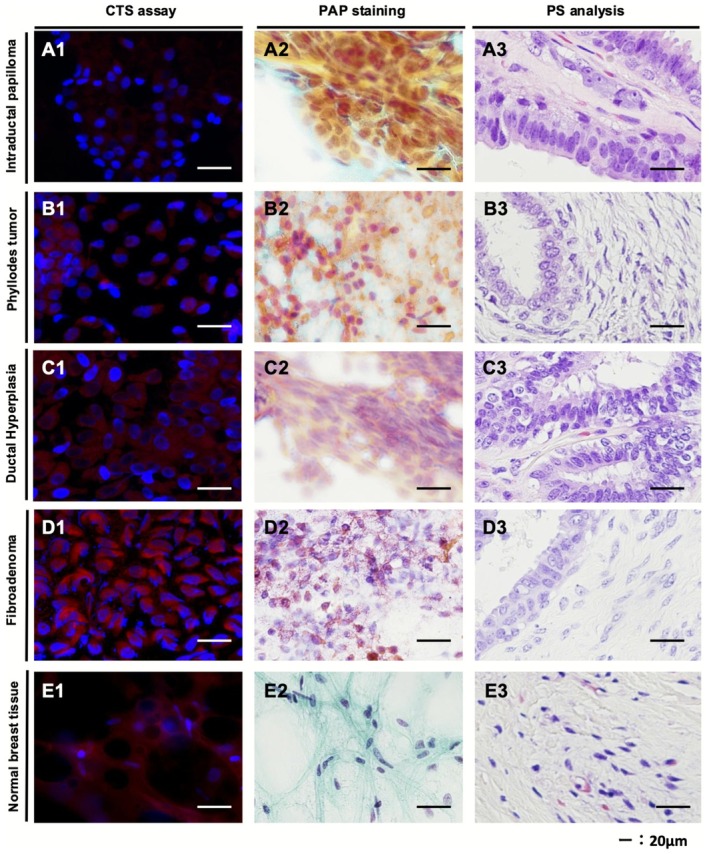 Figure 4
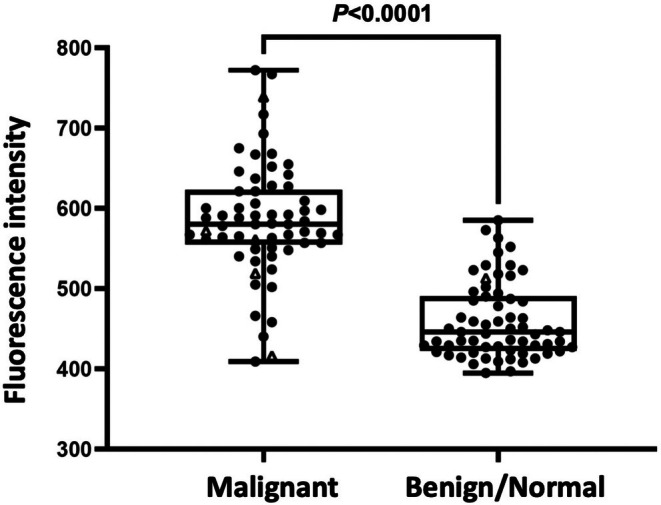 Figure 5
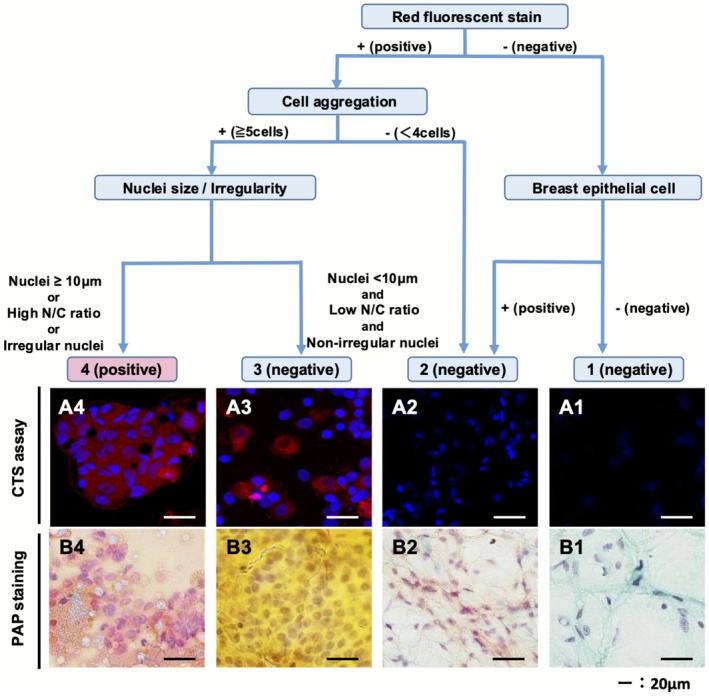 Figure 6
Peer Reviews
No public reviews on file for this paper yet. If you reviewed it on a platform where reviews are public (OpenReview, ICLR, NeurIPS, ICML), you can paste yours below so the community can read it here.
Videos
No videos yet. Explain this paper in a talk, walkthrough, or lecture? Add one.
Taxonomy
TopicsNanoplatforms for cancer theranostics · Cancer Research and Treatments · Click Chemistry and Applications