Tailored Plasticization of Bio- and Fossil-Based Polymers Using a Versatile Bioplasticizer Derived from Phenylacetic Acid and Glycerol
Laura Martellosio, Martina Ferri, Luca Lenzi, Arianna Tauro, Andrea Dorigato, Micaela Degli Esposti, Davide Morselli, Paola Fabbri

TL;DR
This paper introduces a new bioplasticizer that improves the performance of various biobased and conventional polymers while maintaining safety and biodegradability.
Contribution
The study demonstrates the versatility of triphenylacetic glyceroate (TPAG) as a bioplasticizer across multiple polymer types.
Findings
TPAG significantly reduces glass-transition temperatures in PHB, PHBV, and PVC polymers.
TPAG increases elongation at break in PVC and PHBV by up to 349% and 22%, respectively.
TPAG shows minimal volatility and migration, meeting safety standards.
Abstract
For accelerating the shift from fossil-derived plastics toward biopolymers, there is an urgent need to develop efficient and versatile biobased plasticizers to improve biopolymer performance without compromising biodegradability and/or safety. This study explores the versatility of the emerging triphenylacetic glyceroate (TPAG) bioplasticizer by incorporating it into a range of biobased and conventional polymers. An increasing content of TPAG, from 5 to 20 parts per hundred of resin (phr), has been compounded with polyhydroxybutyrate (PHB), polyhydroxybutyrate-co-valerate (PHBV), polyvinyl chloride (PVC), and polybutylene succinate (PBS), which present complicated processability and/or limited mechanical properties as bare polymers. Differential scanning calorimetry reveals a clear reduction in glass-transition temperatures (T g) for PHB, PHBV, and PVC, with the most significant drop…
Genes, proteins, chemicals, diseases, species, mutations and cell lines named across the full text — each resolved to its canonical identifier and authoritative record.
Click any figure to enlarge with its caption.
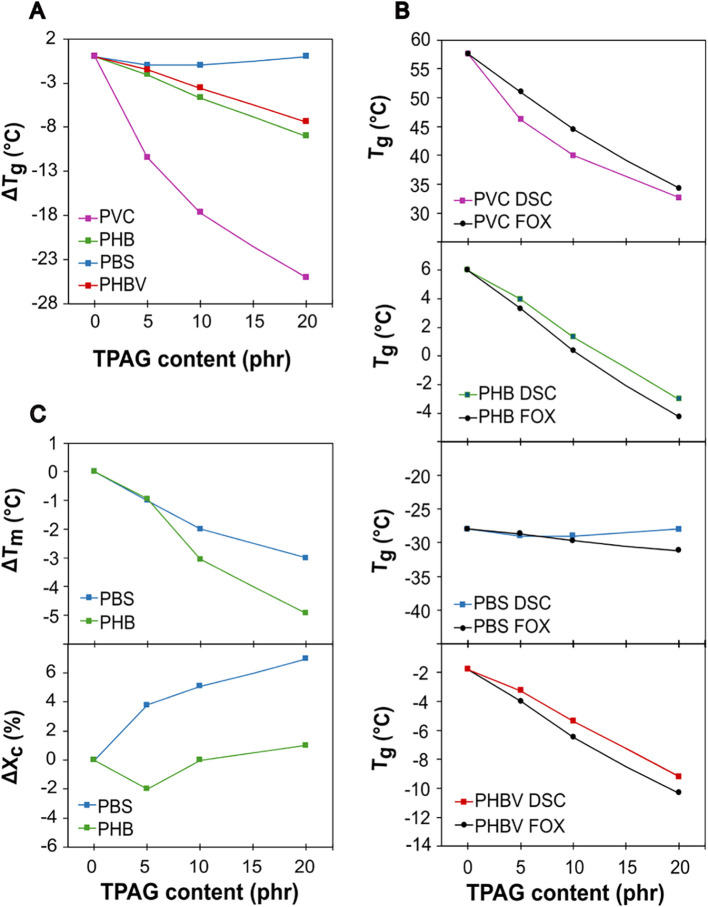 Figure 1
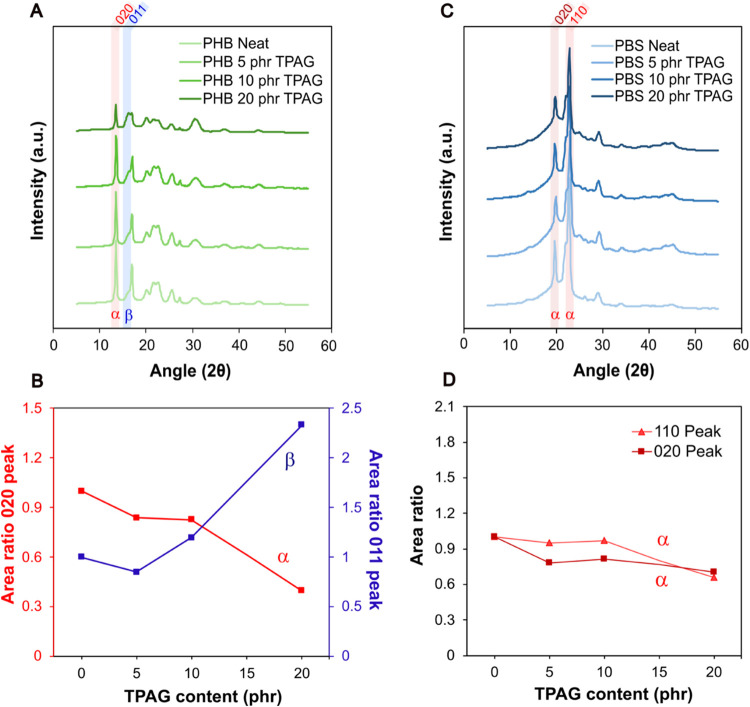 Figure 2
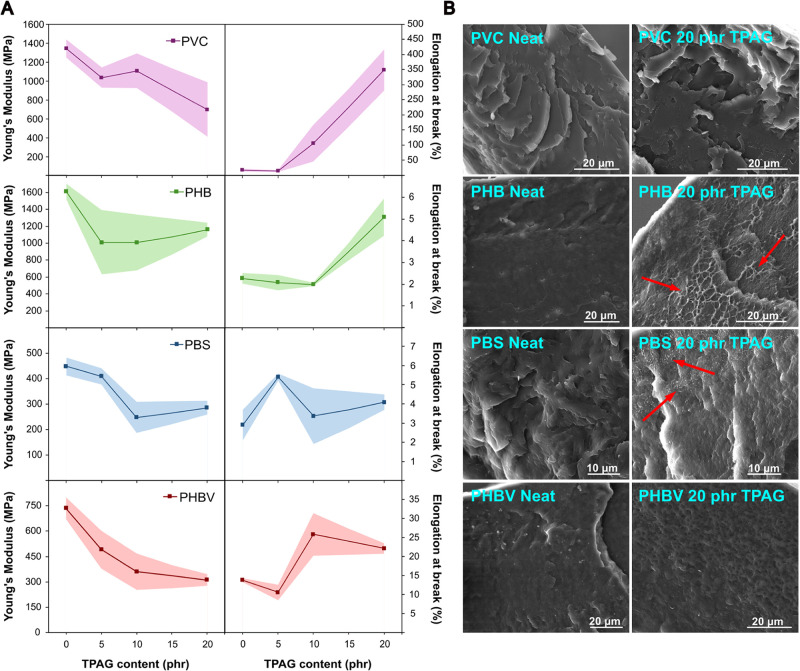 Figure 3
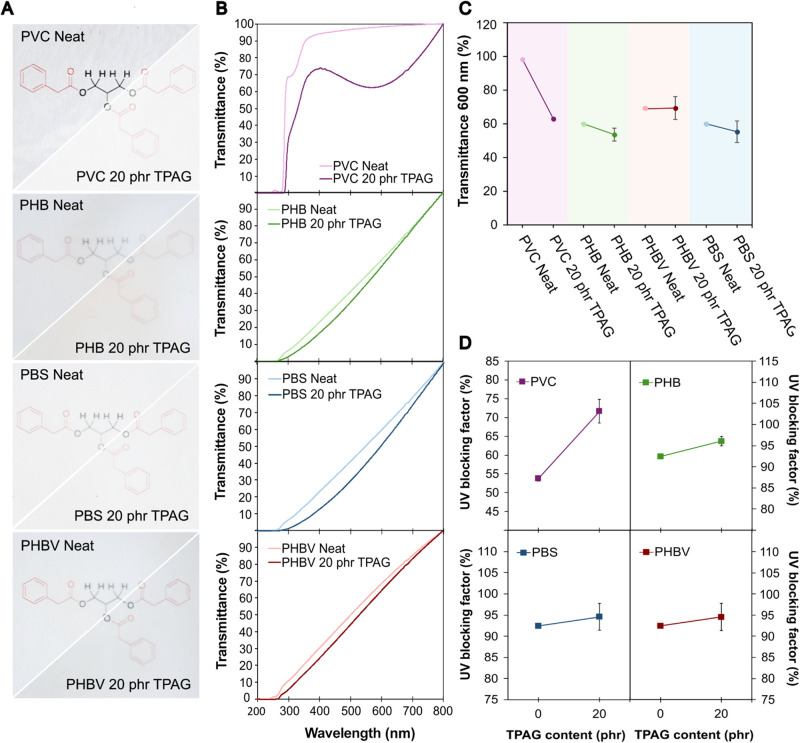 Figure 4
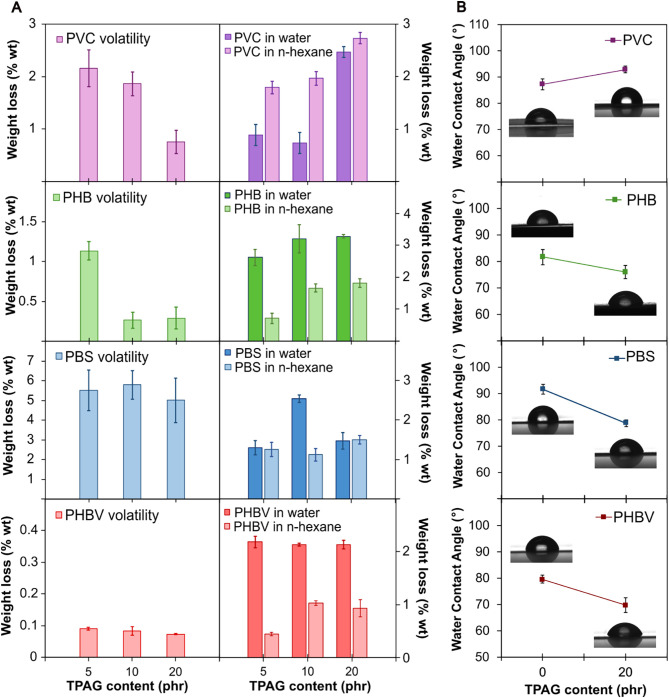 Figure 5
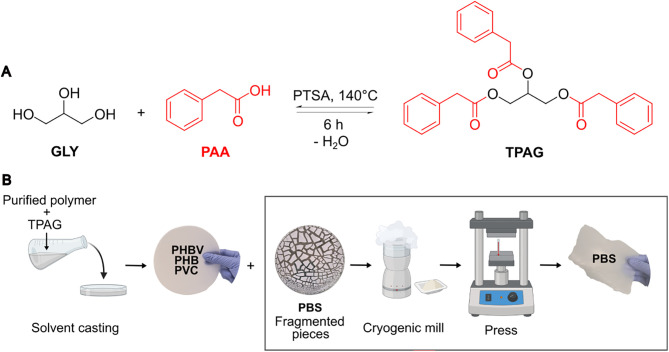 Figure 6
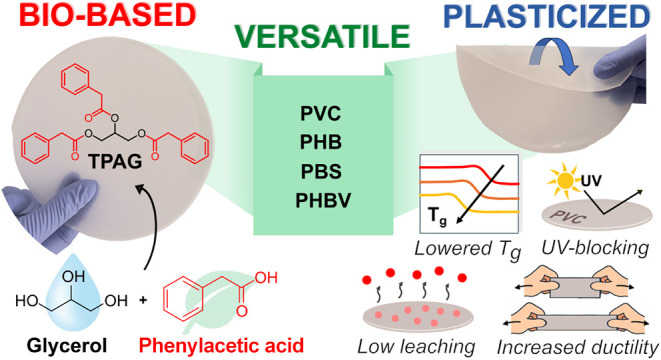 Figure 7
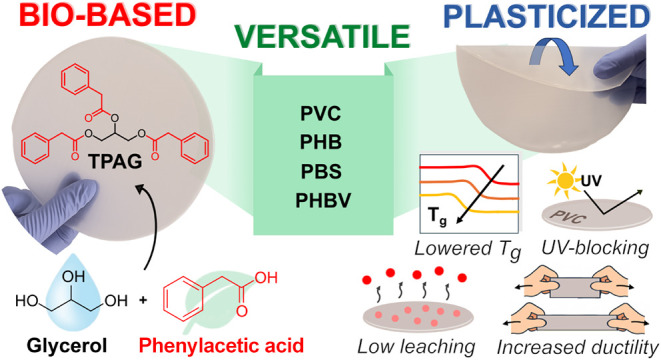 Figure 8
 Figure 9
 Figure 10
 Figure 11
 Figure 12
 Figure 13
Peer Reviews
No public reviews on file for this paper yet. If you reviewed it on a platform where reviews are public (OpenReview, ICLR, NeurIPS, ICML), you can paste yours below so the community can read it here.
Videos
No videos yet. Explain this paper in a talk, walkthrough, or lecture? Add one.
Taxonomy
TopicsPolymer Science and PVC · biodegradable polymer synthesis and properties · Polymer composites and self-healing