A single nucleotide mutation of BnaC05.POLIB creates yellow-white chimeric flower in Brassica napus
Rui Xia, Lin Chen, Pengfei Wang, Baoying Huang, Baoling Liang, Shengzhe Lin, Guangsheng Yang, Dengfeng Hong

TL;DR
A single mutation in a DNA polymerase gene in Brassica napus causes yellow-white chimeric flowers, revealing a new mechanism for flower color variation.
Contribution
The study identifies BnaC05.POLIB as a novel gene controlling chimeric flower color through plastid DNA polymerase activity disruption.
Findings
A G-to-A mutation in BnaC05.POLIB causes a D742N substitution, impairing polymerase activity.
Reduced plastid genome copy number and chromoplast formation lead to yellow-white chimeric flowers.
The mutation affects carotenoid accumulation in a dosage-dependent manner.
Abstract
Flower color is a key trait influencing insect pollination and ornamental value, yet the molecular mechanisms underlying heterozygous flower color remain unclear. In this study, we identified the creation of a yellow-white chimeric flower (cf) mutation in Brassica napus, characterized as the coexistence of yellow and white colors on petals of the same flower. Genetic analysis revealed that chimeric flower formation is controlled by a completely dominant gene. Map-based cloning, transgenic complementation, and CRISPR/Cas9 experiments consistently confirmed that BnaC05G0385300ZS on chromosome C05 is the causal gene of CF, which encodes a plastid DNA polymerase IB (BnaC05.POLIB). A G-to-A mutation in the seventh exon results in a D742N substitution, which disrupts Mg2+ binding and impairs polymerase activity. This leads to a reduced plastid genome copy number, decreased chromoplast…
Genes, proteins, chemicals, diseases, species, mutations and cell lines named across the full text — each resolved to its canonical identifier and authoritative record.
Click any figure to enlarge with its caption.
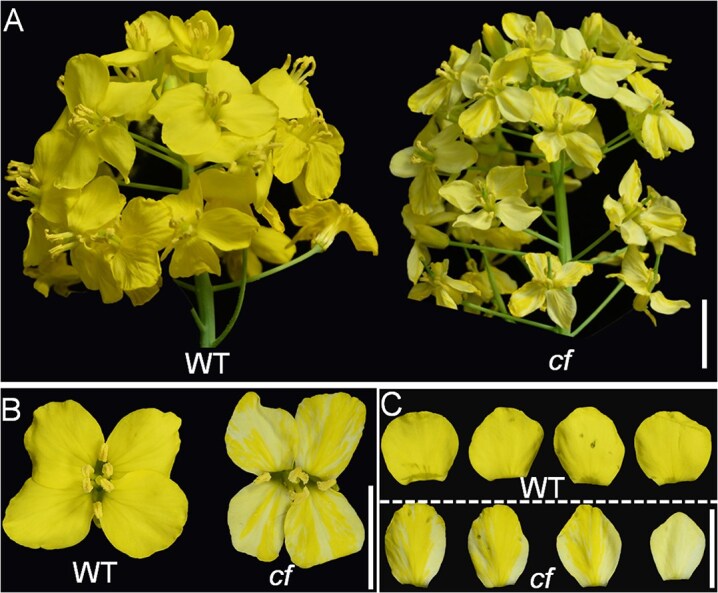 Figure 1
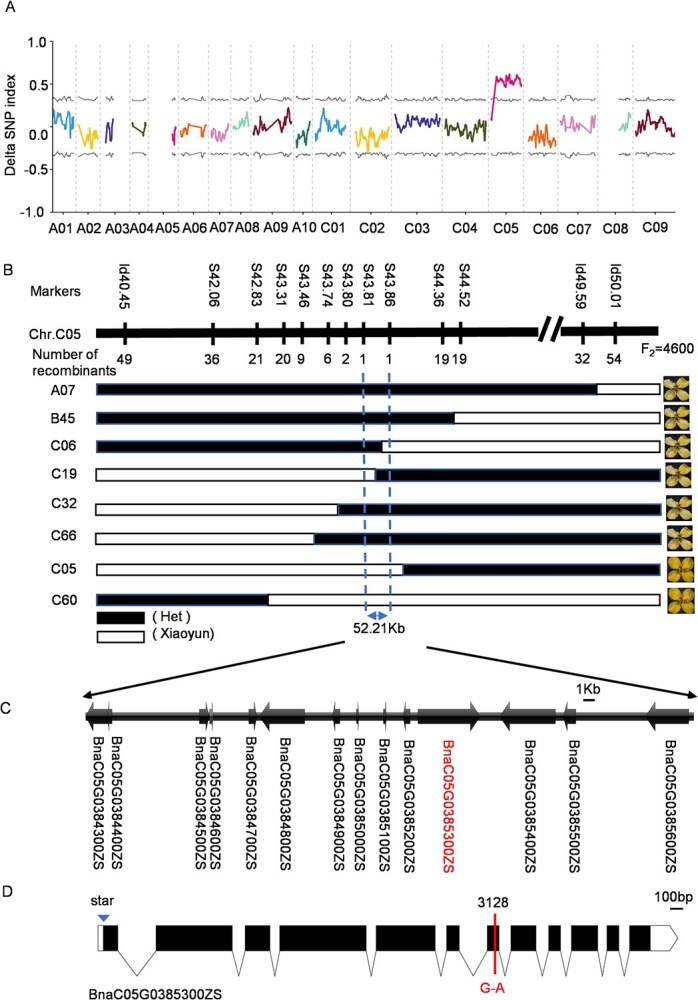 Figure 2
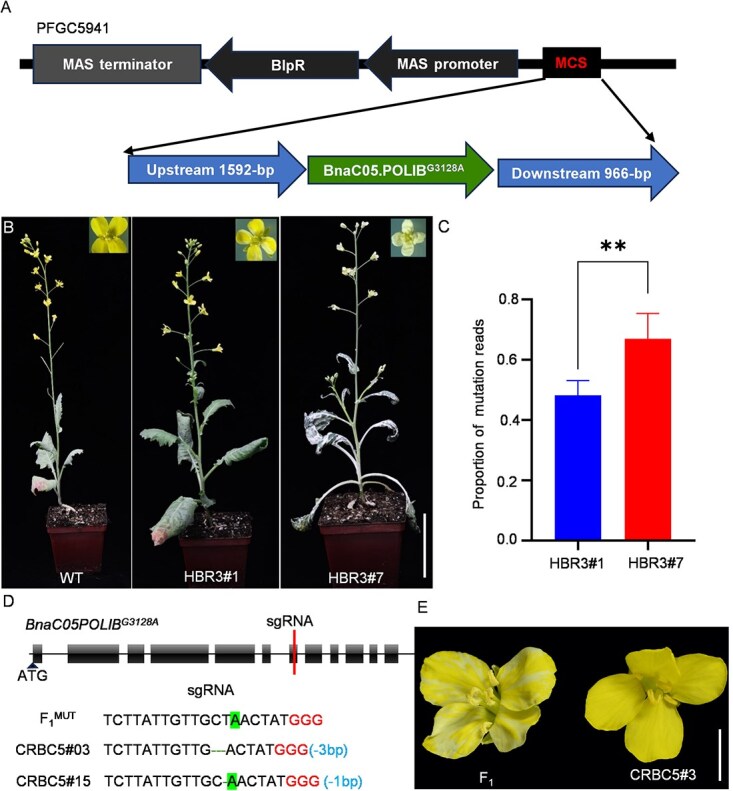 Figure 3
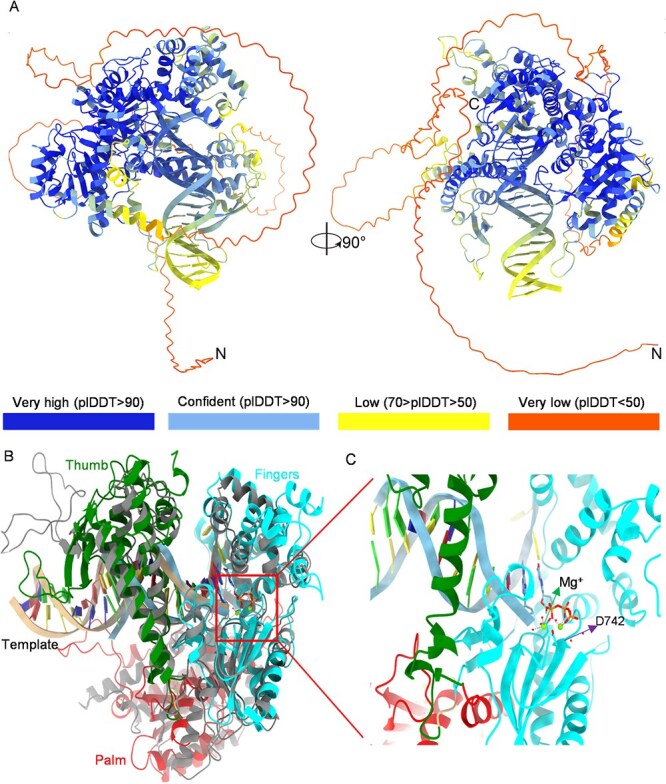 Figure 4
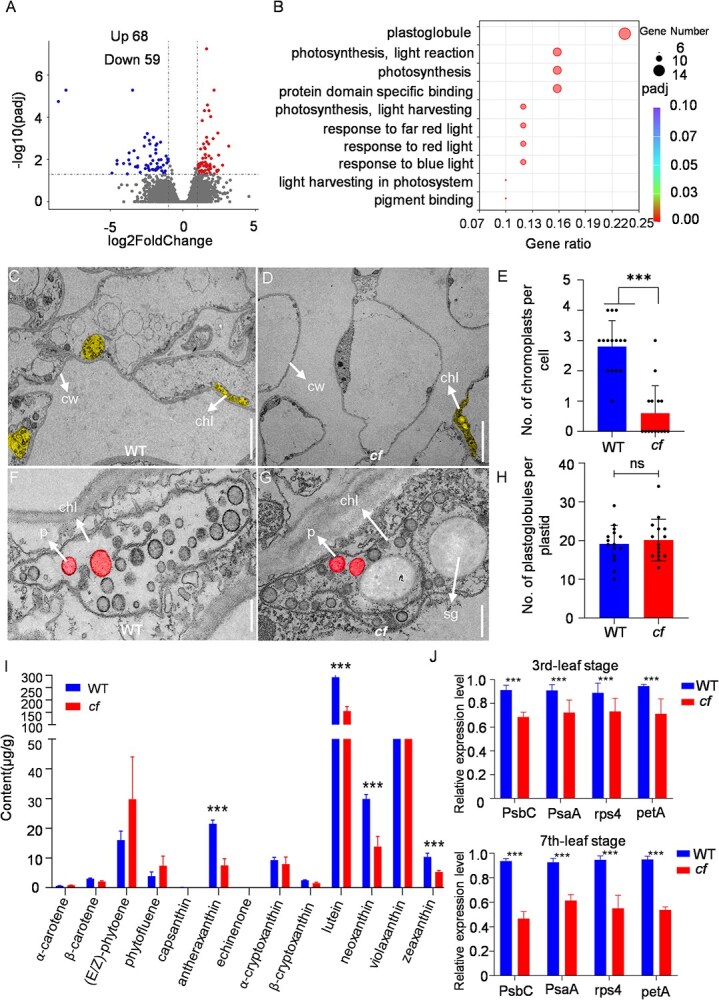 Figure 5
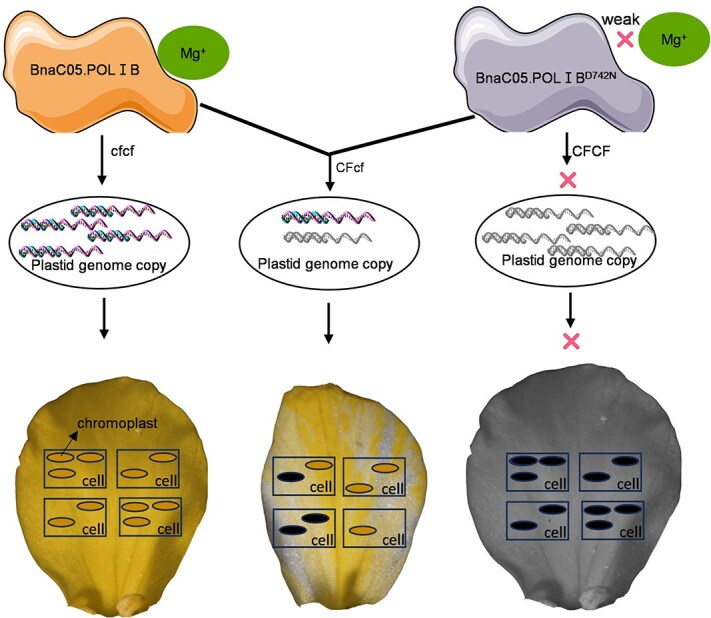 Figure 6
Peer Reviews
No public reviews on file for this paper yet. If you reviewed it on a platform where reviews are public (OpenReview, ICLR, NeurIPS, ICML), you can paste yours below so the community can read it here.
Videos
No videos yet. Explain this paper in a talk, walkthrough, or lecture? Add one.
Taxonomy
TopicsPlant Reproductive Biology · Plant Molecular Biology Research · Photosynthetic Processes and Mechanisms