The avatar principle: exosomal dynamics guiding tumor adaptation and next-generation therapeutic strategies
Juan C. Baena, Sergio Camilo Cabrera-Salcedo, Yesenia Carrera Suárez, Juan M. Biancha-Vasco, Lady J. Rios-Serna, M. Daniela García-Mantilla, Manuela Estrada-Schweineberg, Juan Sebastian Victoria Hincapie, Alejandro Toro-Pedroza, Juan Esteban Garcia-Robledo, Carlos A. Cañas

TL;DR
This review explores how tumor-derived exosomes can both hinder and help cancer treatments, suggesting new strategies to harness their potential for safer and more effective immunotherapies.
Contribution
The paper introduces a strategic framework for leveraging exosome biology in cancer immunotherapy, emphasizing their dual roles and engineering solutions.
Findings
Tumor-derived exosomes contribute to immune evasion and therapeutic resistance.
CAR T cell-derived exosomes offer safer, cell-free immunotherapies with preserved antigen specificity.
Advances in engineering enable exosomes to deliver CRISPR/Cas systems, chemotherapeutics, and vaccines.
Abstract
Exosomes are nanoscale extracellular vesicles that transfer proteins, nucleic acids, and lipids, reflecting the state of their parent cells. A persistent scientific challenge is that tumor-derived exosomes (TDEs) facilitate immune evasion, remodel the tumor microenvironment, and create premetastatic niches, intensifying tumor aggressiveness and undermining therapeutic efficacy, ultimately narrowing treatment options to palliative strategies in advanced settings. Yet their dual roles as suppressive agents and potential therapeutic tools remain poorly integrated within current cancer immunotherapy frameworks. This review examines the molecular mechanisms underlying TDE-mediated immune suppression and therapeutic resistance, while also highlighting engineering strategies to exploit or counteract exosome biology. Exosomes derived from chimeric antigen receptor (CAR) T cells preserve antigen…
Genes, proteins, chemicals, diseases, species, mutations and cell lines named across the full text — each resolved to its canonical identifier and authoritative record.
Click any figure to enlarge with its caption.
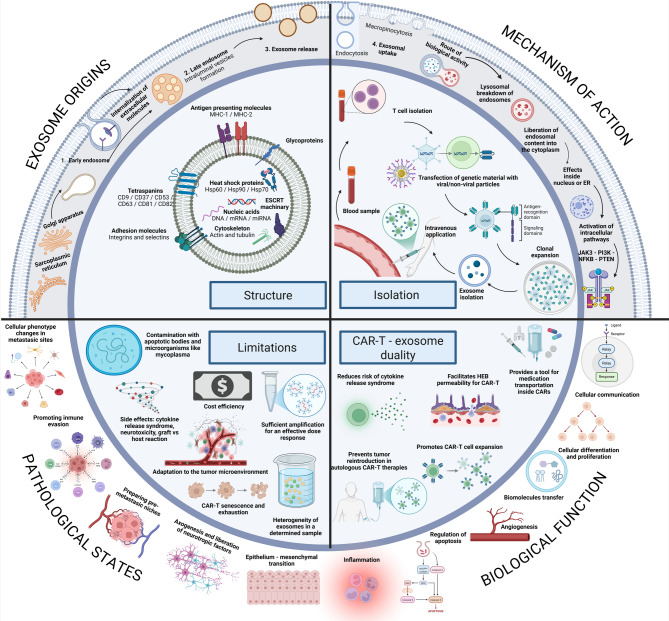 Figure 1
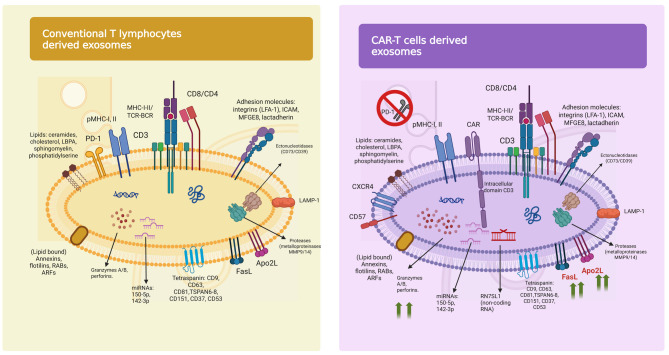 Figure 2
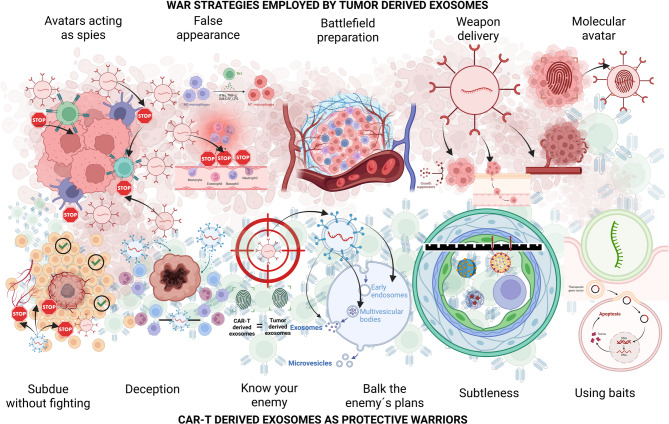 Figure 3
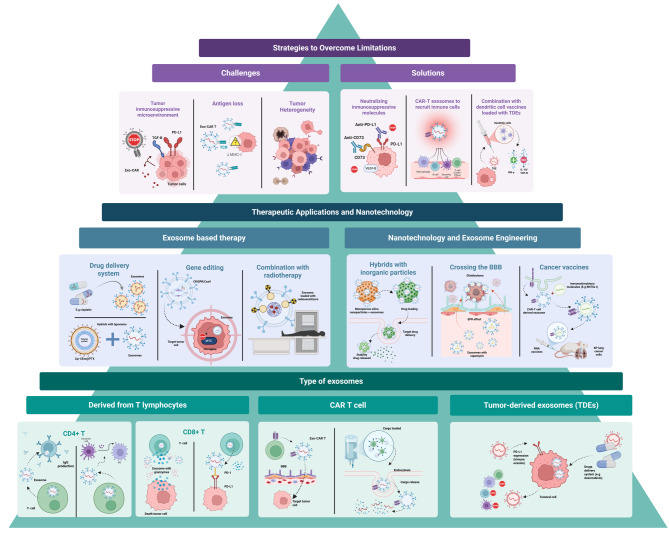 Figure 4
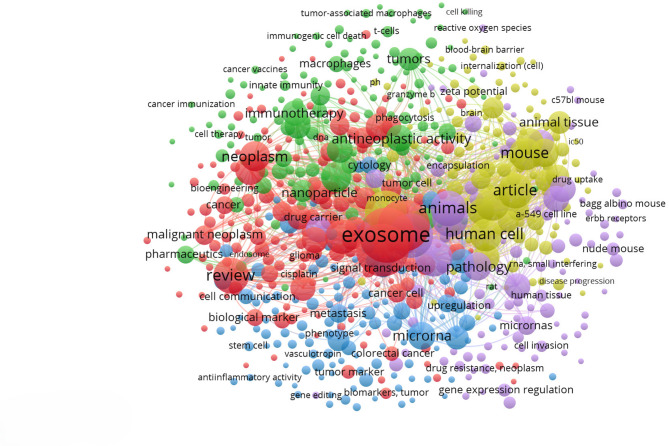 Figure 5
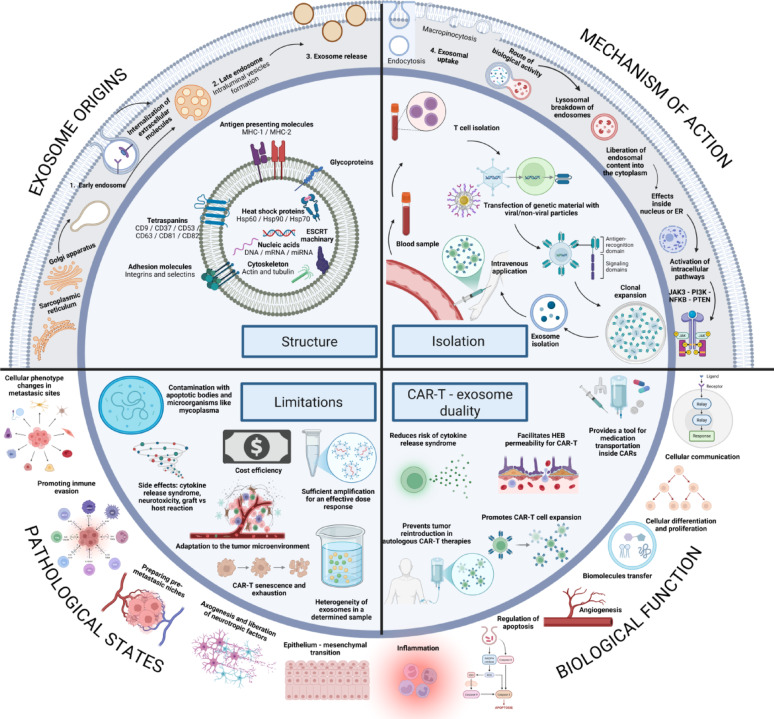 Figure 6
Peer Reviews
No public reviews on file for this paper yet. If you reviewed it on a platform where reviews are public (OpenReview, ICLR, NeurIPS, ICML), you can paste yours below so the community can read it here.
Videos
No videos yet. Explain this paper in a talk, walkthrough, or lecture? Add one.
Taxonomy
TopicsExtracellular vesicles in disease · CAR-T cell therapy research · Nanoplatforms for cancer theranostics