Blended and Microparticle Composite Hyaluronan Hydrogels with Programmable Degradation through Selective Oxidation
Melanie Grimm, Fiona Ye Rojo Acero, Fatemeh Safari, Desiré Venegas-Bustos, Andreas Wagner, Clara Presciutti, Wen Chen, Matteo D’Este, Jacek K. Wychowaniec

TL;DR
This paper introduces a new type of hyaluronan hydrogel that can be programmed to degrade in different ways, depending on its composition.
Contribution
A novel strategy for programmable degradation in hyaluronan hydrogels using blended and microparticle composite networks.
Findings
Blended hydrogels maintain viscoelastic properties while allowing tunable degradation rates.
Hydrogel microparticle composites exhibit abrupt fragmentation upon degradation.
Degradation modes can be programmed by adjusting the oTHA-to-THA ratio.
Abstract
The design space of hydrogels for biomedical applications embraces a wide variety of parameters that can be tuned through chemical modification. Among them, tissue adhesion and viscoelastic properties contribute to the integration of tissue-engineered constructs with native tissues, while the degradation profile determines their temporal evolution and cell invasion. Selective 1,2-diol oxidation is a versatile tool to control all of these properties in polysaccharide-based hydrogels by generating aldehyde groups. A key challenge in implementing this tool is that although aldehyde groups improved adhesion, they also promoted chain fragmentation, demanding a trade-off. To address this, we devised a strategy that leverages the adhesiveness of oxidized biopolymers together with the mechanical stability of their nonoxidized counterparts. Here, we synthesized tyramine-modified hyaluronan (THA)…
Genes, proteins, chemicals, diseases, species, mutations and cell lines named across the full text — each resolved to its canonical identifier and authoritative record.
Click any figure to enlarge with its caption.
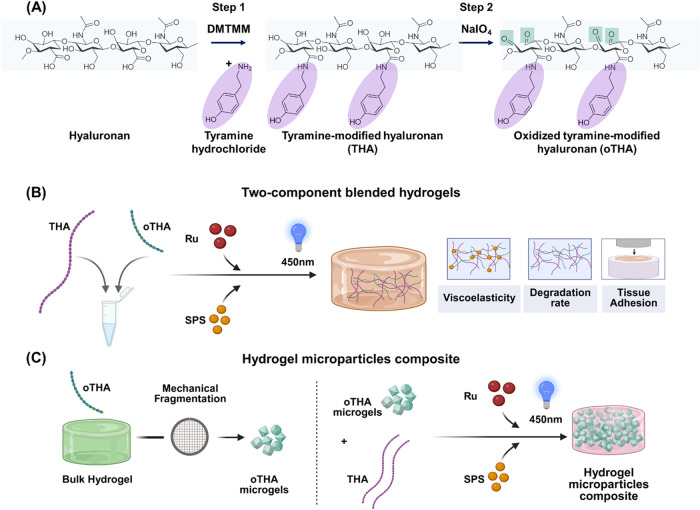 Figure 1
 Figure 2
 Figure 3
 Figure 4
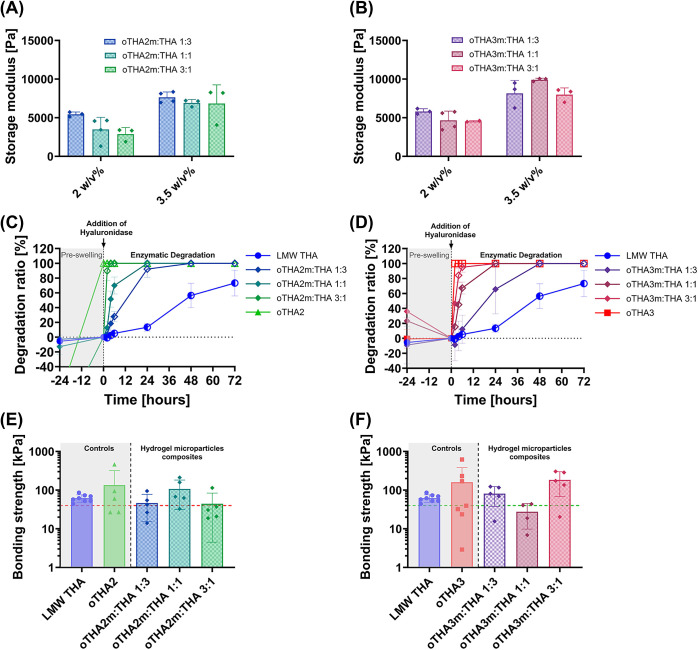 Figure 5
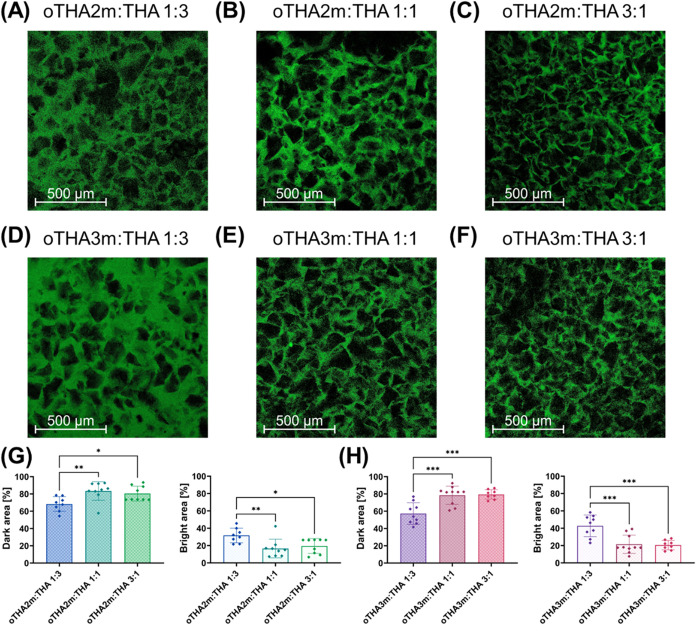 Figure 6
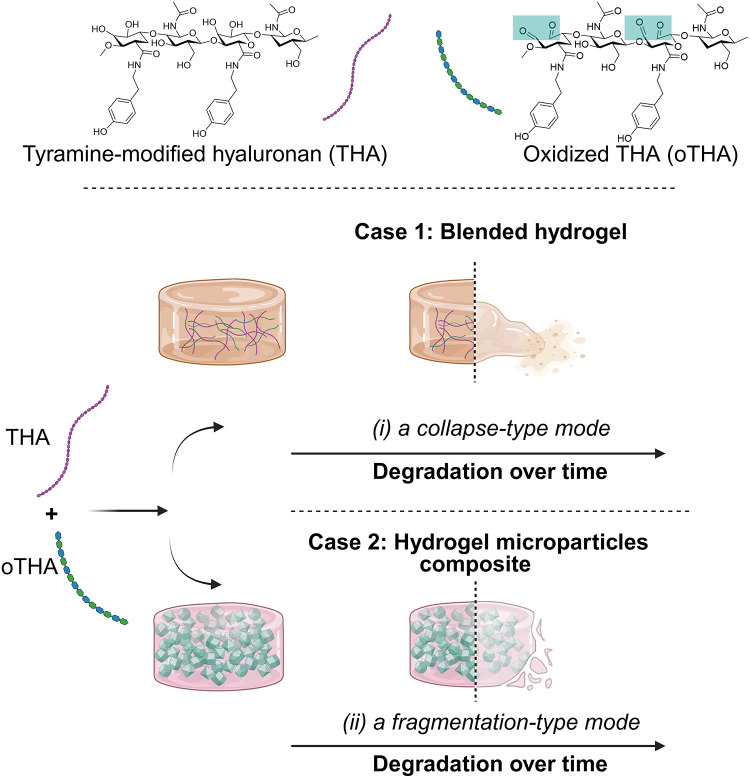 Figure 7
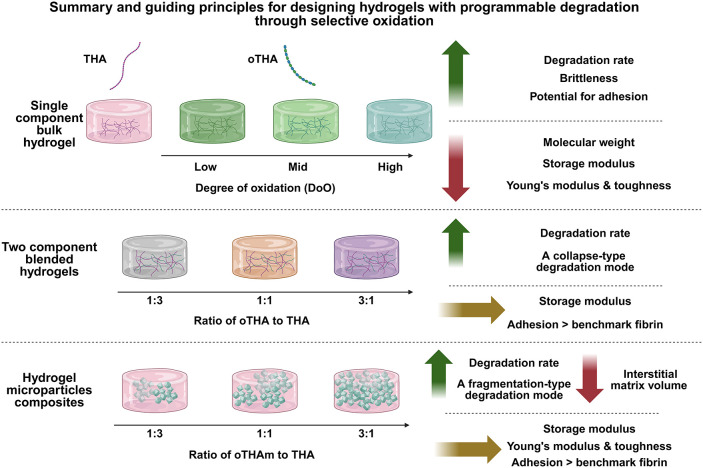 Figure 8
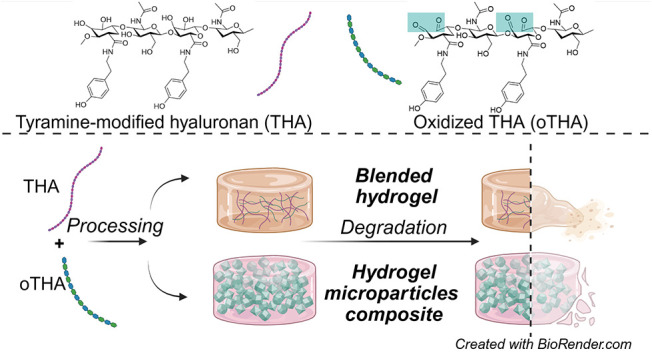 Figure 9
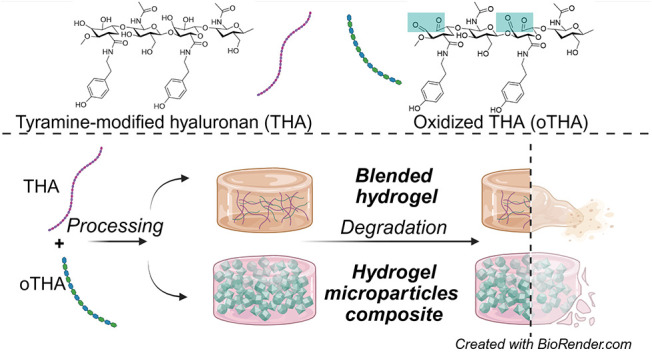 Figure 10
 Figure 11
 Figure 12
 Figure 13
 Figure 14
 Figure 15
 Figure 16
Peer Reviews
No public reviews on file for this paper yet. If you reviewed it on a platform where reviews are public (OpenReview, ICLR, NeurIPS, ICML), you can paste yours below so the community can read it here.
Videos
No videos yet. Explain this paper in a talk, walkthrough, or lecture? Add one.
Taxonomy
TopicsHydrogels: synthesis, properties, applications · 3D Printing in Biomedical Research · Wound Healing and Treatments