Integrative profiling of condensation-prone RNAs during early development
Tajda Klobučar, Jona Novljan, Ira A. Iosub, Boštjan Kokot, Iztok Urbančič, D. Marc Jones, Anob M. Chakrabarti, Nicholas M. Luscombe, Jernej Ule, Miha Modic

TL;DR
The paper identifies a new class of RNAs called smOOPs that are prone to forming condensates during early development and are closely linked to RNA-binding proteins and disordered proteins.
Contribution
The study introduces smOOPs, a novel class of condensation-prone RNAs, and reveals their unique sequence and protein features in phase separation.
Findings
smOOPs form denser RNA subnetworks and are heavily bound by RNA-binding proteins.
smOOPs have lower sequence complexity and increased intramolecular folding.
smOOPs encode proteins with intrinsically disordered regions linked to phase separation.
Abstract
Complex RNA-protein networks play a pivotal role in the formation of many types of biomolecular condensates. How RNA features contribute to condensate formation, however, remains incompletely understood. Here, we integrate tailored transcriptomics assays to identify a distinct class of developmental condensation-prone RNAs termed “smOOPs” (semi-extractable, orthogonal-organic-phase-separation-enriched RNAs). These transcripts localize to larger intracellular foci, form denser RNA subnetworks than expected, and are heavily bound by RNA-binding proteins (RBPs). Using an explainable deep learning framework, we reveal that smOOPs harbor characteristic sequence composition, with lower sequence complexity, increased intramolecular folding, and specific RBP-binding patterns. Intriguingly, these RNAs encode proteins bearing extensive intrinsically disordered regions and are highly predicted to…
Genes, proteins, chemicals, diseases, species, mutations and cell lines named across the full text — each resolved to its canonical identifier and authoritative record.
Click any figure to enlarge with its caption.
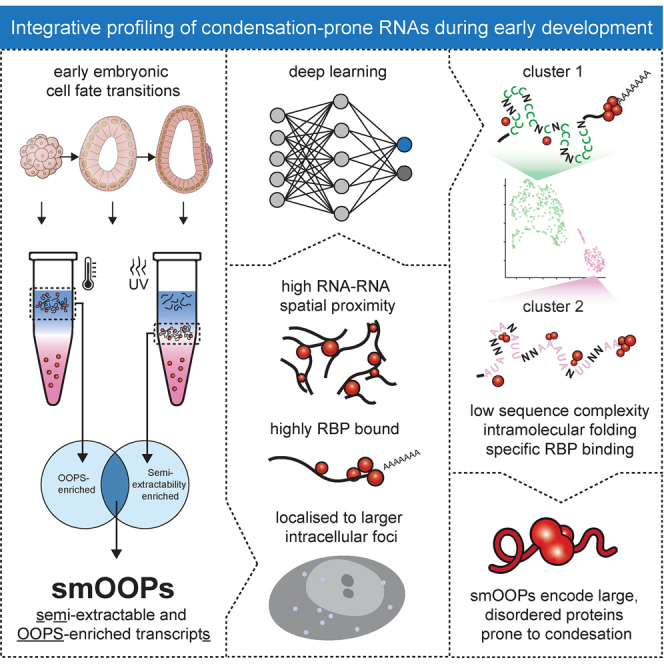 Figure 1
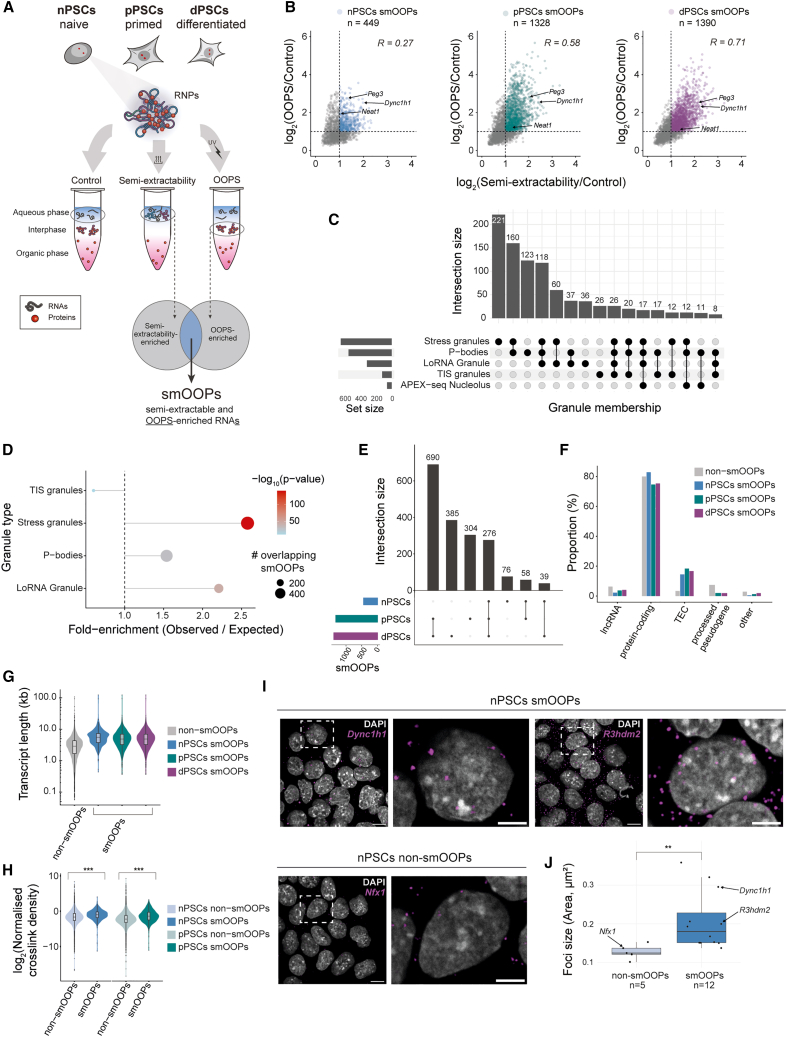 Figure 2
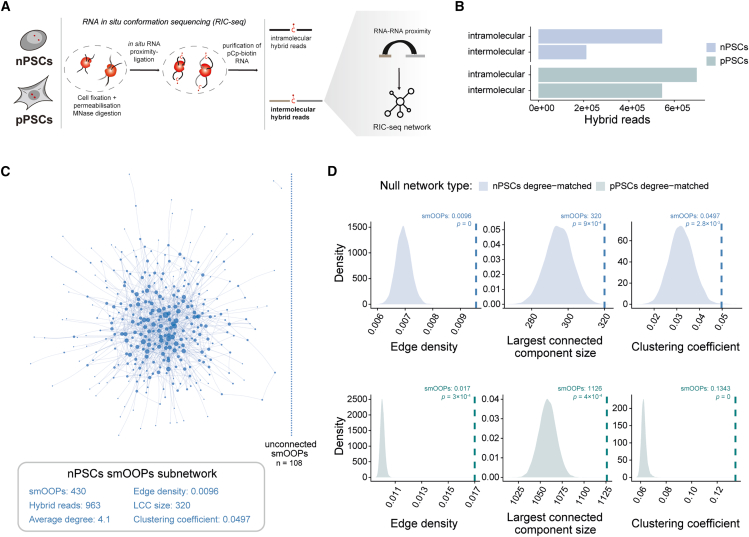 Figure 3
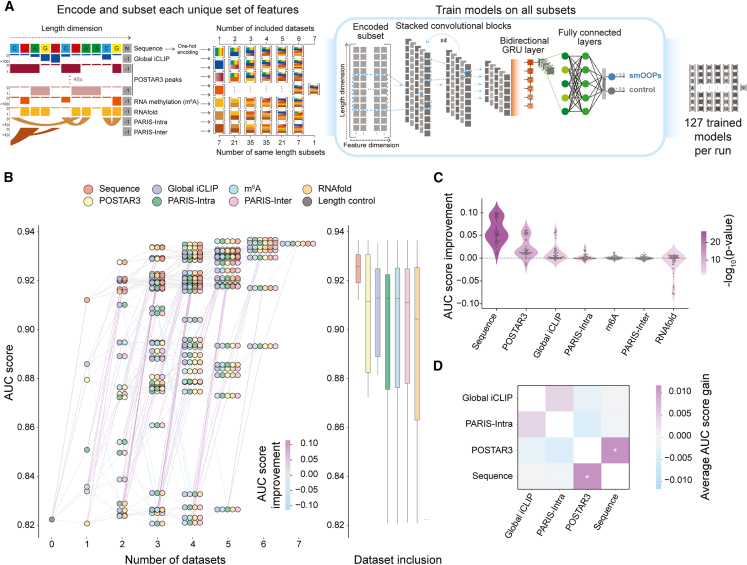 Figure 4
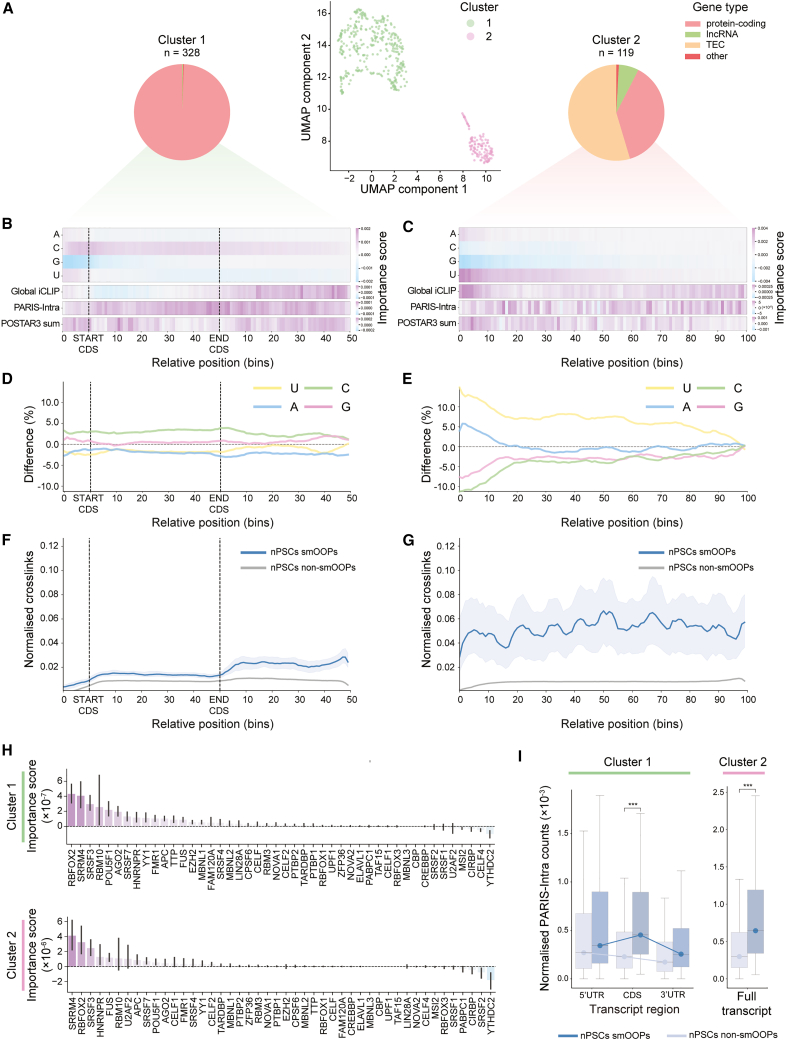 Figure 5
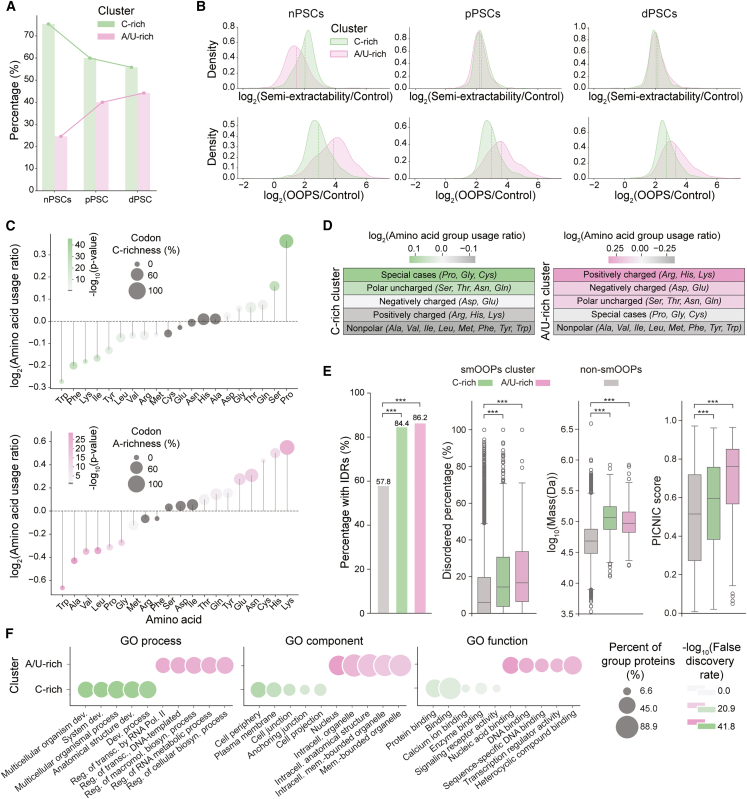 Figure 6
Peer Reviews
No public reviews on file for this paper yet. If you reviewed it on a platform where reviews are public (OpenReview, ICLR, NeurIPS, ICML), you can paste yours below so the community can read it here.
Videos
No videos yet. Explain this paper in a talk, walkthrough, or lecture? Add one.
Taxonomy
TopicsRNA Research and Splicing · RNA modifications and cancer · RNA and protein synthesis mechanisms