Case Report: Sengers syndrome caused by a novel 7.6 kb AGK deletion misdiagnosed as isolated congenital cataract
Xingwang Gong, Yue Liu, Hui Liang

TL;DR
A rare mitochondrial disorder, Sengers syndrome, was correctly diagnosed in a child after a large genetic deletion was identified, initially misdiagnosed as a cataract condition.
Contribution
A novel 7.6 kb deletion in AGK was identified, revealing a non-Alu-mediated mutational mechanism and emphasizing the need for CNV analysis in ambiguous cases.
Findings
CNV analysis revealed a large heterozygous deletion in AGK, confirming compound heterozygosity for Sengers syndrome.
Breakpoint analysis showed the deletion was caused by a non-Alu-mediated mechanism.
The CRYBA2 variant was reclassified as incidental after the AGK deletion was identified.
Abstract
The diagnosis of Sengers syndrome, a rare mitochondrial disorder, is often challenged by phenotypic mimicry. We report a diagnostically instructive case of a 4-month-old female who presented with the classic triad of congenital cataracts, hypertrophic cardiomyopathy, and lactic acidosis. Initial whole-exome sequencing (WES) was confounded by the finding of a heterozygous variant in CRYBA2 and only a single heterozygous nonsense mutation in AGK (c.409C>T, p.Arg137*). The persistence of a multisystemic phenotype inconsistent with an isolated cataract disorder prompted further investigation. Copy number variation (CNV) analysis of the WES data revealed a large heterozygous deletion in AGK, which breakpoint-specific polymerase chain reaction and Sanger sequencing precisely characterized as a novel 7.6 kb deletion (chr7:141297542-141305156). This confirmed compound heterozygosity, yielding a…
Genes, proteins, chemicals, diseases, species, mutations and cell lines named across the full text — each resolved to its canonical identifier and authoritative record.
Click any figure to enlarge with its caption.
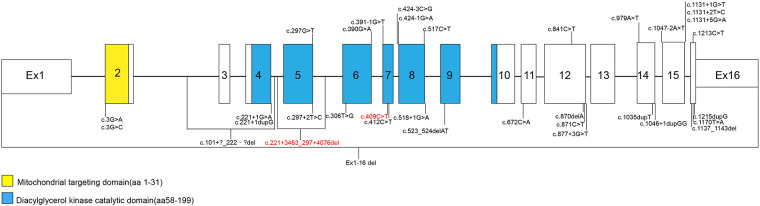 Figure 1
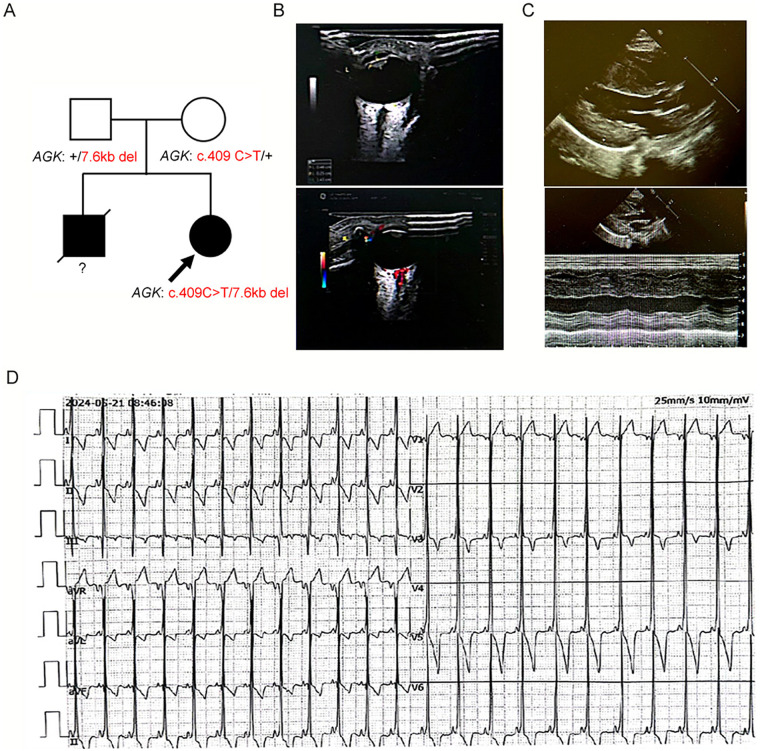 Figure 2
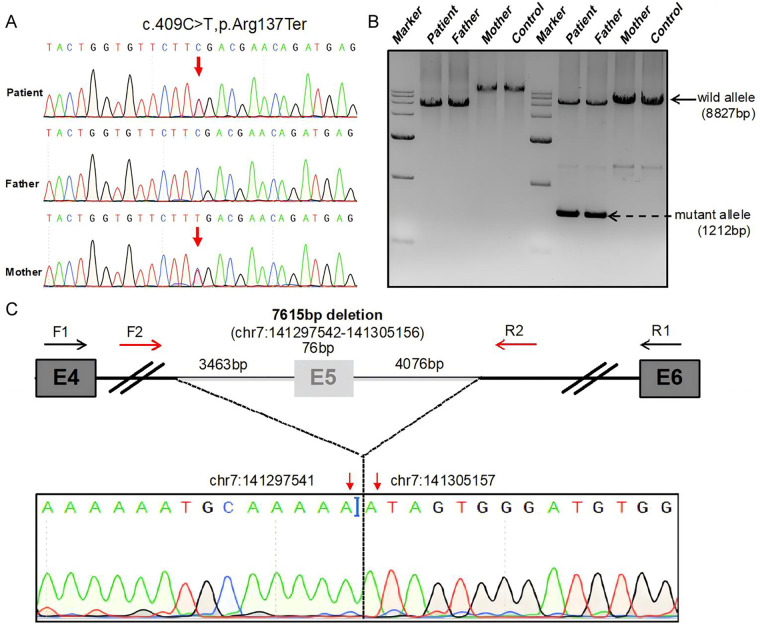 Figure 3
Peer Reviews
No public reviews on file for this paper yet. If you reviewed it on a platform where reviews are public (OpenReview, ICLR, NeurIPS, ICML), you can paste yours below so the community can read it here.
Videos
No videos yet. Explain this paper in a talk, walkthrough, or lecture? Add one.
Taxonomy
TopicsMitochondrial Function and Pathology · Connective tissue disorders research · Genomics and Rare Diseases