Redirecting linear hydrocarbon metabolism toward polyhydroxyalkanoate biosynthesis
Rocío Palacios-Ferrer, María T. Manoli, Patricia Godoy, Antonio Delgado, Auxiliadora Prieto, Juan L. Ramos

TL;DR
This study shows how a bacteria strain can convert specific hydrocarbons into a biopolymer called PHA, especially under nitrogen-limited conditions.
Contribution
The discovery of a novel alkane monooxygenase fusion enzyme and its role in directing carbon toward PHA synthesis is presented.
Findings
The AlkB enzyme oxidizes n-octane and n-decane into octanoate and decanoate, entering β-oxidation and the glyoxylate shunt.
A phaZ-deficient mutant accumulates PHA up to 75% of cell dry weight under nitrogen limitation.
13C-isotopic labeling revealed unexpected C10 monomers from C8 substrates, possibly from de novo fatty acid synthesis.
Abstract
This study explores how Pseudomonas putida EM2-4 metabolizes linear alkanes after acquiring an integrative and conjugative element (ICE) encoding a novel alkane monooxygenase (AlkB). This AlkB enzyme is a fusion of a hydroxylase and a fatty acid desaturase, exhibiting a narrow substrate range limited to n-octane and n-decane. The oxidation of these hydrocarbons yields octanoate and decanoate, respectively, which then enter the β-oxidation pathway and the glyoxylate shunt. Under nitrogen-limiting conditions, excess carbon is redirected toward polyhydroxyalkanoate (PHA) synthesis, a phenomenon particularly pronounced in a phaZ-deficient mutant unable to depolymeraze PHA, leading to up 75% of cell dry weight. Analysis of the PHAs monomer composition revealed variations with the carbon source. Additionally, 13C-isotopic labeling uncovered a minor but unexpected fraction of C10 monomers from…
Genes, proteins, chemicals, diseases, species, mutations and cell lines named across the full text — each resolved to its canonical identifier and authoritative record.
Click any figure to enlarge with its caption.
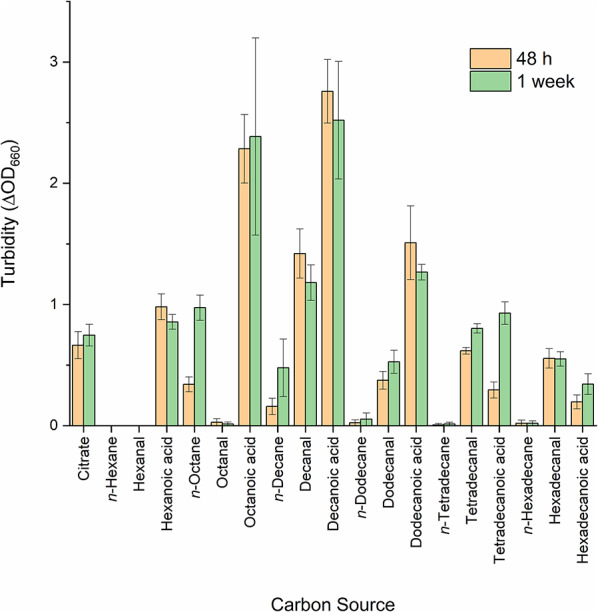 Figure 1
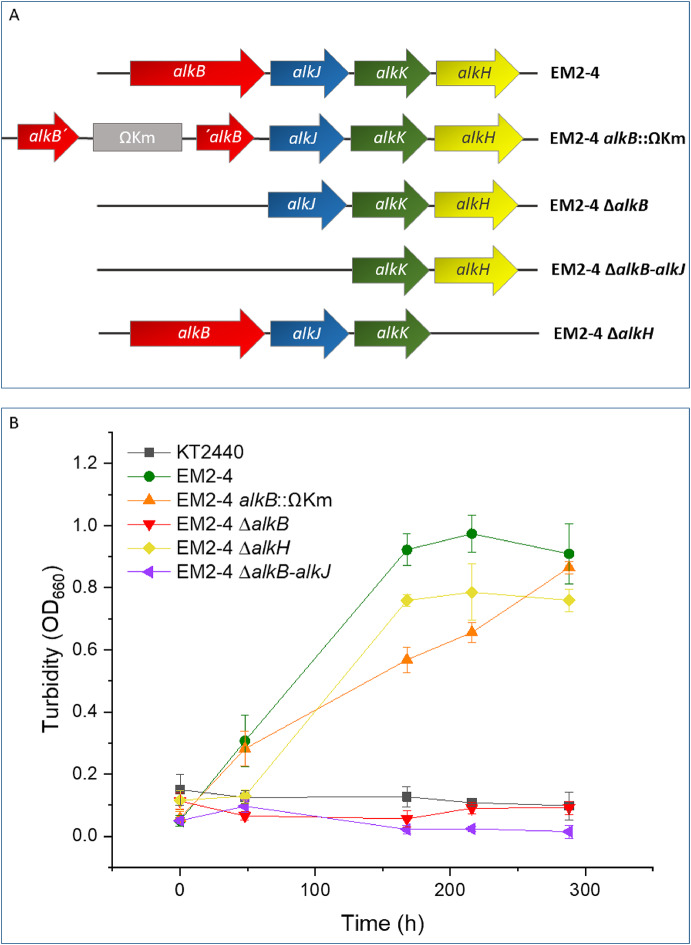 Figure 2
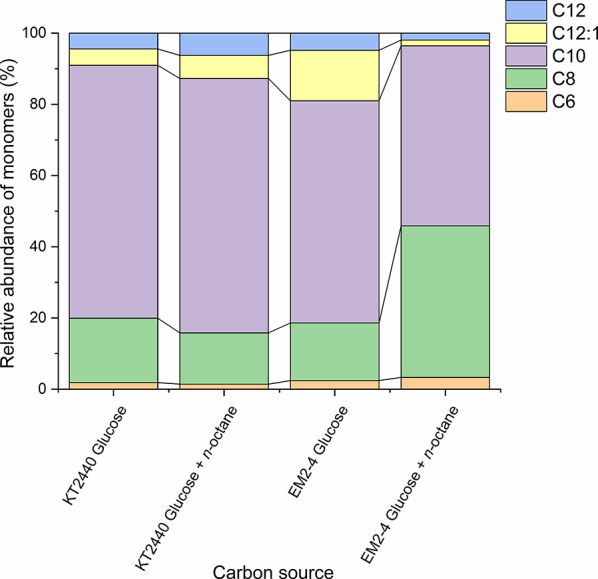 Figure 3
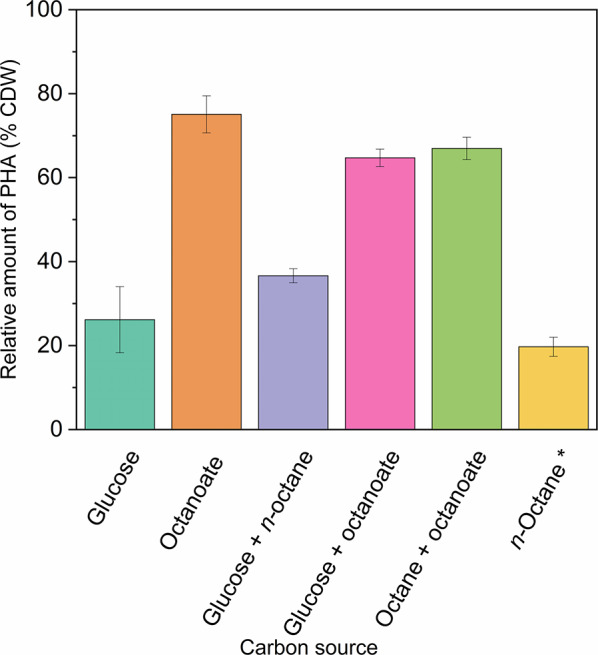 Figure 4
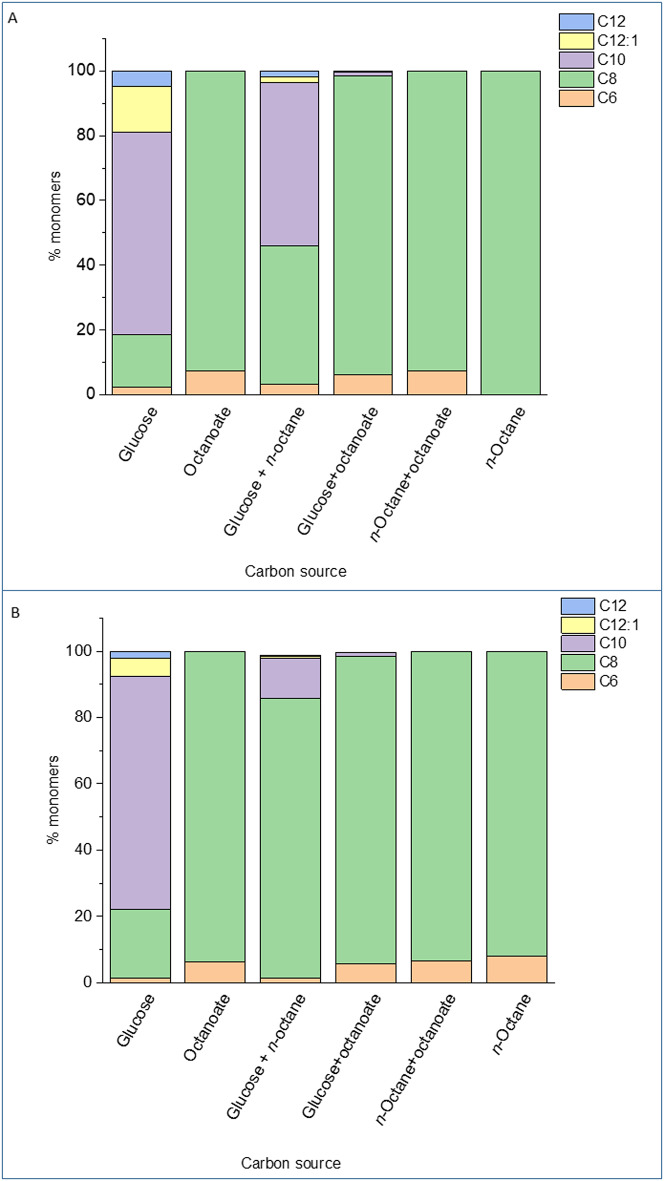 Figure 5
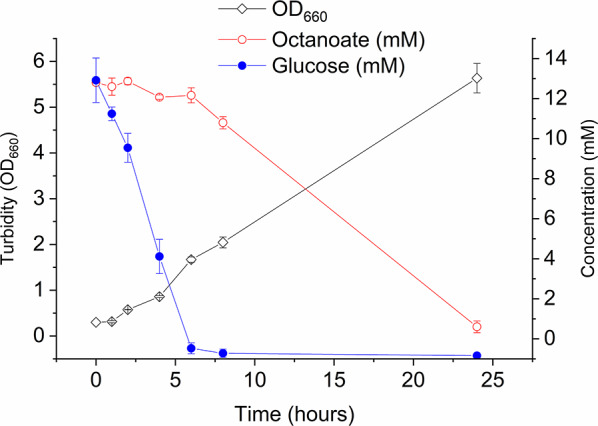 Figure 6
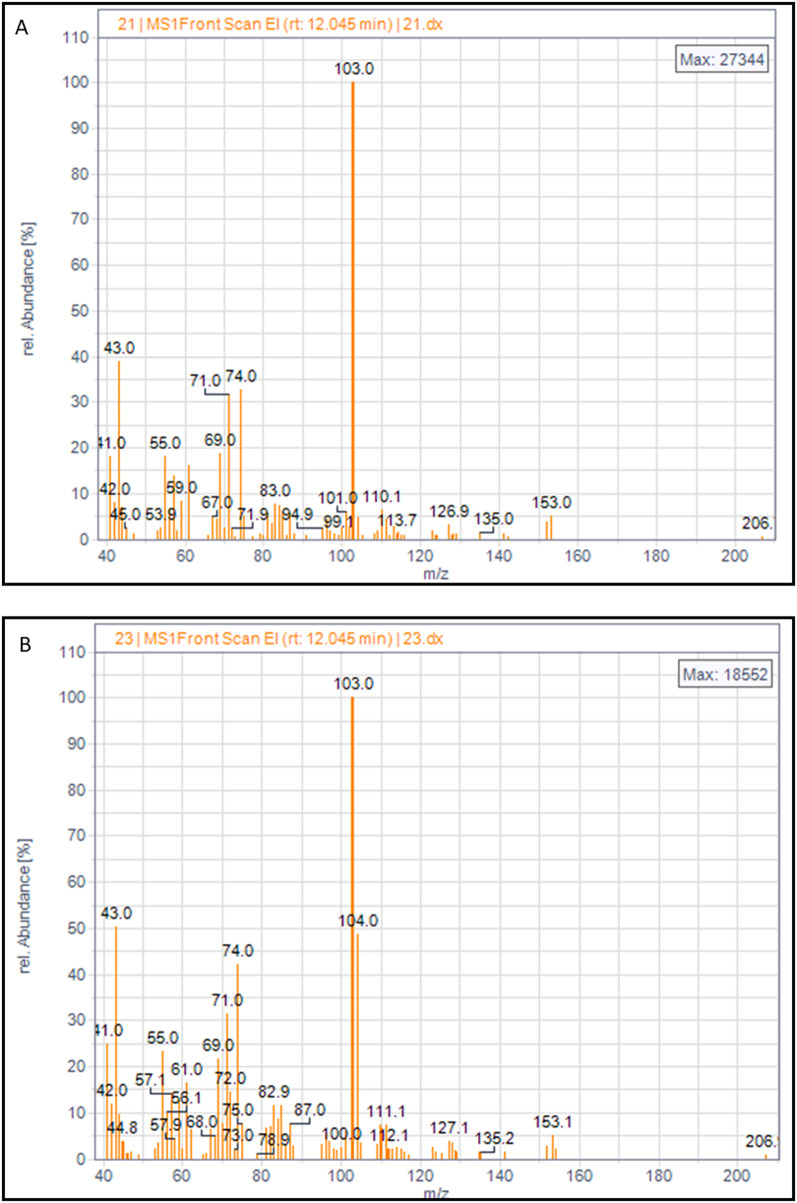 Figure 7
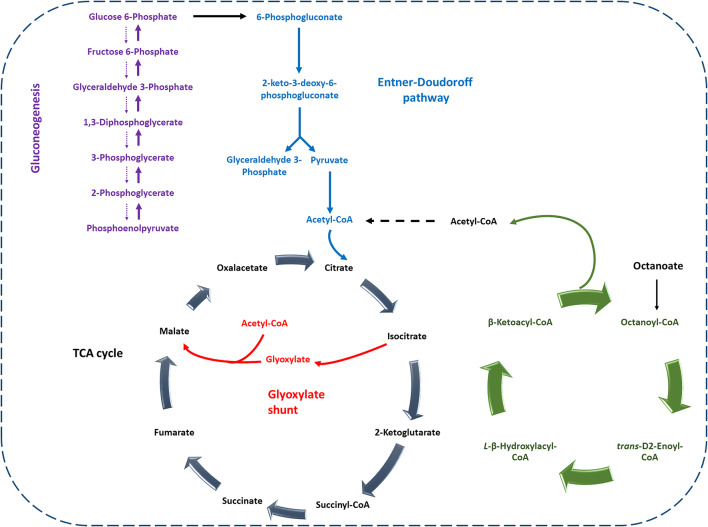 Figure 8
Peer Reviews
No public reviews on file for this paper yet. If you reviewed it on a platform where reviews are public (OpenReview, ICLR, NeurIPS, ICML), you can paste yours below so the community can read it here.
Videos
No videos yet. Explain this paper in a talk, walkthrough, or lecture? Add one.
Taxonomy
Topicsbiodegradable polymer synthesis and properties · Microplastics and Plastic Pollution · Microbial metabolism and enzyme function