Fe–Mn Biochar Composites from Sugarcane Bagasse for Herbicides Removal: Structure, Mechanisms, and Safety Relationships toward Sustainable Water Treatment
Thamiris Ferreira Souza, Lucas Ferreira Fernandes, Laura Maria da Silva Batista, Carlos Henrique Milagres Ribeiro, Fábio Rodrigo Piovezani Rocha, Rafael Pio, Guilherme Max Dias Ferreira

TL;DR
This paper explores using Fe–Mn biochar composites made from sugarcane bagasse to remove herbicides from water, showing effectiveness but also highlighting the need for safety checks.
Contribution
The study introduces Fe–Mn biochar composites synthesized from sugarcane bagasse for sustainable herbicide removal and evaluates their adsorption mechanisms and safety.
Findings
IME composites showed consistent herbicide removal across pH levels, while COP was pH-dependent.
2,4-D removal mainly involved Fe3+-carboxylate complexation, while picloram adsorption relied on weaker interactions.
Metal leaching from IME exceeded Mn safety limits, and reuse performance declined significantly after three cycles.
Abstract
Fe–Mn biochar composites were synthesized from sugarcane bagasse through prepyrolytic impregnation with FeCl3 and MnCl2, using immersion (IME) and coprecipitation (COP) methods, followed by pyrolysis at 600 °C for 2 h. Their characterization revealed distinct differences in surface chemistry and oxide dispersion. Both composites contained mixed Fe3O4, Fe2O3, MnO, and Mn3O4 phases, but IME exhibited a amorphous carbon matrix, while COP displayed greater crystallinity (∼41%). In aqueous adsorption studies, IME maintained nearly constant removal efficiency across pH 2–10, whereas COP was strongly pH-dependent, leading to IME’s selection for subsequent studies. Adsorption isotherms of 2,4-dichlorophenoxyacetic acid (2,4-D) and picloram (25 °C; 2 g L–1) were well fitted by the Sips model, with maximum adsorption capacities of 18.1 and 8.1 mg g–1, respectively. X-ray photoelectron…
Genes, proteins, chemicals, diseases, species, mutations and cell lines named across the full text — each resolved to its canonical identifier and authoritative record.
Click any figure to enlarge with its caption.
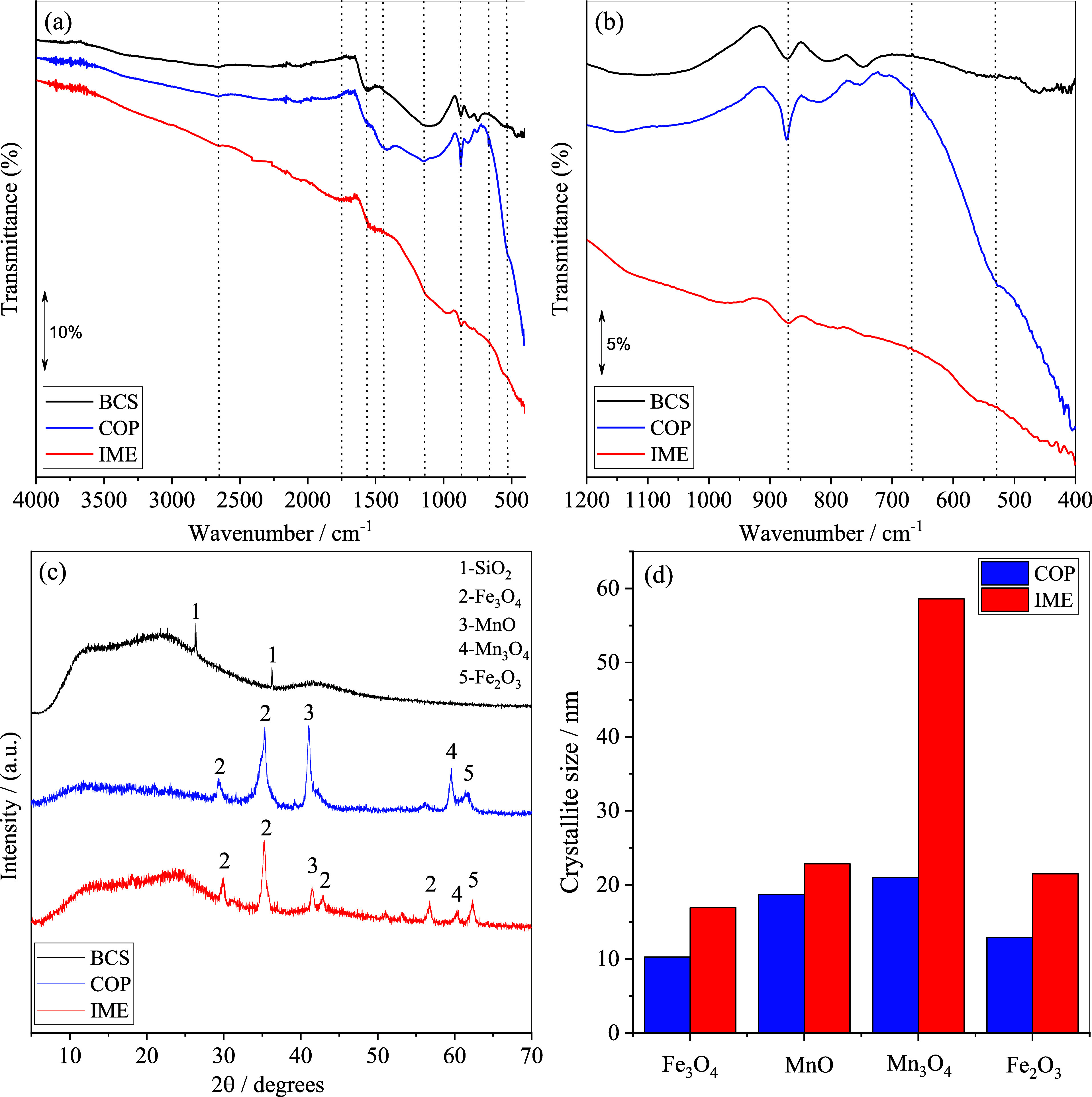 Figure 1
 Figure 2
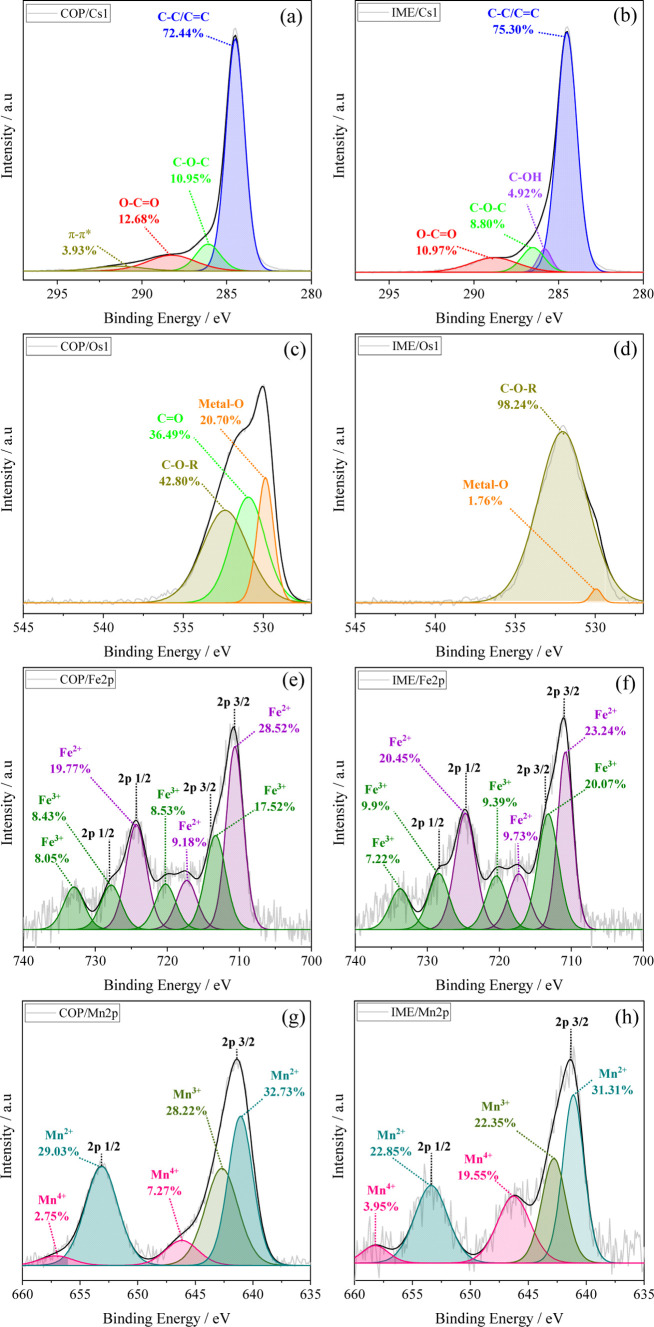 Figure 3
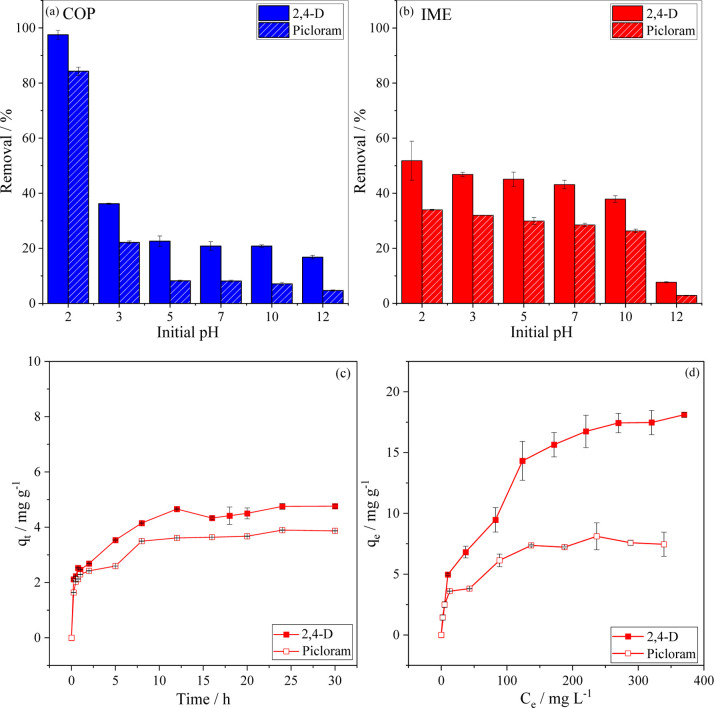 Figure 4
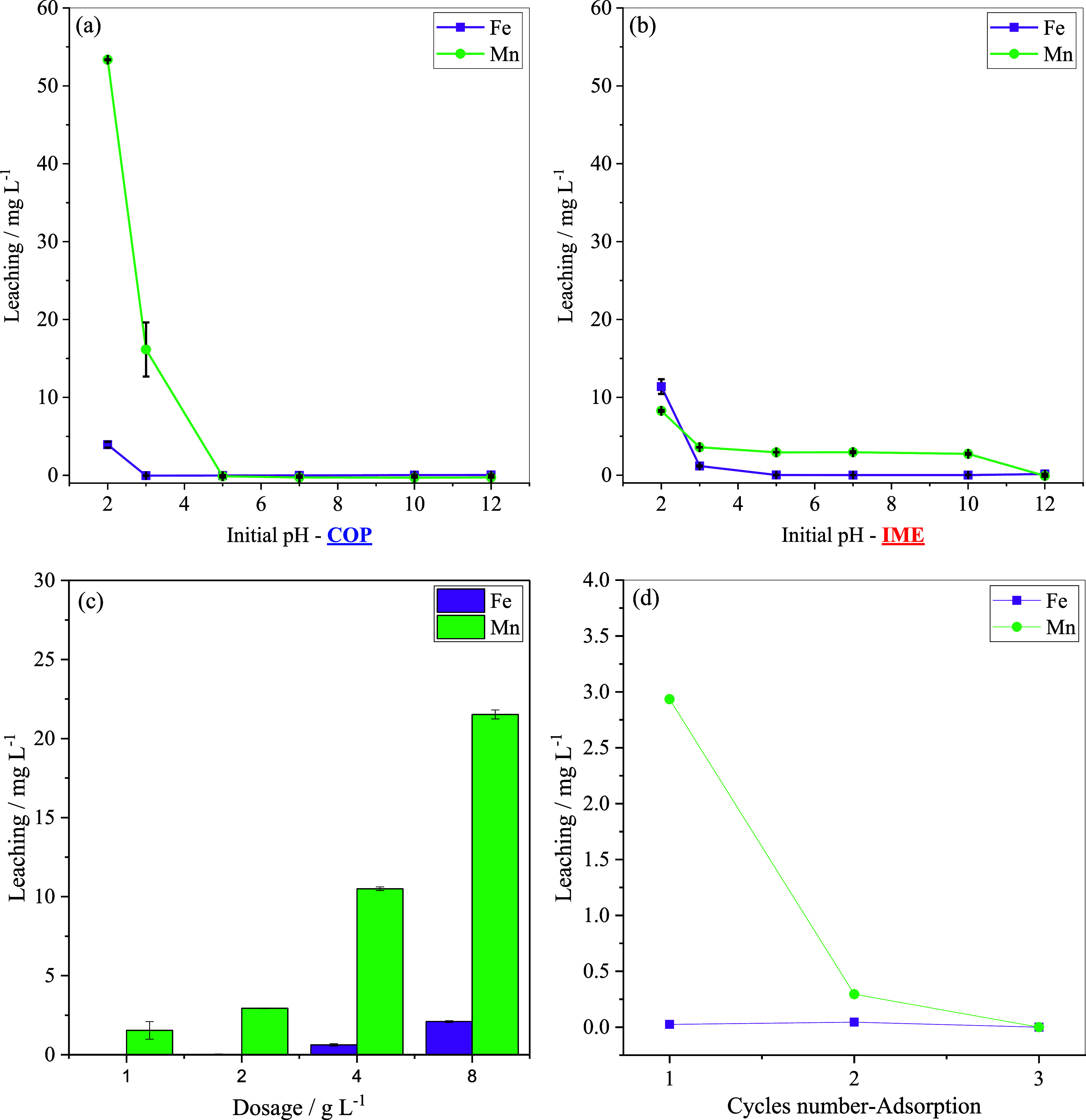 Figure 5
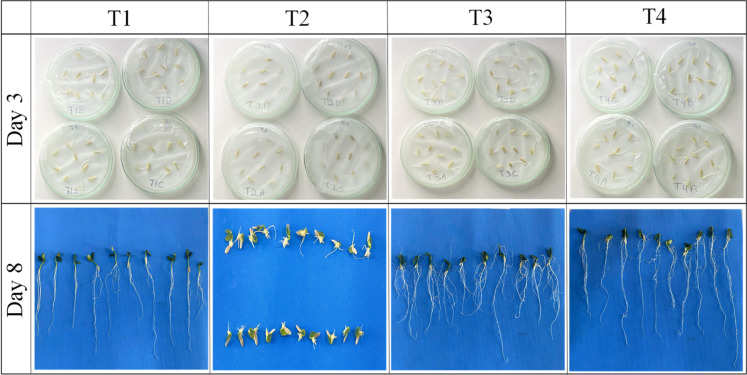 Figure 6
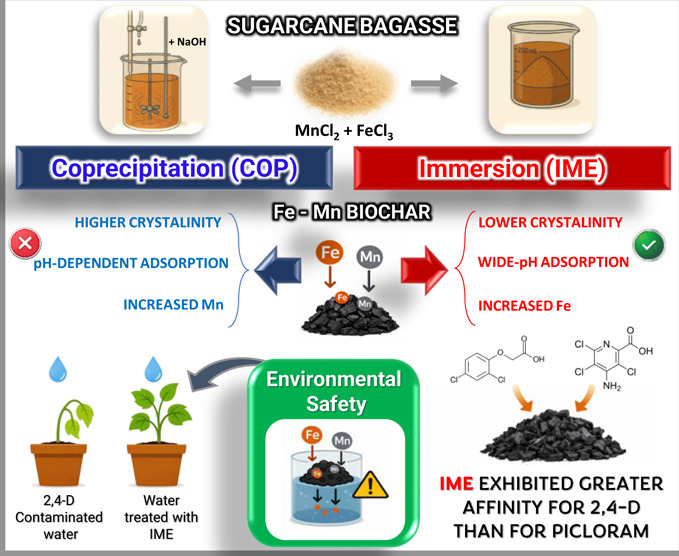 Figure 7
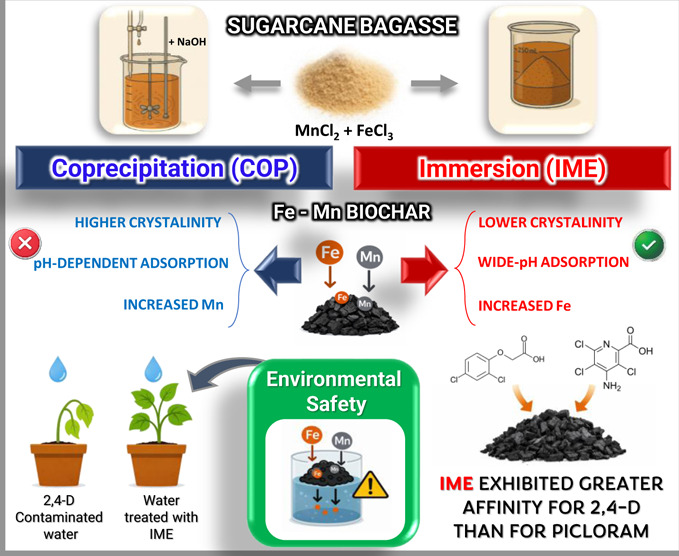 Figure 8
 Figure 9
 Figure 10
 Figure 11
 Figure 12
 Figure 13
 Figure 14
 Figure 15
 Figure 16
Peer Reviews
No public reviews on file for this paper yet. If you reviewed it on a platform where reviews are public (OpenReview, ICLR, NeurIPS, ICML), you can paste yours below so the community can read it here.
Videos
No videos yet. Explain this paper in a talk, walkthrough, or lecture? Add one.
Taxonomy
TopicsAdsorption and biosorption for pollutant removal · Environmental remediation with nanomaterials · Advanced oxidation water treatment