The impact of metal amino acid complexes on cuticle quality and Salmonella Enteritidis contamination in laying hens’ eggs
Saruanna M. S. Clemente, Mércia R. Barros, Carlos B. V. Rabello, Marcos Jose Batista dos Santos, Waleska R. L. Medeiros-Ventura, Rogério Ventura da Silva Junior, Felipe P. Melo, Priscila O. Silva, Fábio A. B. Santos, Raquel Burin, Alba Fireman

TL;DR
This study shows that using metal amino acid complexes in laying hens improves eggshell quality and reduces Salmonella contamination, making eggs safer for consumption.
Contribution
The study demonstrates that amino acid-complexed minerals enhance eggshell quality and prevent bacterial contamination more effectively than traditional inorganic minerals.
Findings
Supplementation with 40% amino acid-complexed minerals improved shell thickness and reduced Salmonella contamination.
Lysine and glutamic acid-complexed minerals at all levels completely prevented bacterial penetration into egg yolks.
Eggs from hens fed 40% amino acid-complexed minerals had 91.7% classified as no risk for consumption.
Abstract
Eggshell quality and microbial safety are critical concerns in poultry production, with Salmonella Enteritidis contamination representing a significant public health risk. Traditional inorganic mineral supplementation may not optimize eggshell integrity against bacterial penetration. This study investigated the effects of different metal–amino acid complexes on eggshell cuticle quality and resistance to S. Enteritidis penetration in egg laying hens. Two experiments were conducted with 67-week-old Dekalb White laying hens with treatments consisting of inorganic minerals (IM; Control at 100% recommendations inclusion) or different trace mineral inclusion rates (100, 70, and 40%) as either amino acid-complexed minerals (AACM, Experiment 1) or lysine and glutamic acid-complexed minerals (LGCM, Experiment 2). The quality of the eggshell cuticle was measured using spectrophotometric…
Genes, proteins, chemicals, diseases, species, mutations and cell lines named across the full text — each resolved to its canonical identifier and authoritative record.
Click any figure to enlarge with its caption.
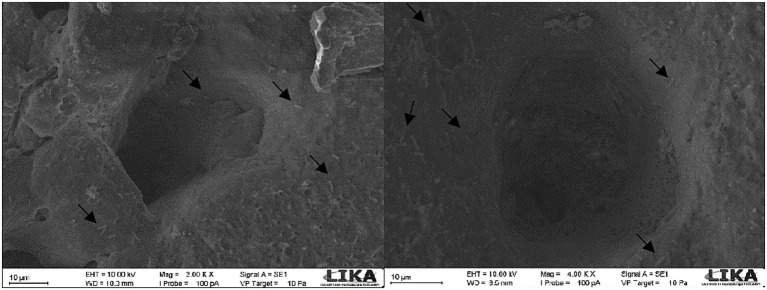 Figure 1
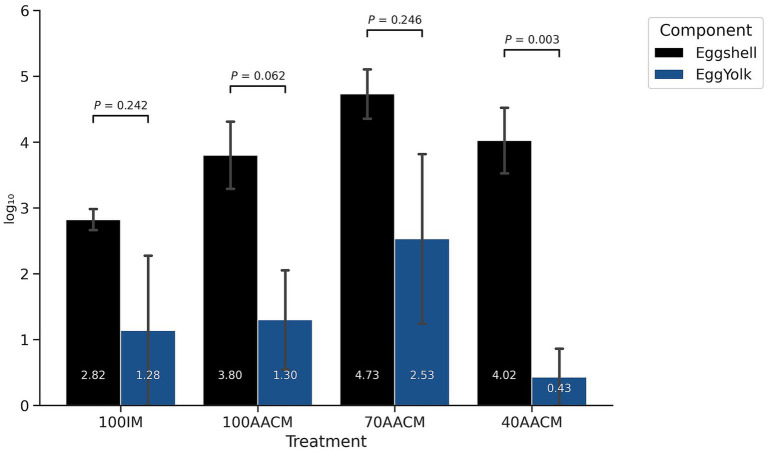 Figure 2
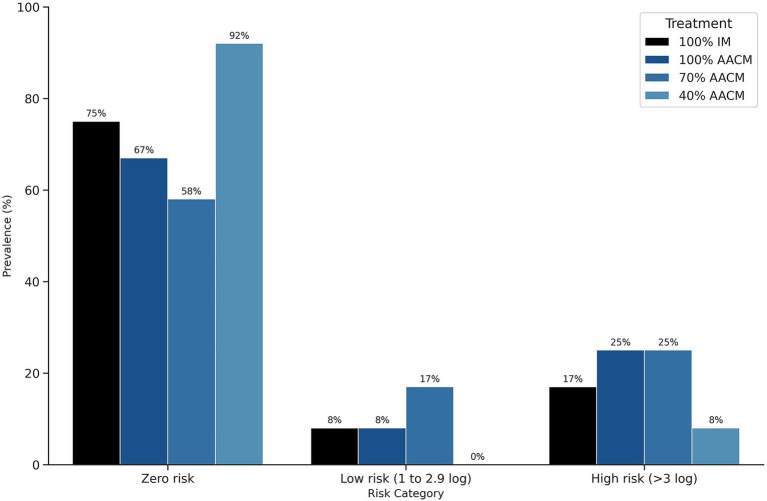 Figure 3
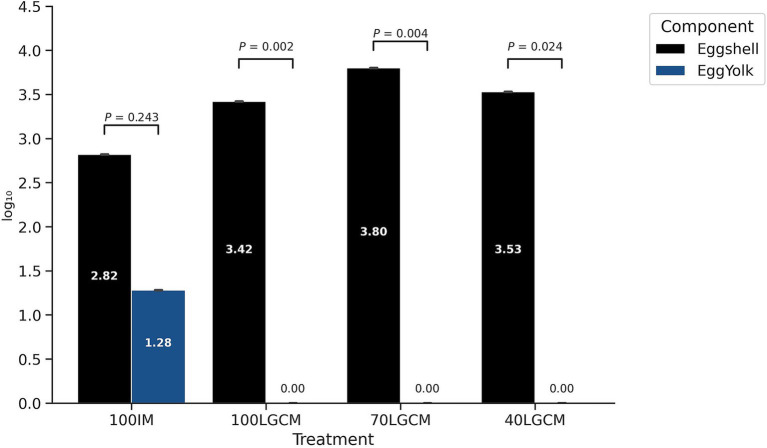 Figure 4
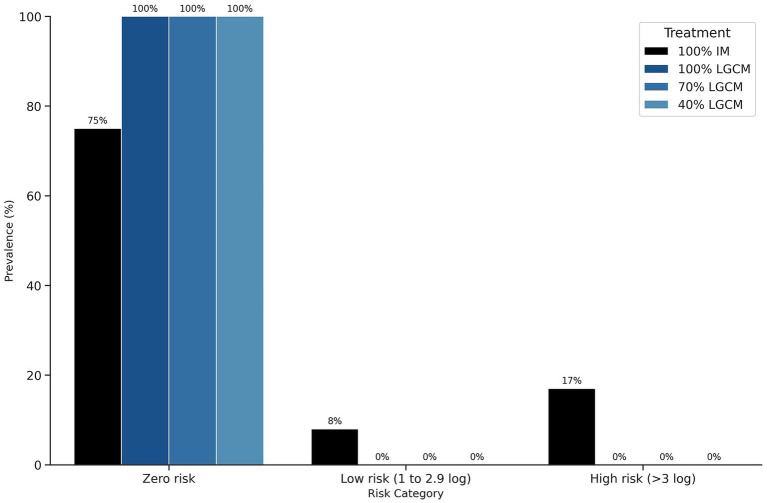 Figure 5
Peer Reviews
No public reviews on file for this paper yet. If you reviewed it on a platform where reviews are public (OpenReview, ICLR, NeurIPS, ICML), you can paste yours below so the community can read it here.
Videos
No videos yet. Explain this paper in a talk, walkthrough, or lecture? Add one.
Taxonomy
TopicsAnimal Nutrition and Physiology · Salmonella and Campylobacter epidemiology · Meat and Animal Product Quality