Inferring neural sources from electroencephalography: foundations and frontiers
A R Phillips, Y S Vakilna, D EPMoghaddam, A Banta, J C Mosher, B Aazhang

TL;DR
This paper reviews methods for improving the accuracy of brain activity localization using EEG, focusing on overcoming spatial resolution limitations and integrating advanced techniques.
Contribution
The paper synthesizes recent advances in nonlinear inverse modeling and multimodal integration for EEG source localization.
Findings
Nonlinear methods and high-density EEG systems can better address anatomical variability and source complexity.
Multimodal integration improves the accuracy of neural source estimation.
Publicly available datasets and software tools are essential for advancing EEG source localization research.
Abstract
Electroencephalography (EEG) provides robust, cost-effective, and portable measurements of brain electrical activity. However, its spatial resolution is limited, constraining the localization and estimation of deep sources. Although methods exist to infer neural activity from scalp recordings, major challenges remain due to high dimensionality, temporal overlap among neural sources, and anatomical variability in head geometry. This topical review synthesizes inverse modeling approaches, with emphasis on nonlinear methods, multimodal integration, and high-density EEG systems that address these limitations. We also review the forward model and related background theory, summarize clinical applications, outline research directions, and identify available software tools and relevant publicly available datasets. Our goal is to help researchers understand traditional source estimation…
Genes, proteins, chemicals, diseases, species, mutations and cell lines named across the full text — each resolved to its canonical identifier and authoritative record.
Click any figure to enlarge with its caption.
 Figure 1
 Figure 2
 Figure 3
 Figure 4
 Figure 5
 Figure 6
 Figure 7
 Figure 8
 Figure 9
 Figure 10
 Figure 11
 Figure 12
 Figure 13
 Figure 14
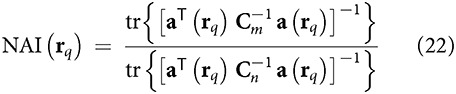 Figure 15
 Figure 16
 Figure 17
 Figure 18
 Figure 19
 Figure 20
 Figure 21
 Figure 22
 Figure 23
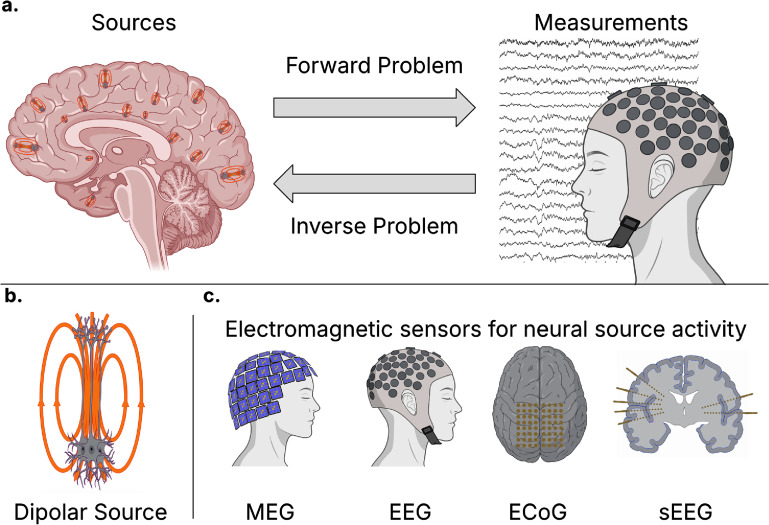 Figure 24
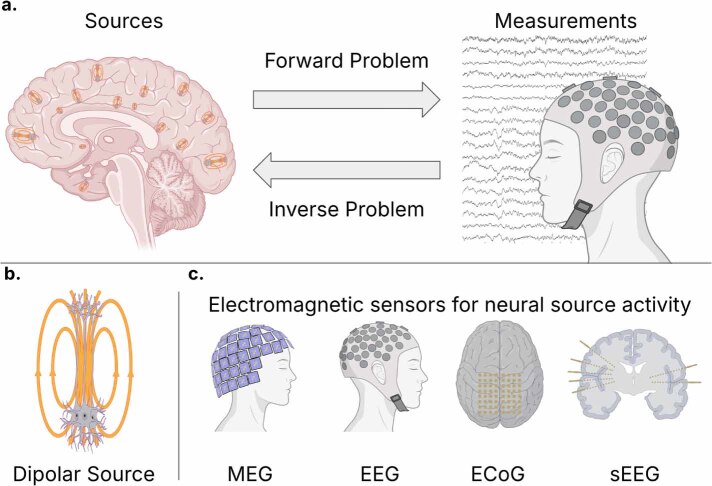 Figure 25
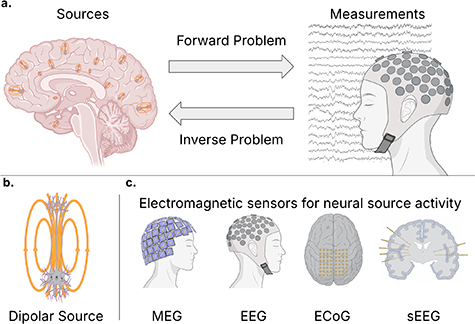 Figure 26
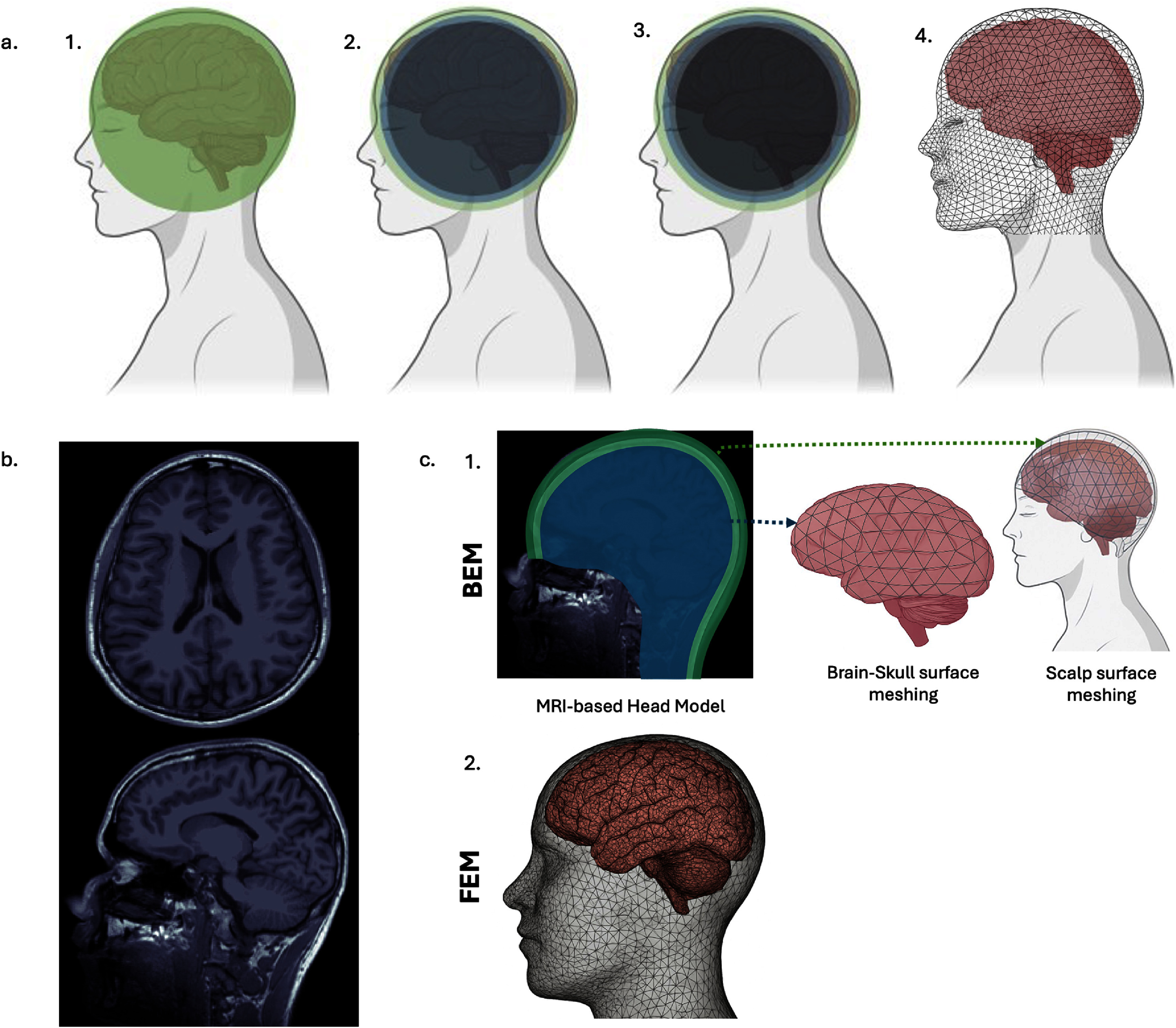 Figure 27
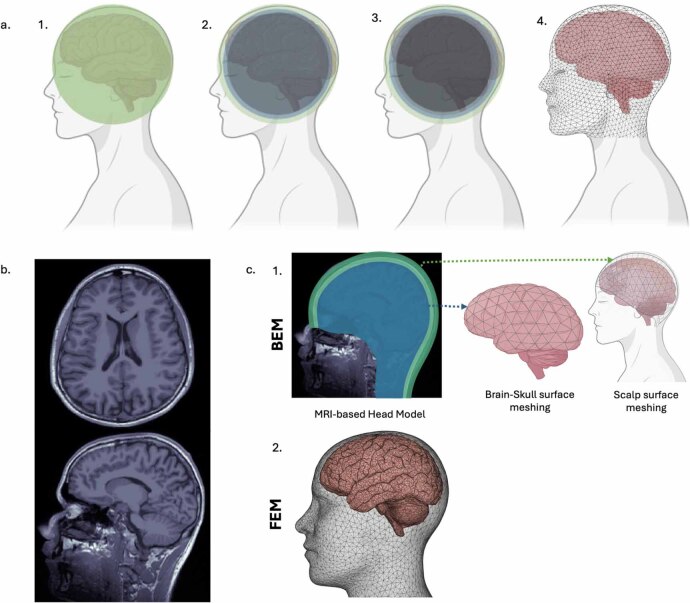 Figure 28
 Figure 29
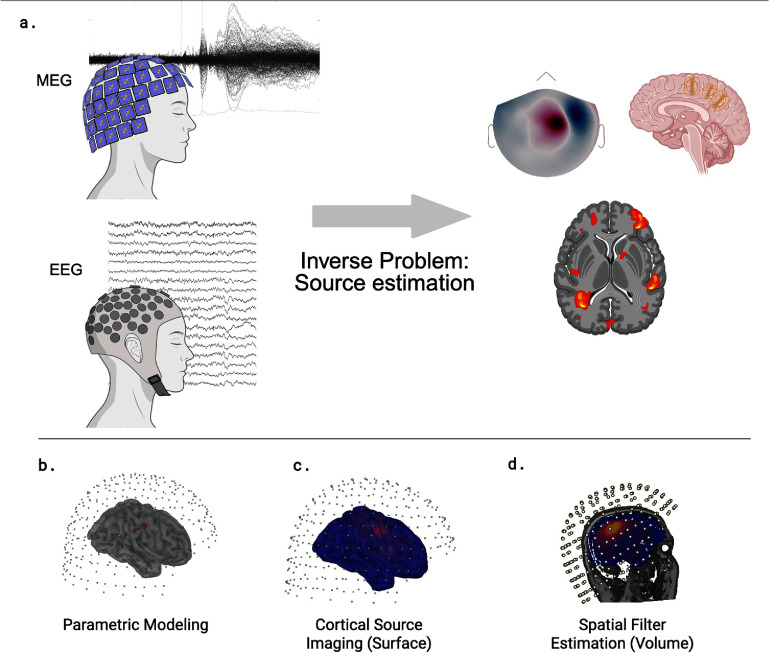 Figure 30
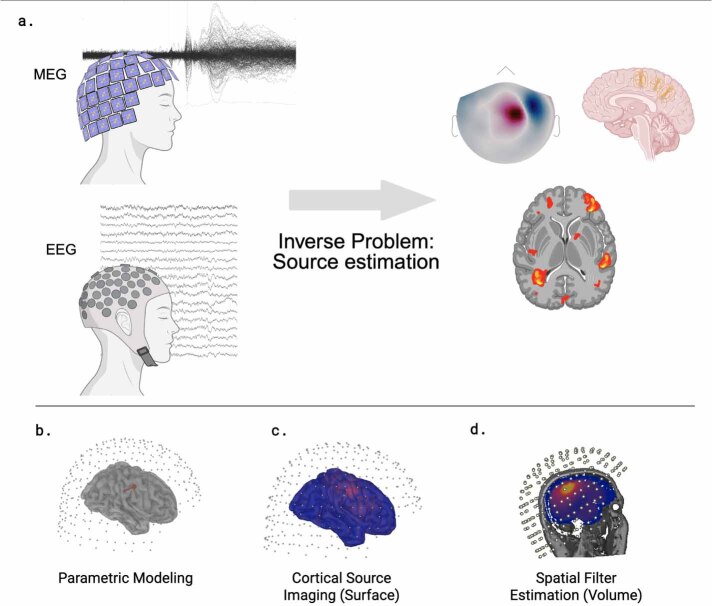 Figure 31
 Figure 32
 Figure 33
 Figure 34
 Figure 35
 Figure 36
 Figure 37
 Figure 38
 Figure 39
 Figure 40
 Figure 41
 Figure 42
 Figure 43
 Figure 44
 Figure 45
 Figure 46
 Figure 47
 Figure 48
 Figure 49
 Figure 50
Peer Reviews
No public reviews on file for this paper yet. If you reviewed it on a platform where reviews are public (OpenReview, ICLR, NeurIPS, ICML), you can paste yours below so the community can read it here.
Videos
No videos yet. Explain this paper in a talk, walkthrough, or lecture? Add one.
Taxonomy
TopicsFunctional Brain Connectivity Studies · EEG and Brain-Computer Interfaces · Face Recognition and Perception