Liquid Patterning Using Droplet Impact on Textured Nonwetting Surfaces
Biruk Teka Gidreta, Elijah Williams, Michal Remer, Solomon Adera

TL;DR
This paper introduces a method to control droplet shapes on nonwetting surfaces using textured silicon micropillars, enabling precise patterning for various industrial applications.
Contribution
A novel approach to manipulate droplet contact shapes on nonwetting surfaces using structured micropillars and a unified analytical model for wetting morphology.
Findings
Droplet contact shapes can be polygonal (square, hexagon, etc.) based on micropillar arrangement and density.
Inline and staggered micropillar arrangements produce distinct polygonal wetting patterns.
A unified analytical model accurately predicts droplet wetting and entrapped bubble retraction during impact.
Abstract
Controlling the shape and contact area that an impacting droplet makes with a solid substrate has significant implications in numerous industrial processes, including inkjet printing and spray cooling. Here, we report a unique approach that offers an extraordinary ability to precisely control and manipulate the contact shape of a droplet impinging on nonwetting well-structured silicon micropillars. Our experiments show that the wetted Wenzel-type contact area can take on various polygonal shapes, including square, rectangle, hexagon, octagon, and dodecagon, depending on the pillar density (diameter-to-spacing ratio), arrangement (inline versus staggered), and/or the droplet contact angle. Experiments show that inline pillars give rise to a square, rectangle, or octagon shape while staggered pillars give rise to a hexagon, dodecagon, or extended hexagon shape. Rooted in the fundamentals…
Genes, proteins, chemicals, diseases, species, mutations and cell lines named across the full text — each resolved to its canonical identifier and authoritative record.
Click any figure to enlarge with its caption.
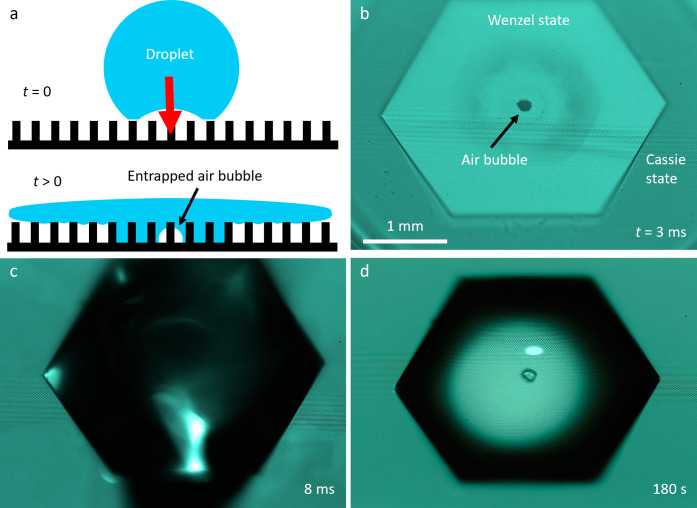 Figure 1
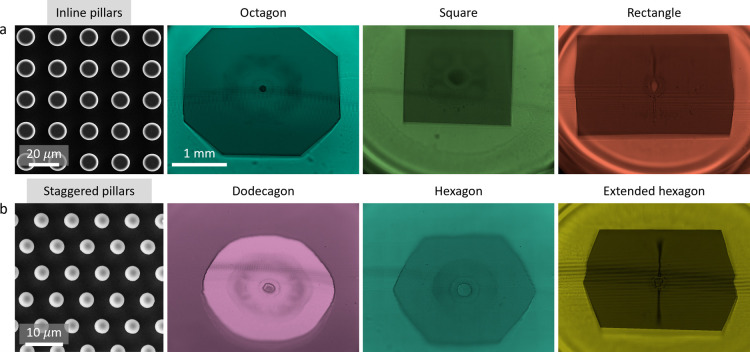 Figure 2
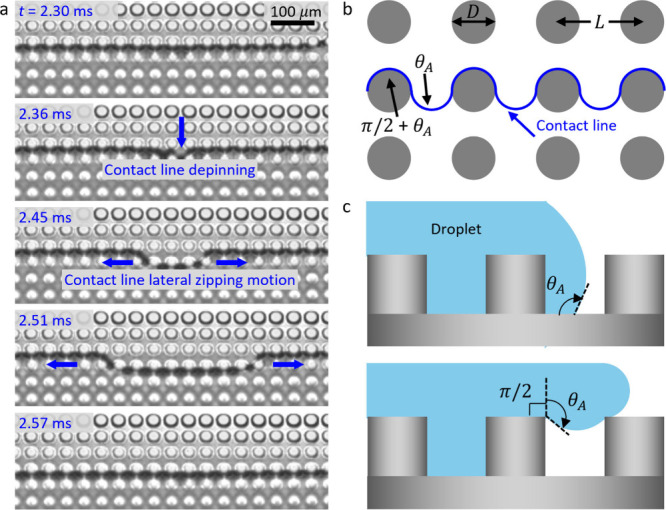 Figure 3
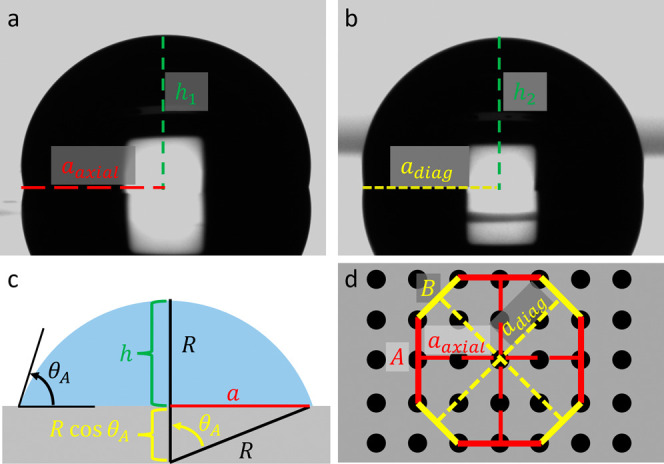 Figure 4
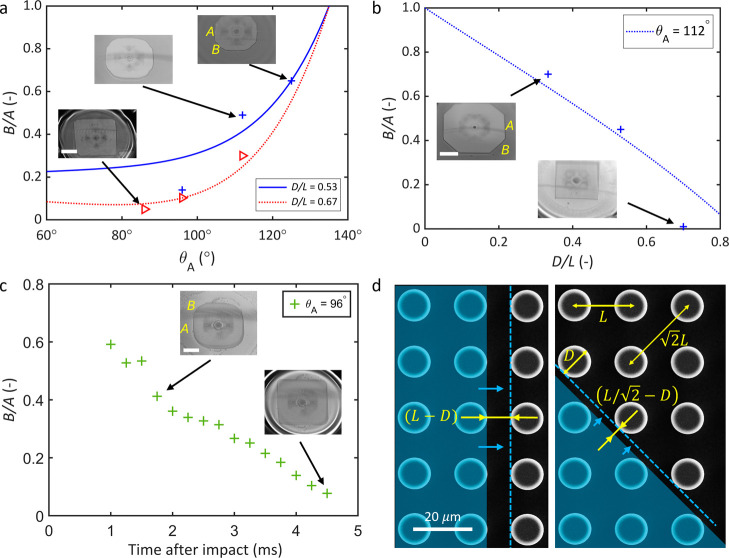 Figure 5
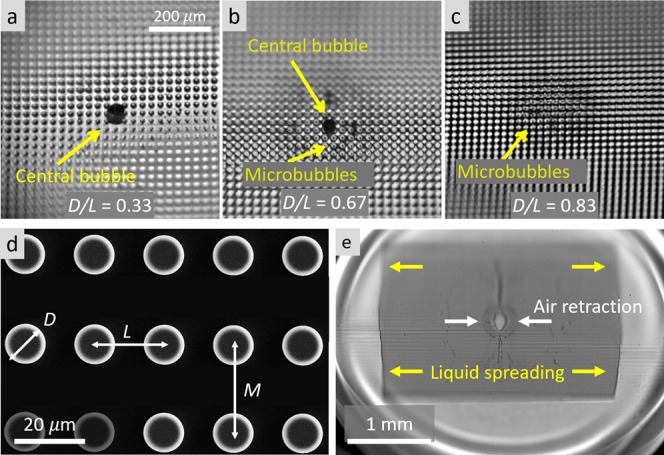 Figure 6
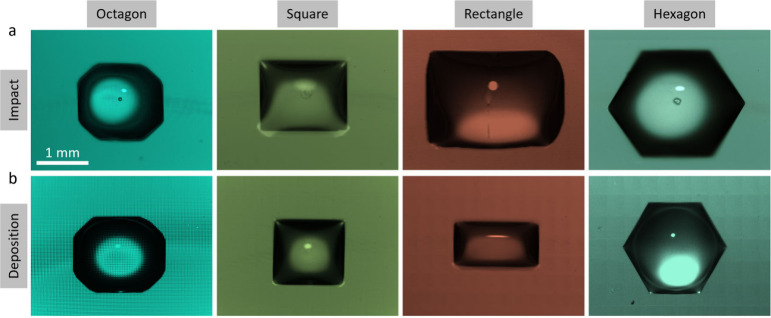 Figure 7
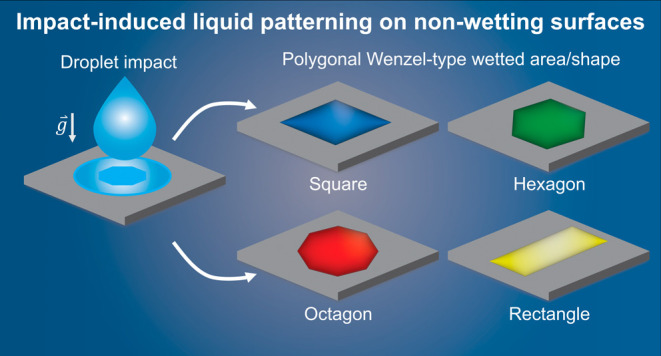 Figure 8
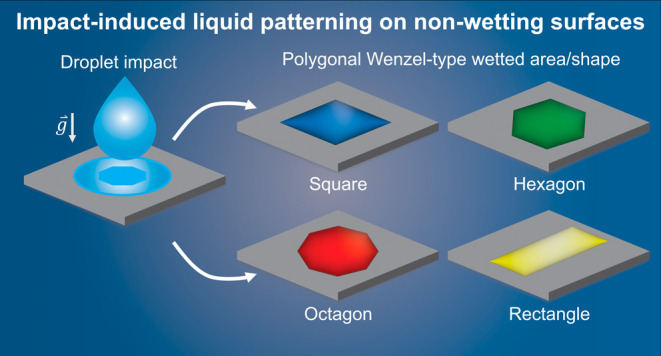 Figure 9
 Figure 10
 Figure 11
 Figure 12
 Figure 13
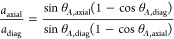 Figure 14
 Figure 15
 Figure 16
 Figure 17
 Figure 18
 Figure 19
 Figure 20
Peer Reviews
No public reviews on file for this paper yet. If you reviewed it on a platform where reviews are public (OpenReview, ICLR, NeurIPS, ICML), you can paste yours below so the community can read it here.
Videos
No videos yet. Explain this paper in a talk, walkthrough, or lecture? Add one.
Taxonomy
TopicsNanomaterials and Printing Technologies · Fluid Dynamics and Heat Transfer · Surface Modification and Superhydrophobicity