Wafer-Bonded AlGaInP Red LEDs with Suppressed S‑Droop through Surface Sulfidation
Je-Sung Lee, Seung-Hyun Mun, Sunwoo Shin, Rae-Young Kim, Seung Hyeok Lee, Sugyeong Cha, Hye-Sung Han, Kyung-Pil Kim, Hoe-Min Kwak, Jaeyoung Baik, Soo-Young Choi, Sang-Jo Kim, Woo-Lim Jeong, Jun-Youn Kim, Sung-Chan Jo, Chang-Mo Kang, Dong-Seon Lee

TL;DR
This paper shows how surface sulfidation improves the efficiency of red micro-LEDs by reducing defects and enhancing performance.
Contribution
The study demonstrates that surface sulfidation reduces S-droop in AlGaInP LEDs by stabilizing surface defects and unpinning the Fermi level.
Findings
Surface sulfidation with ammonium sulfide increases maximum external quantum efficiency by 120.6% at 5 A/cm².
Sulfidation replaces surface defects with stable sulfur bridge bonds, reducing nonradiative recombination.
Electrical characterization shows sulfidation improves both top and sidewall interface properties.
Abstract
Micro–light-emitting diode (micro-LED) technology enables high pixels-per-inch (PPI) displays using conventional semiconductor processes and relies on extremely miniaturized mesa structures derived from traditional LEDs. Scaling to smaller sizes leads to a significant decrease in emission efficiency because of the stronger influence of sidewall damage. This efficiency degradation, known as the size-effect or S-droop, primarily arises from surface defects introduced by dry etching. These defects promote nonradiative Shockley–Read–Hall (SRH) recombination and create pathways for surface leakage current. In aluminum gallium indium phosphide (AlGaInP) LEDs, chemical passivation with ammonium sulfide is widely used to mitigate sidewall damage. However, the underlying reaction mechanism remains unclear, and most studies address only the sidewall regions. In this work, we fabricated a…
Genes, proteins, chemicals, diseases, species, mutations and cell lines named across the full text — each resolved to its canonical identifier and authoritative record.
Click any figure to enlarge with its caption.
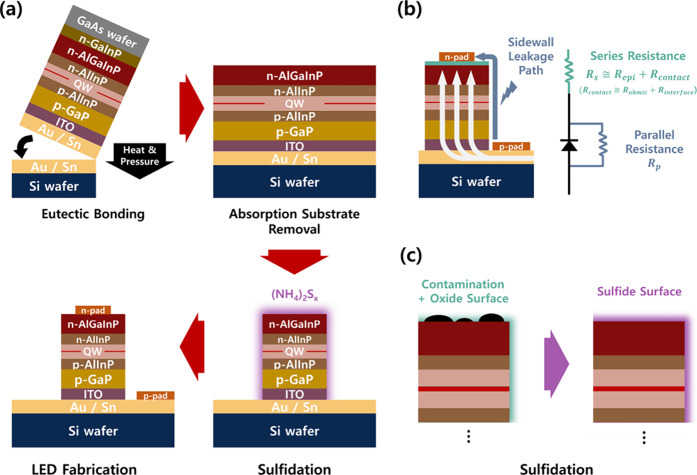 Figure 1
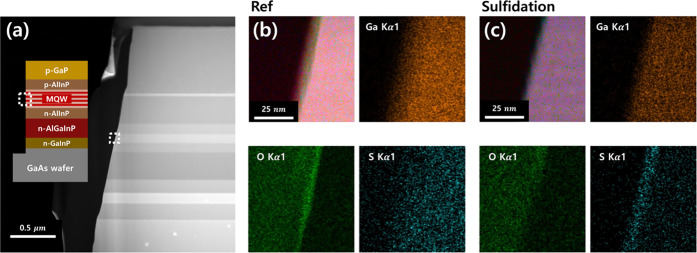 Figure 2
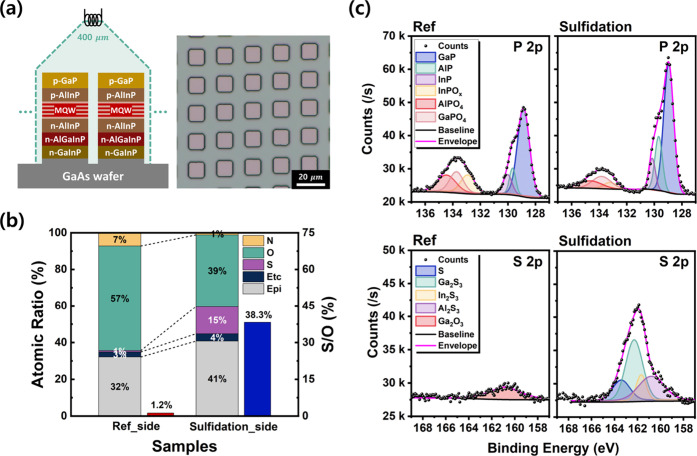 Figure 3
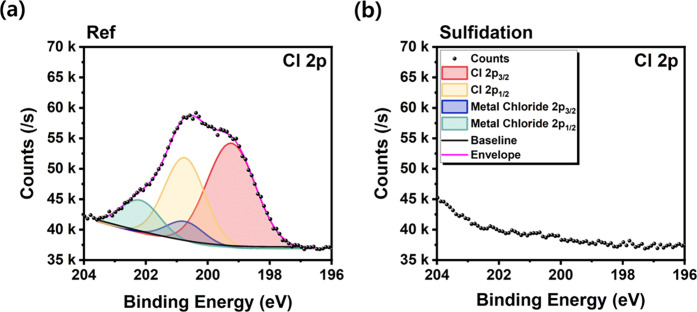 Figure 4
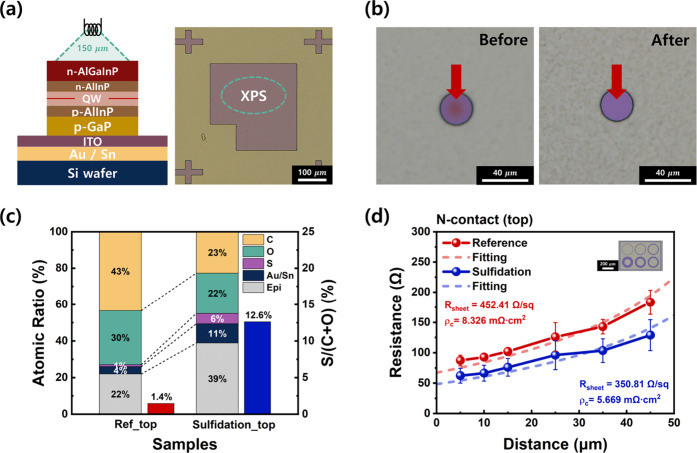 Figure 5
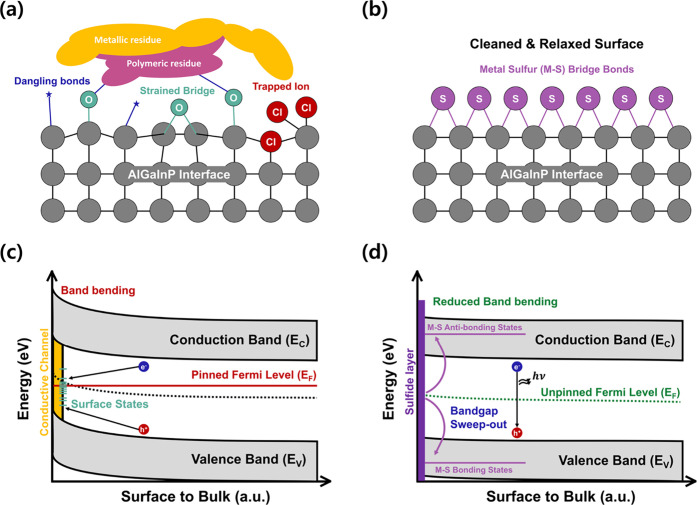 Figure 6
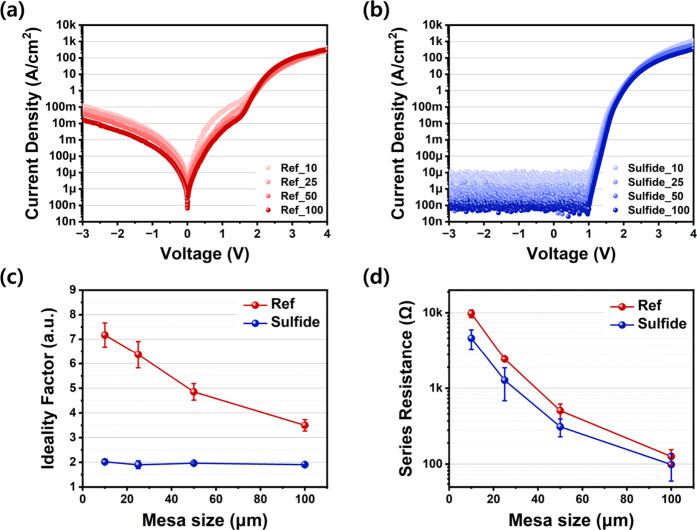 Figure 7
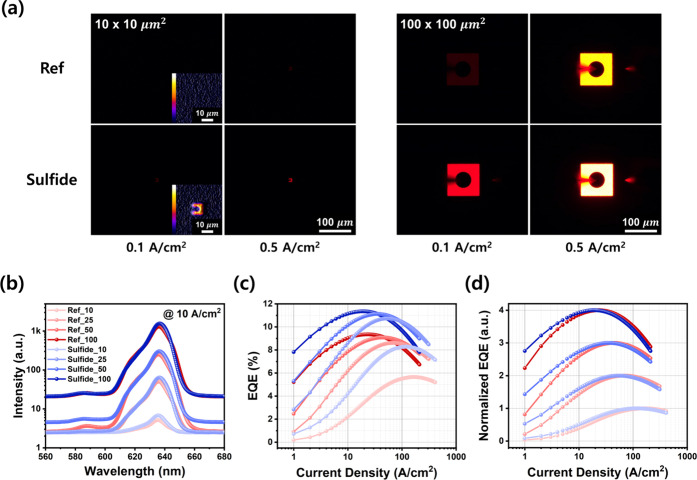 Figure 8
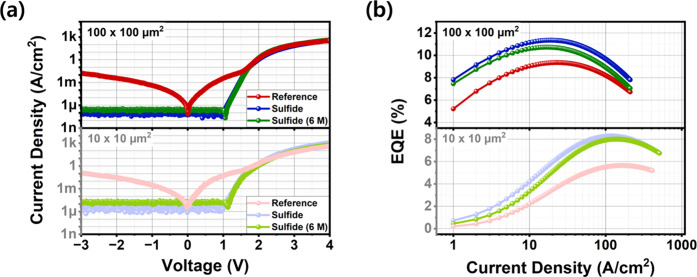 Figure 9
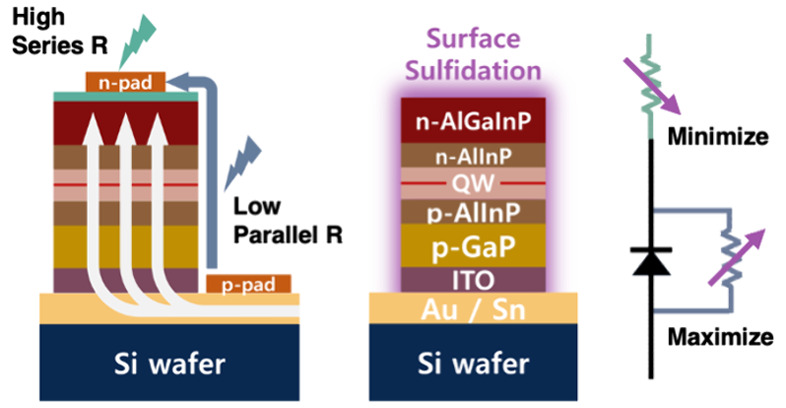 Figure 10
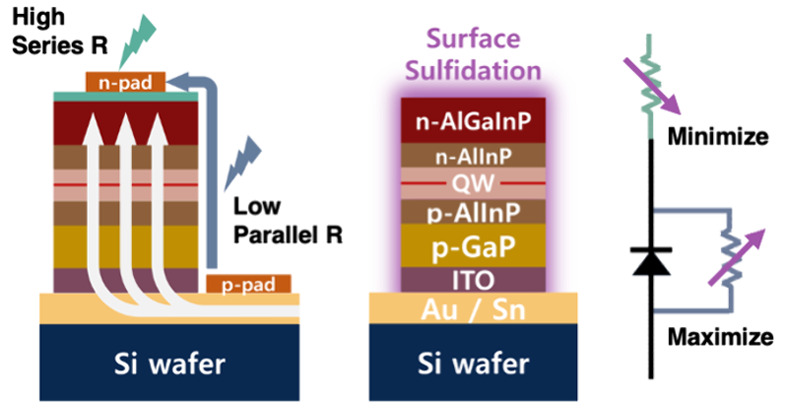 Figure 11
 Figure 12
 Figure 13
 Figure 14
 Figure 15
Peer Reviews
No public reviews on file for this paper yet. If you reviewed it on a platform where reviews are public (OpenReview, ICLR, NeurIPS, ICML), you can paste yours below so the community can read it here.
Videos
No videos yet. Explain this paper in a talk, walkthrough, or lecture? Add one.
Taxonomy
TopicsGaN-based semiconductor devices and materials · Silicon Nanostructures and Photoluminescence · Semiconductor Quantum Structures and Devices