Scalable Defect Engineering of Pt3Te4 Nanosheets Activates an Electro-Switchable and Termination-Dependent PtO2 Skin for Low-Overpotential Hydrogen Evolution
Tsotne Dadiani, Gianluca D’Olimpio, Loreta Tamasauskaite-Tamasiunaite, Stefano Zenone, Chia-Nung Kuo, Matteo Amati, Zygmunt Milosz, Luca Gregoratti, Tomáš Hrbek, Miquel Gamón Rodríguez, Marian Cosmin Istrate, Chin Shan Lue, Yevheniia Lobko, Corneliu Ghica, Eugenijus Norkus

TL;DR
This paper shows how to create efficient hydrogen production catalysts using nanosheets of a topological metal, Pt3Te4, by engineering their surface chemistry.
Contribution
The study introduces a scalable method to create electro-switchable PtO2 skins on Pt3Te4 nanosheets for enhanced hydrogen evolution.
Findings
H2O2-assisted exfoliation creates nanoporous Pt3Te4 nanosheets with a bias-controlled PtO2 skin.
PtO2 forms selectively on PtTe2-like terminations, improving HER performance with lower overpotential and higher current density.
The catalytic activity is stable over 50 hours in acidic conditions with no change in Tafel slope.
Abstract
Topological materials are promising electrocatalysts for the hydrogen evolution reaction (HER) because of their protected electronic states and exceptional carrier mobility. Among them, the topological metal Pt3Te4 (mitrofanovite) exhibits low Tafel slopes in the nanocrystals. Realizing this potential in scalable catalyst systems requires nanoscale texturing coupled with precise control of the surface chemistry under operating conditions. Herein, we demonstrate that hydrogen peroxide (H2O2)-assisted liquid-phase exfoliation (LPE) of bulk Pt3Te4 yields nanoporous nanosheets that retain their metallic character and are chemically preconditioned to develop a bias-controlled PtO2 skin that governs the catalytic activity. Crucially, spectromicroscopy resolves termination-selective oxidation: PtO2 forms exclusively on PtTe2-like terminations, whereas Pt2Te2 terminations remain metallic.…
Genes, proteins, chemicals, diseases, species, mutations and cell lines named across the full text — each resolved to its canonical identifier and authoritative record.
Click any figure to enlarge with its caption.
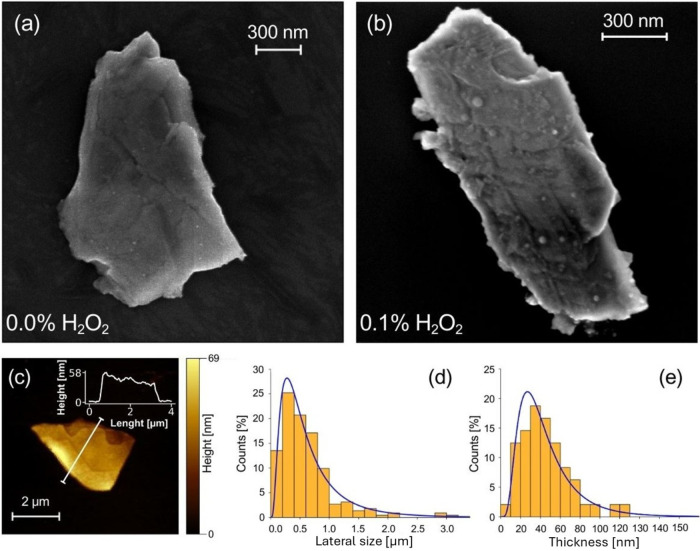 Figure 1
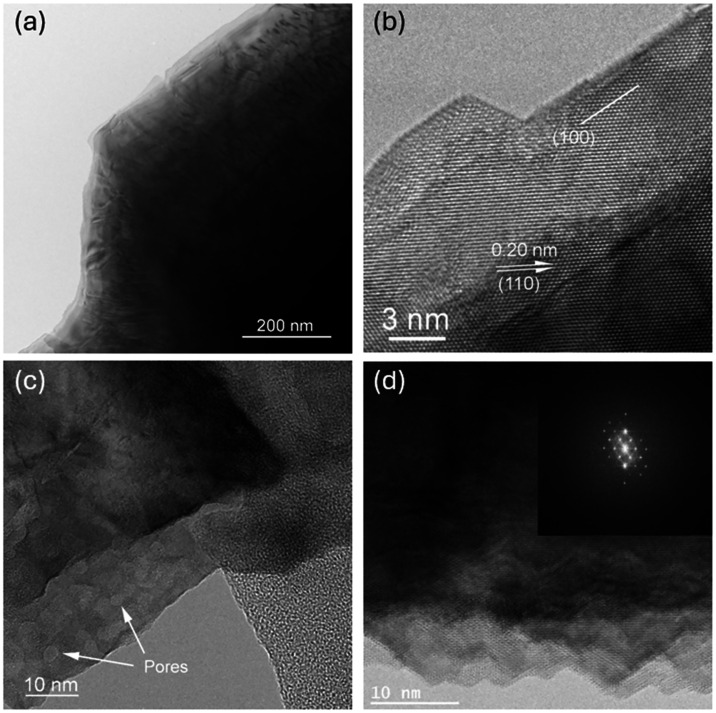 Figure 2
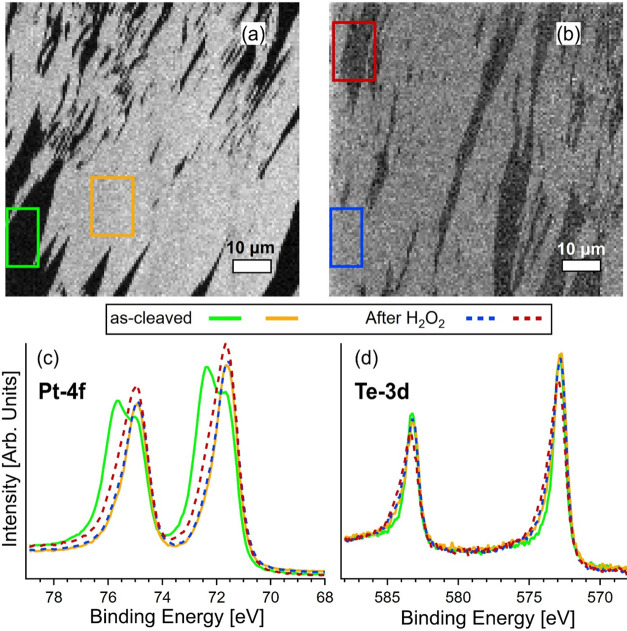 Figure 3
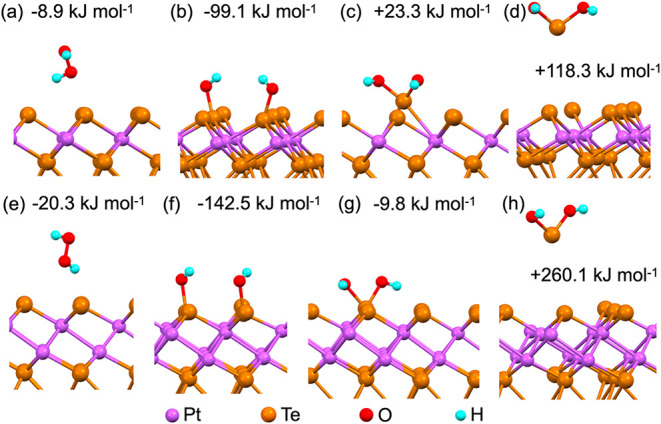 Figure 4
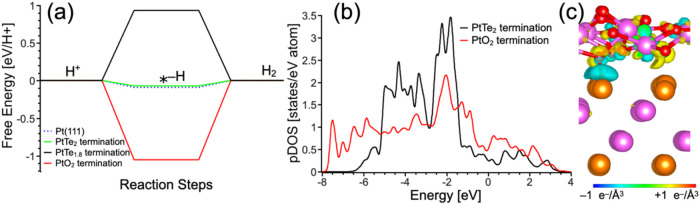 Figure 5
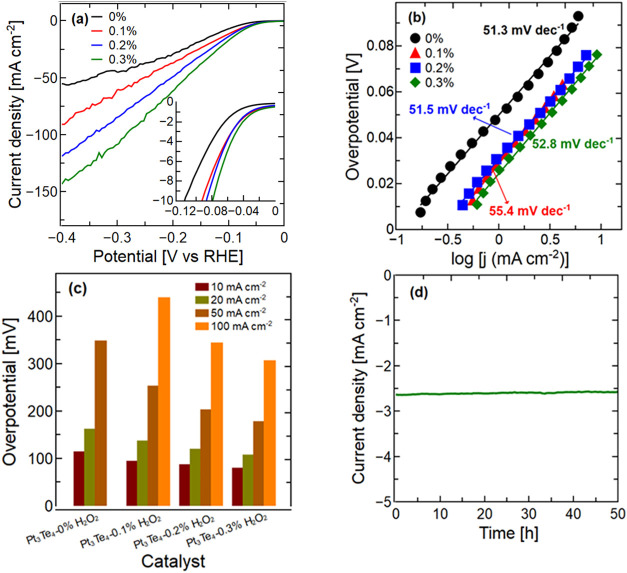 Figure 6
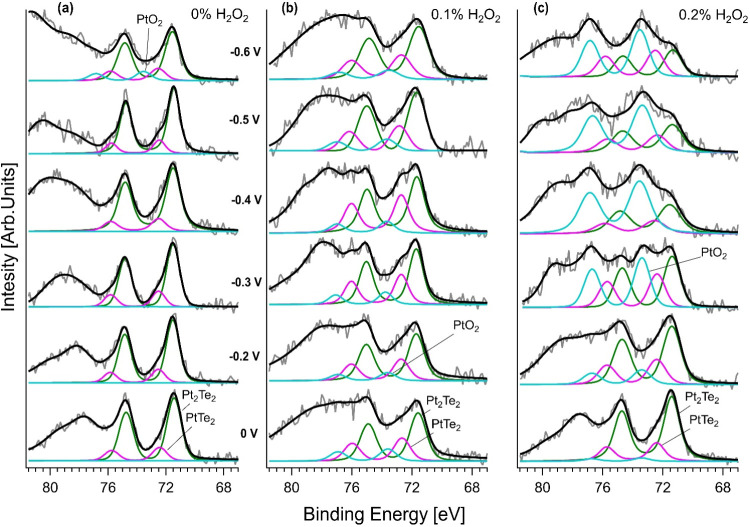 Figure 7
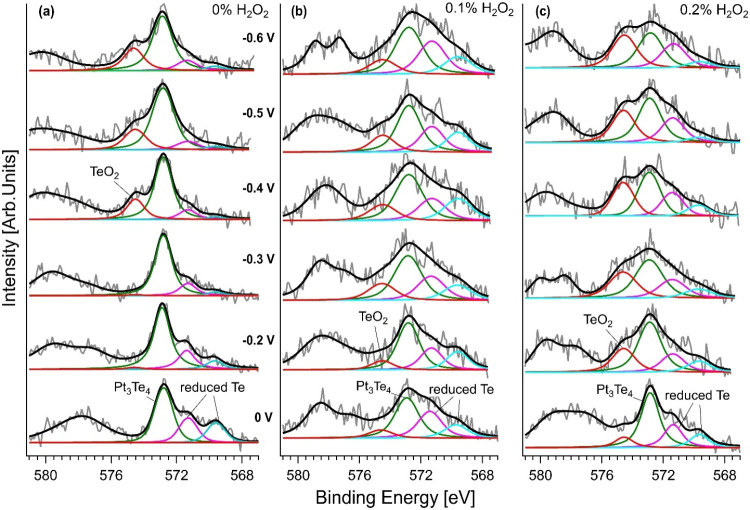 Figure 8
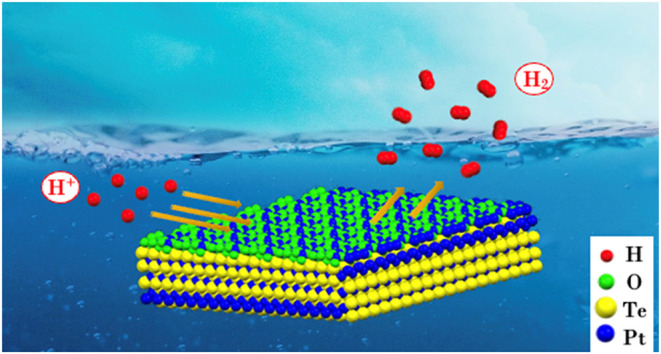 Figure 9
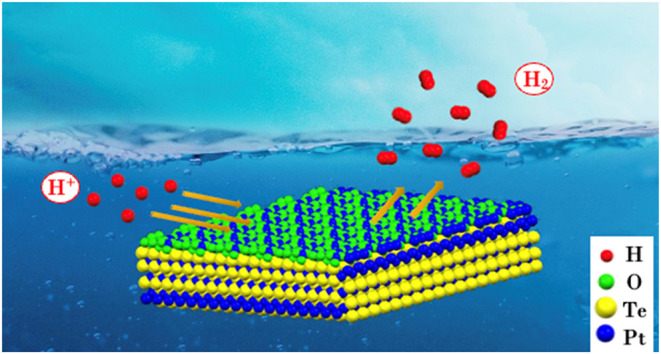 Figure 10
 Figure 11
 Figure 12
 Figure 13
 Figure 14
 Figure 15
 Figure 16
 Figure 17
 Figure 18
 Figure 19
Peer Reviews
No public reviews on file for this paper yet. If you reviewed it on a platform where reviews are public (OpenReview, ICLR, NeurIPS, ICML), you can paste yours below so the community can read it here.
Videos
No videos yet. Explain this paper in a talk, walkthrough, or lecture? Add one.
Taxonomy
TopicsElectrocatalysts for Energy Conversion · TiO2 Photocatalysis and Solar Cells · Ammonia Synthesis and Nitrogen Reduction