Shape-Memory–Assisted Self-Healing and Real-Time Acidic Environment Detection in Multifunctional Electrospun Fibers
Huan-Ru Chen, Yi-Fan Chen, Tse-Yu Lo, Chien-Lin Chen, Kai-Jie Chang, Kuan-Hsun Tseng, Jhih-Hao Ho, Jiun-Tai Chen

TL;DR
This paper introduces electrospun fibers that can self-heal and detect acidic environments, offering potential for smart textiles and wearable electronics.
Contribution
A novel multifunctional fiber platform integrating shape-memory self-healing and acid-triggered color change is developed.
Findings
TPU-rich blends enable self-healing efficiencies up to 95% and stable chromic reversibility.
PCL-rich blends show larger diameters, reduced chromic response, and incomplete recovery.
The platform combines shape-memory, self-healing, and acid detection in a single fiber system.
Abstract
Smart fiber systems that integrate self-healing and environmental responsiveness are emerging as promising candidates for wearable electronics, protective clothing, and adaptive textiles. Here, we report a multifunctional electrospun fiber platform combining shape-memory–assisted self-healing with acid-triggered chromism. The fibers are fabricated from thermoplastic polyurethane (TPU)/poly(ε-caprolactone) (PCL) blends doped with the acid-sensitive dye ODB-2. Distinct thermal transitions of TPU and PCL enable programmable deformation and recovery, whereby fractured fibers self-heal through thermally activated interfacial diffusion. Meanwhile, ODB-2 undergoes a reversible structural change upon protonation, producing a visible color contrast that functions as an acid-responsive optical signal. Systematic characterization of chemical structure, morphology, and functional performance…
Genes, proteins, chemicals, diseases, species, mutations and cell lines named across the full text — each resolved to its canonical identifier and authoritative record.
Click any figure to enlarge with its caption.
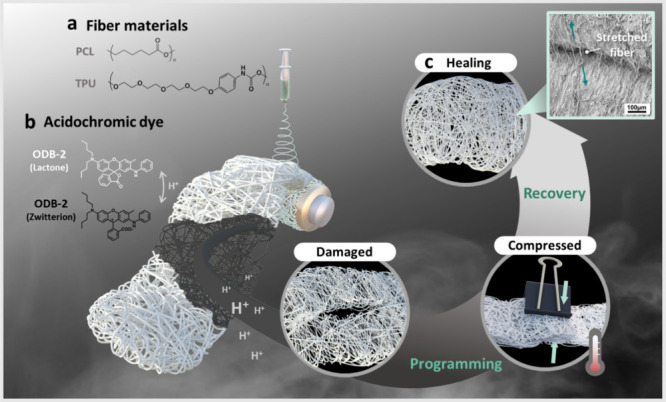 Figure 1
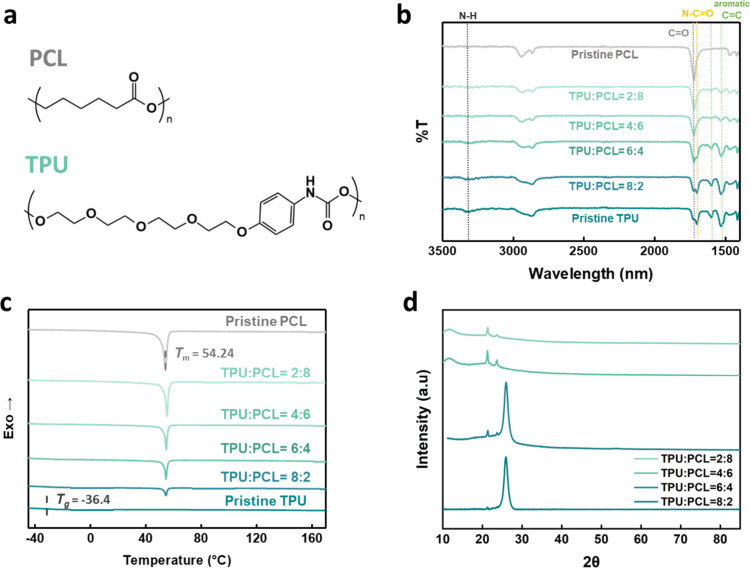 Figure 2
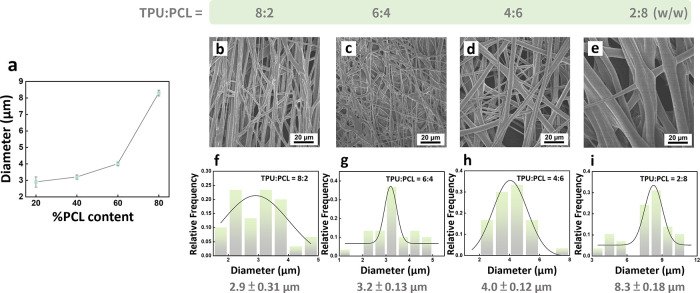 Figure 3
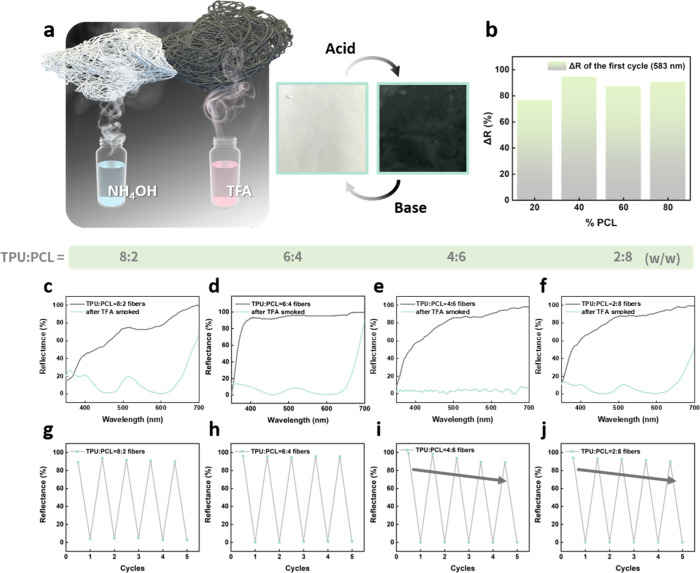 Figure 4
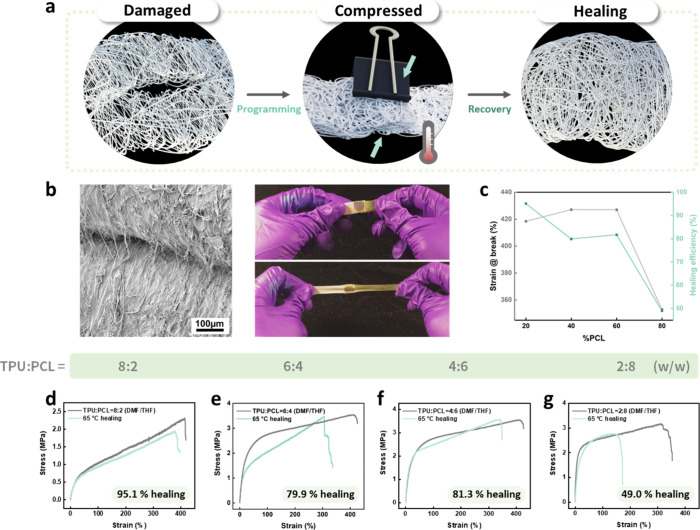 Figure 5
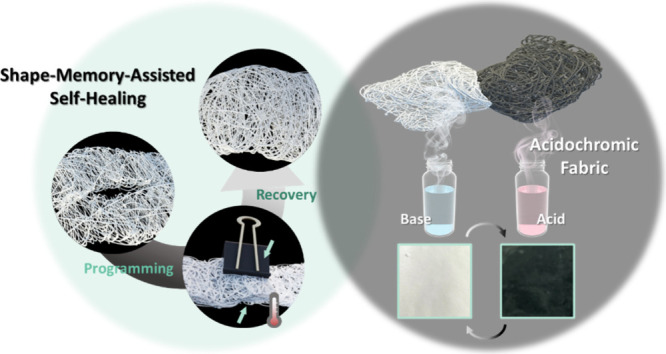 Figure 6
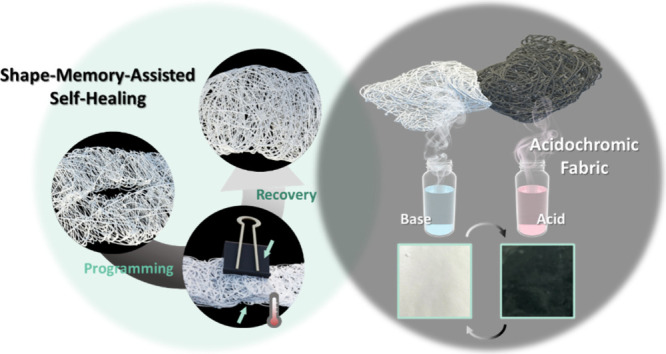 Figure 7
Peer Reviews
No public reviews on file for this paper yet. If you reviewed it on a platform where reviews are public (OpenReview, ICLR, NeurIPS, ICML), you can paste yours below so the community can read it here.
Videos
No videos yet. Explain this paper in a talk, walkthrough, or lecture? Add one.
Taxonomy
TopicsPolymer composites and self-healing · Advanced Sensor and Energy Harvesting Materials · Hydrogels: synthesis, properties, applications