Distinct SOX9 single-molecule dynamics characterize adult differentiation and fetal-like reprogrammed states in intestinal organoids
Nike Walther, Sathvik Anantakrishnan, Gina M. Dailey, Anna C. Maurer, Claudia Cattoglio

TL;DR
The study shows how the movement and binding of SOX9 molecules change during intestinal cell development and when cells are reprogrammed to a fetal-like state.
Contribution
The novel use of automated live-cell single-molecule tracking reveals SOX9 dynamics linked to differentiation and reprogramming in intestinal organoids.
Findings
SOX9 immobile fraction decreases during differentiation, independent of expression levels.
Long-term SOX9 overexpression causes fetal-like reversion with increased proliferation and loss of intestinal identity.
Automated single-molecule tracking in 2D monolayers reveals transcription factor dynamics underlying organoid phenotypes.
Abstract
Transcription factors (TFs) mediate gene expression changes during differentiation and development. However, how TF biophysical properties and abundance dynamically regulate specific cell state transitions remains poorly understood. Using automated live-cell single-molecule tracking (SMT) in intestinal organoid models, we revealed an expression-level-independent decrease in the fraction of immobile sex-determining region Y box 9 (SOX9) molecules during differentiation from ∼48% to ∼38%, largely dependent on DNA binding. Strikingly, long-term SOX9 overexpression caused organoids to transition from budding to spheroid morphology accompanied by increased proliferation and a loss in gene expression signatures for intestinal identity and function. In this fetal-like reprogrammed state, a larger fraction of partially self-interacting SOX9 molecules (∼61%) binds to DNA. Our results suggest…
Genes, proteins, chemicals, diseases, species, mutations and cell lines named across the full text — each resolved to its canonical identifier and authoritative record.
Click any figure to enlarge with its caption.
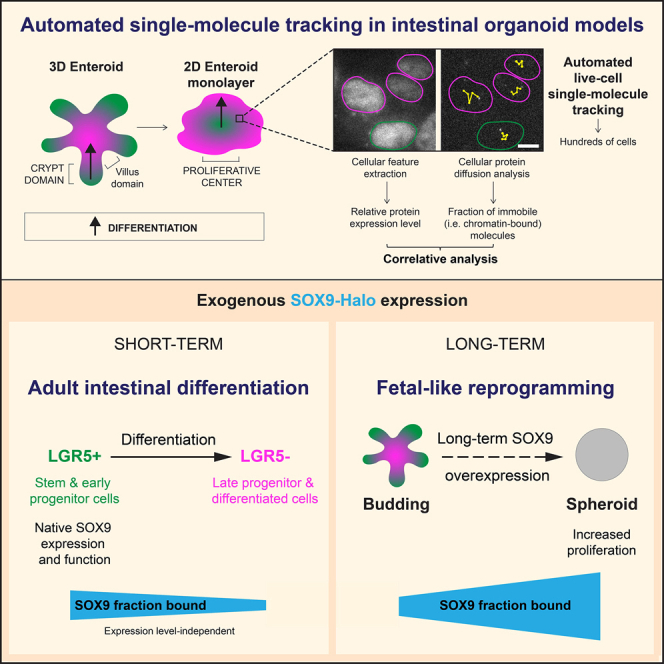 Figure 1
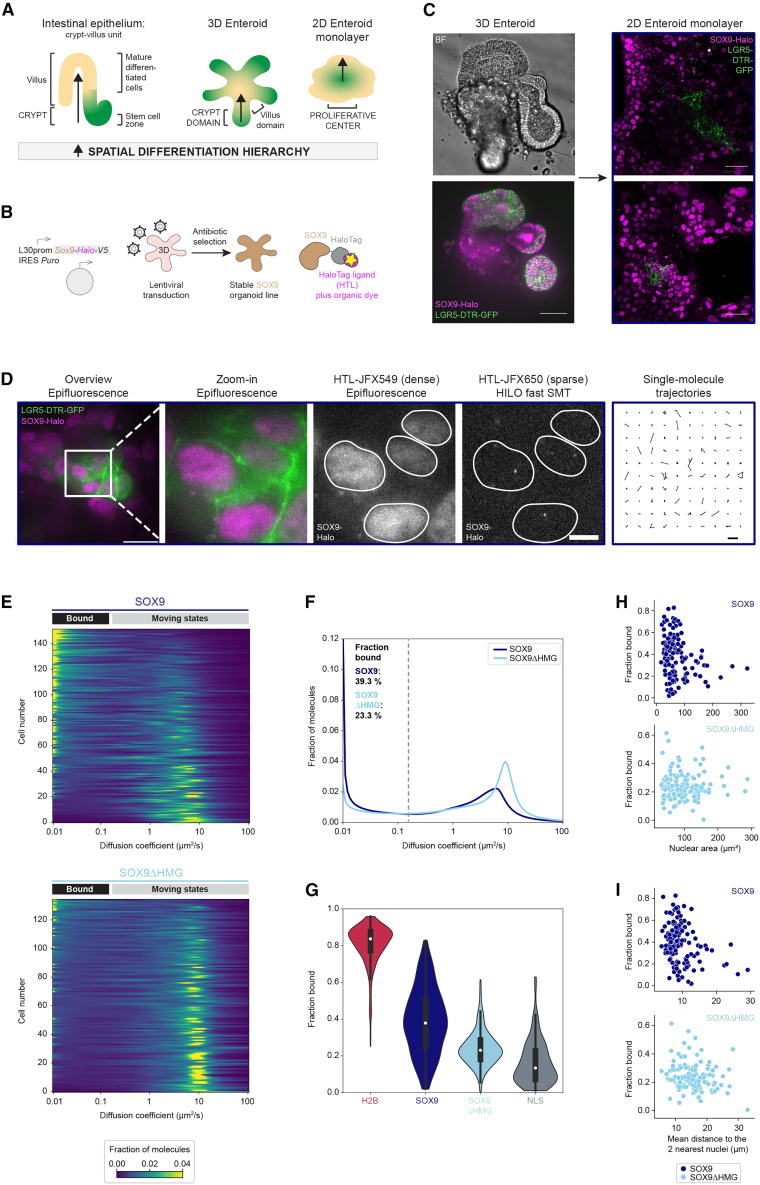 Figure 2
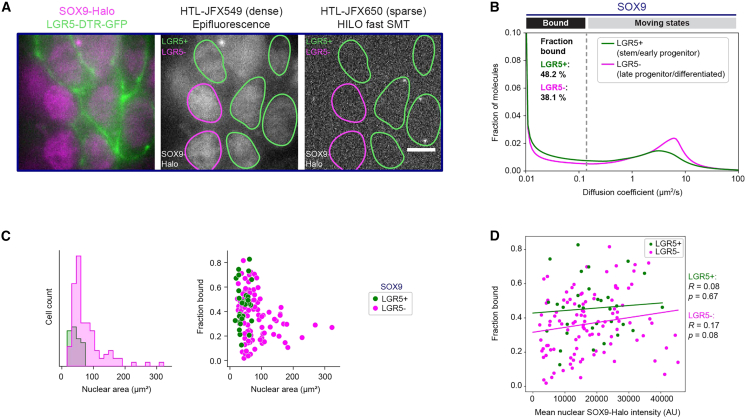 Figure 3
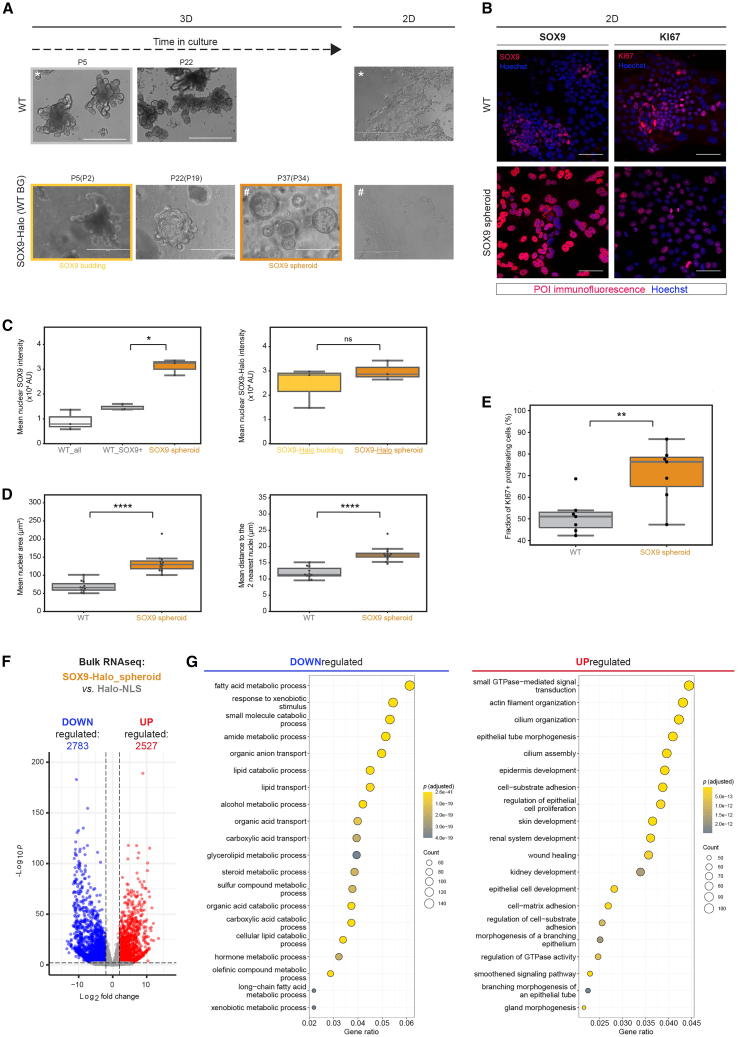 Figure 4
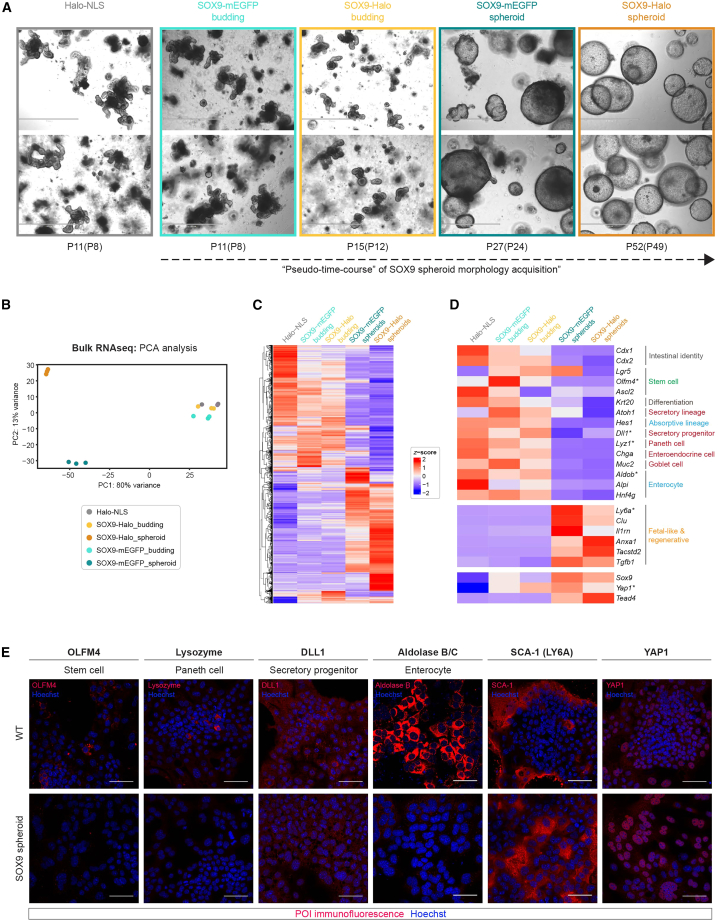 Figure 5
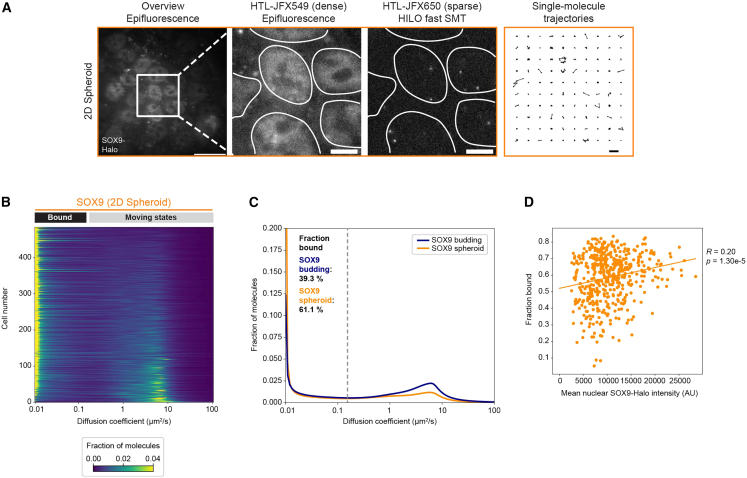 Figure 6
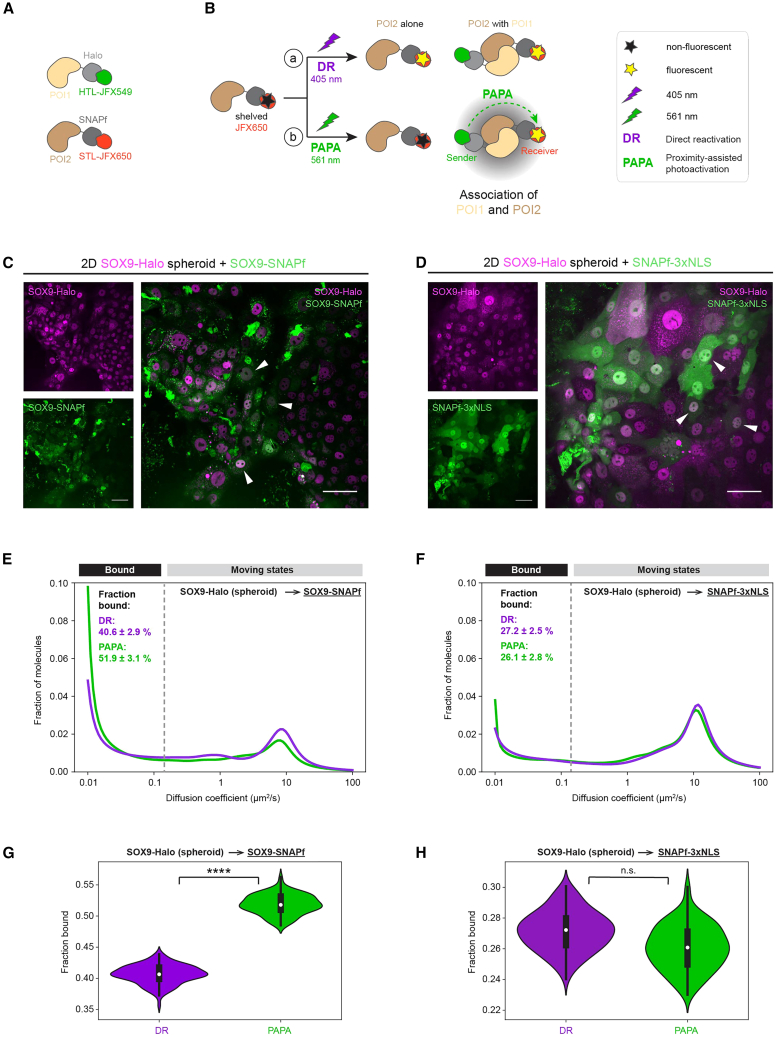 Figure 7
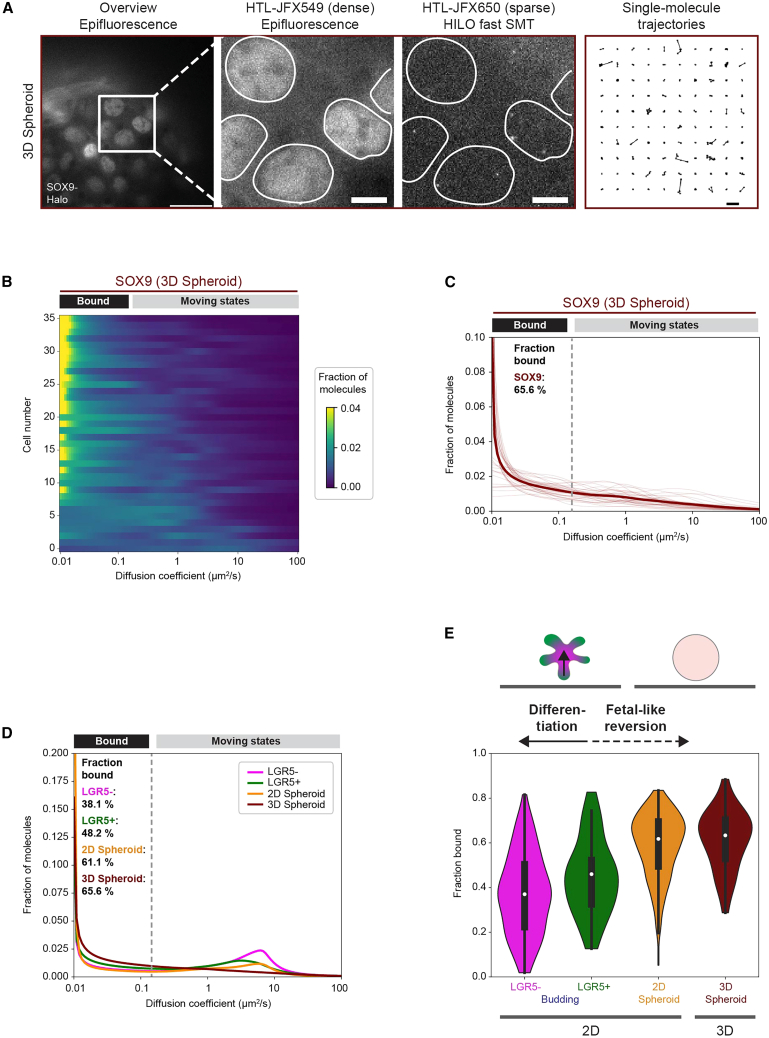 Figure 8
Peer Reviews
No public reviews on file for this paper yet. If you reviewed it on a platform where reviews are public (OpenReview, ICLR, NeurIPS, ICML), you can paste yours below so the community can read it here.
Videos
No videos yet. Explain this paper in a talk, walkthrough, or lecture? Add one.
Taxonomy
TopicsSingle-cell and spatial transcriptomics · Cancer Cells and Metastasis · Pluripotent Stem Cells Research