Comparative lipidomics of iPSC-derived microglia protocols reveal lipid droplet and immune differences mediated by media composition
Aiko Toda Robert, Amanda McQuade, Sascha J. Koppes-den Hertog, Lena Erlebach, Deborah Kronenberg-Versteeg, Martin Kampmann, Martin Giera, Rik van der Kant

TL;DR
Different methods to make microglia-like cells from stem cells lead to big differences in their lipid content, which affects their function and could impact Alzheimer's research.
Contribution
The study reveals that media composition, particularly B-27 and L-carnitine, strongly influences the lipidome and immune state of iPSC-derived microglia.
Findings
iMGL generated via different protocols show major differences in lipid classes like triglycerides.
B-27 and L-carnitine reduce triglyceride levels and promote a homeostatic microglial state.
B-27 makes iMGL metabolically responsive to immune stimuli.
Abstract
Altered microglial lipid metabolism is heavily implicated in Alzheimer’s disease (AD) and aging. Recently, protocols were developed to generate human induced pluripotent stem cell-derived microglia-like cells (iMGL) to study microglial function in vitro, including embryoid body-based methods and induced transcription factor (iTF)-dependent approaches. Here, we performed comparative lipidomics on iMGL from these methods and report major differences in multiple lipid classes, including triglycerides (TGs), a storage form of fatty acids implicated in microglial reactivity. TGs are strongly increased in iTF microglia due to the absence of a media supplement (B-27). Supplementing iTF microglia with B-27, or its component L-carnitine, reduces TGs and promotes a homeostatic state. B-27 also renders iTF microglia metabolically responsive to immune stimuli. Overall, our data show that iMGL…
Genes, proteins, chemicals, diseases, species, mutations and cell lines named across the full text — each resolved to its canonical identifier and authoritative record.
Click any figure to enlarge with its caption.
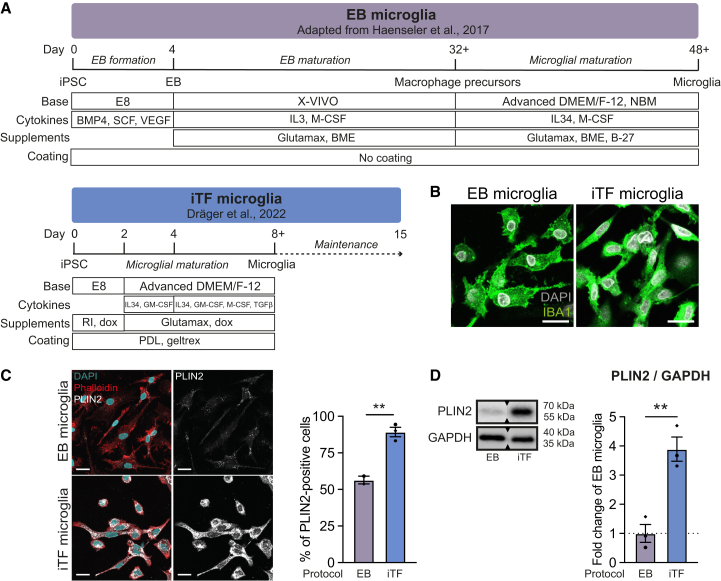 Figure 1
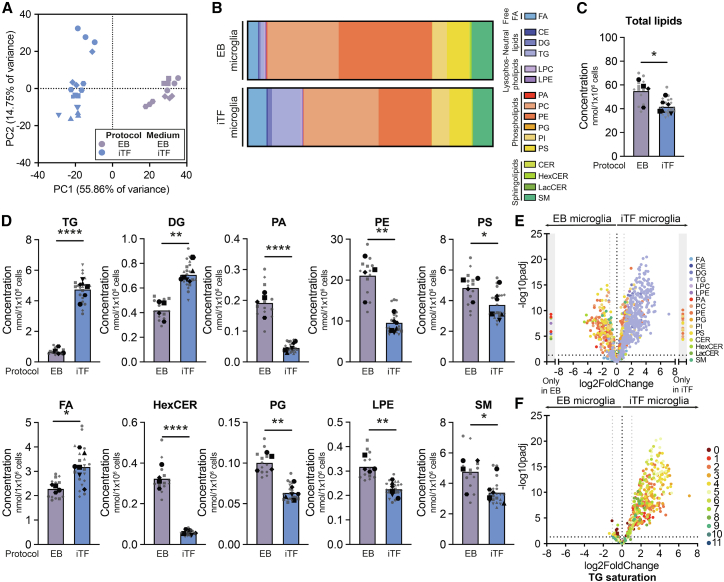 Figure 2
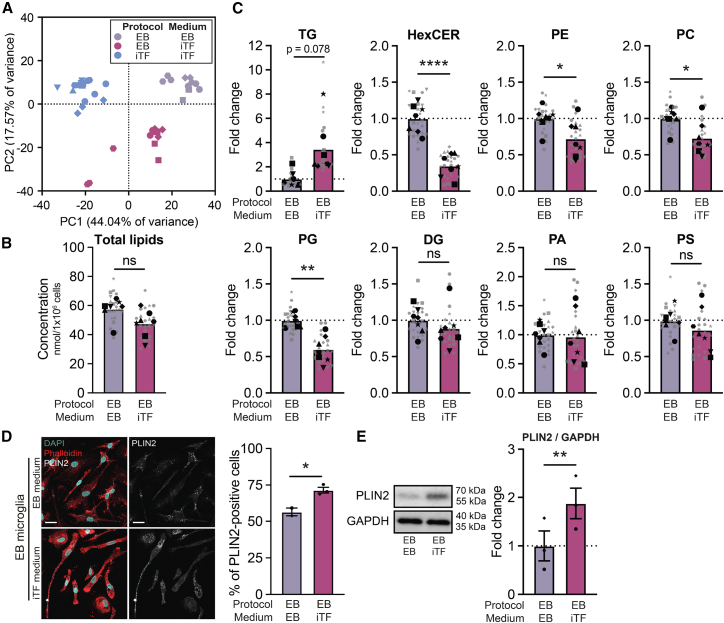 Figure 3
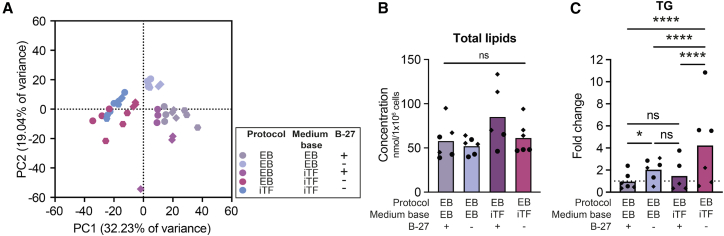 Figure 4
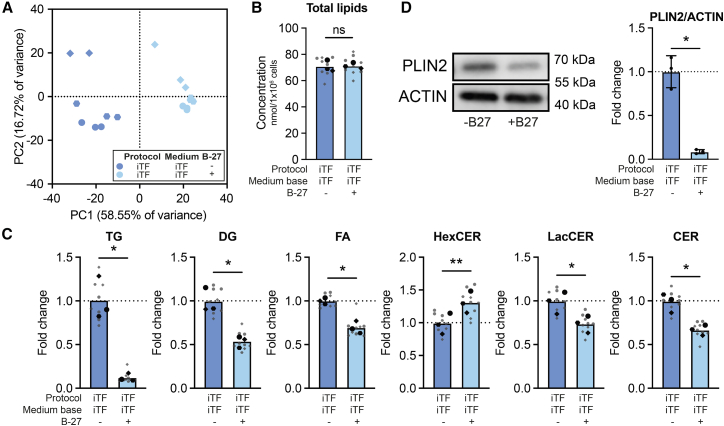 Figure 5
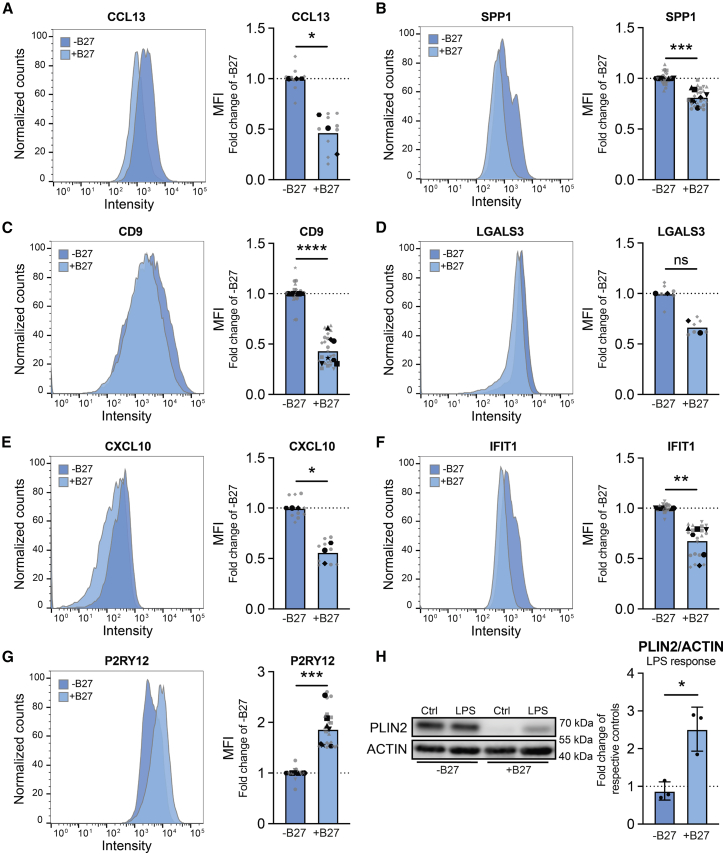 Figure 6
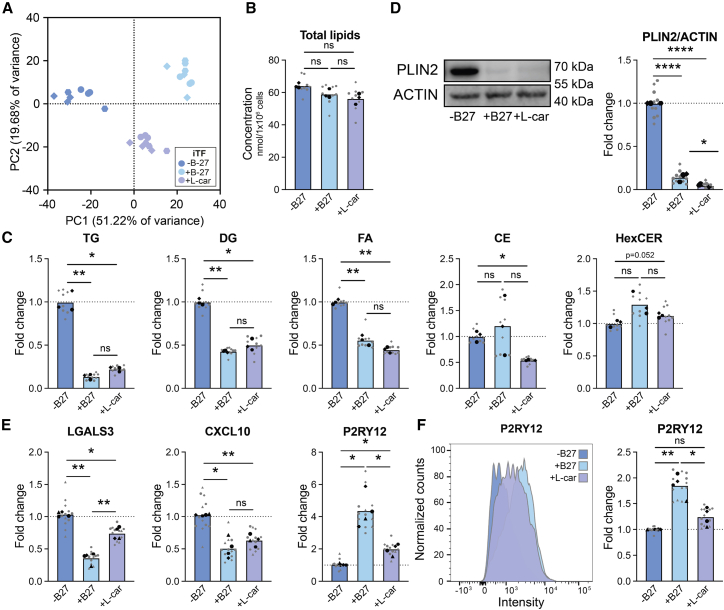 Figure 7
Peer Reviews
No public reviews on file for this paper yet. If you reviewed it on a platform where reviews are public (OpenReview, ICLR, NeurIPS, ICML), you can paste yours below so the community can read it here.
Videos
No videos yet. Explain this paper in a talk, walkthrough, or lecture? Add one.
Taxonomy
TopicsNeuroinflammation and Neurodegeneration Mechanisms · Alzheimer's disease research and treatments · Fatty Acid Research and Health