Generation and characterization of iPSC models from HIV-1-positive individuals with divergent clinical outcomes
Nathalia Almeida, Sam Acors, Daniel Cox, Neophytos Kouphou, Lazaros Fotopoulos, Thomas Williams, Patricia A. Otto, Eun-Young Kim, Steven M. Wolinsky, Davide Danovi, Alessandra Vigilante, Michael H. Malim, Luis Apolonia

TL;DR
Researchers created 50 HIV-free stem cell lines from HIV-positive individuals with different disease outcomes to study how host genetics influence HIV progression.
Contribution
The novel contribution is generating a diverse, HIV-1-free iPSC resource from HIV-positive individuals with known clinical outcomes for mechanistic studies.
Findings
iPSC lines are HIV-1 negative, pluripotent, and can differentiate into HIV-1 target macrophages.
Derived macrophages support productive HIV-1 infection and lentiviral vector transduction.
The resource enables in vitro modeling of host determinants of HIV-1 pathogenesis.
Abstract
The clinical outcome of human immunodeficiency virus type-1 (HIV-1) infection varies greatly among individuals, ranging from rapid disease progression to natural viral suppression. While viral and environmental factors contribute, host genetics are considered major determinants of disease trajectory. To enable mechanistic studies of host factors underlying disease outcomes, we generated 50 induced pluripotent stem cell (iPSC) lines from 18 participants of the Multicenter AIDS Cohort Study (MACS), spanning a spectrum of clinical trajectories. Reprogrammed MACS lines are confirmed to be HIV-1 negative and Sendai vector-free. We validate their pluripotency and demonstrate robust differentiation into macrophages capable of productive HIV-1 infection. These MACS-iPSC lines offer a genetically diverse resource to model HIV-1 infection in vitro, where clinical progression is known. Crucially,…
Genes, proteins, chemicals, diseases, species, mutations and cell lines named across the full text — each resolved to its canonical identifier and authoritative record.
Click any figure to enlarge with its caption.
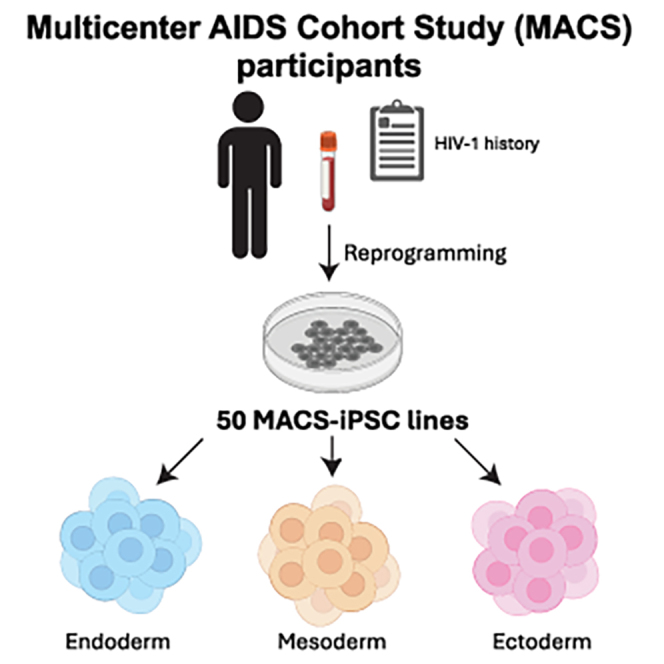 Figure 1
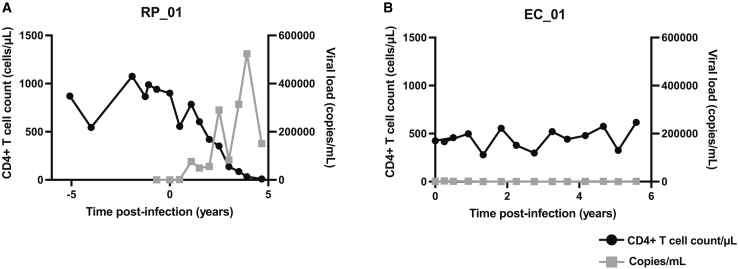 Figure 2
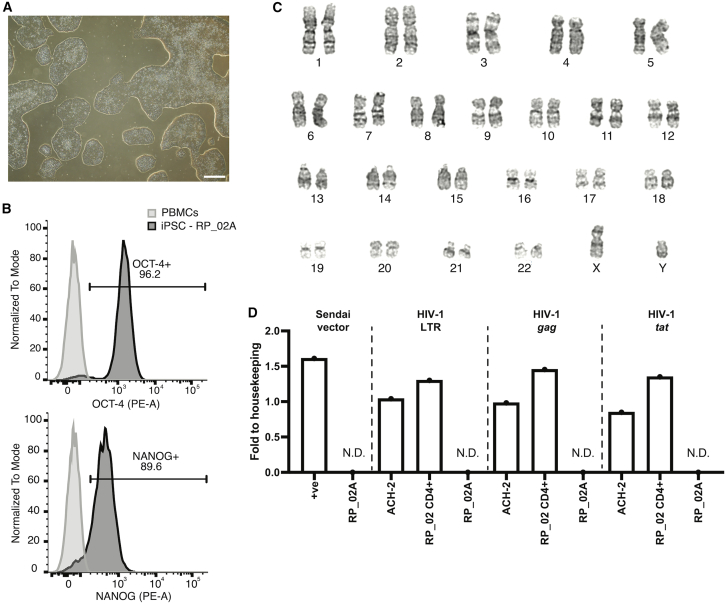 Figure 3
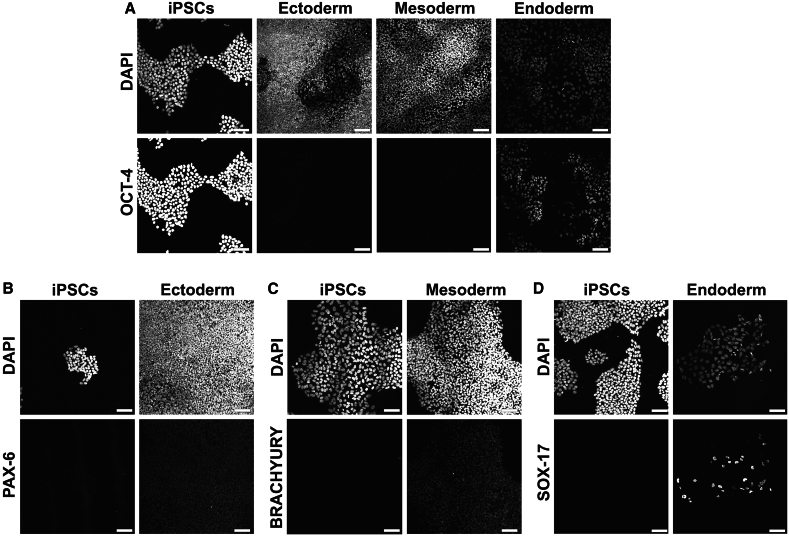 Figure 4
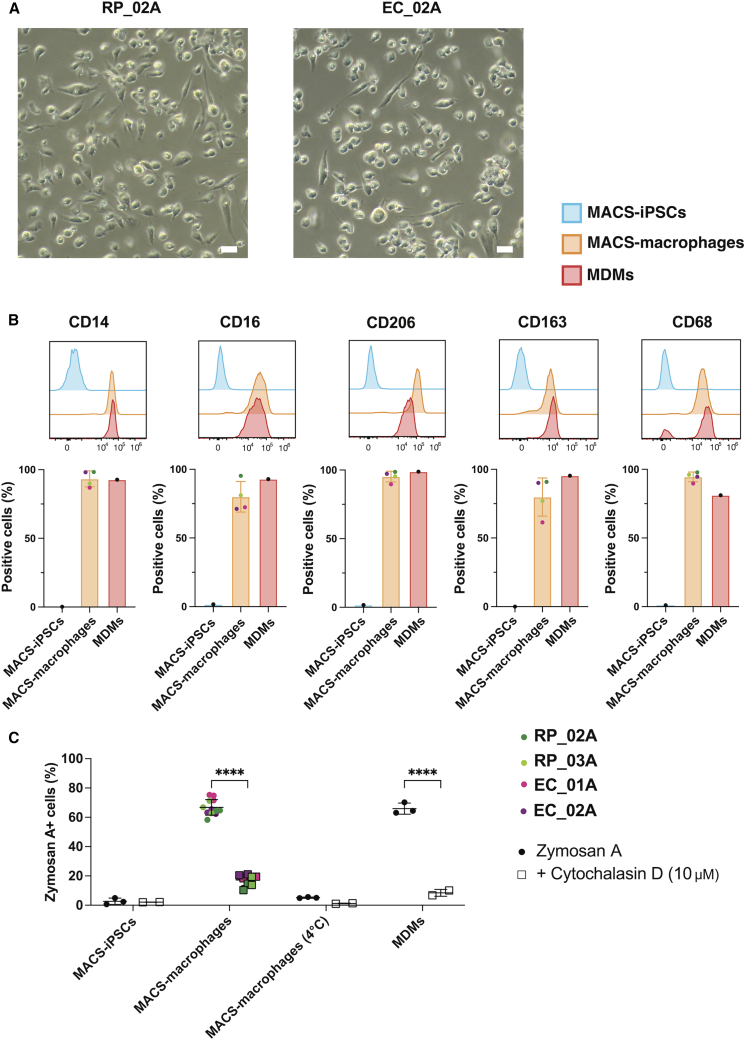 Figure 5
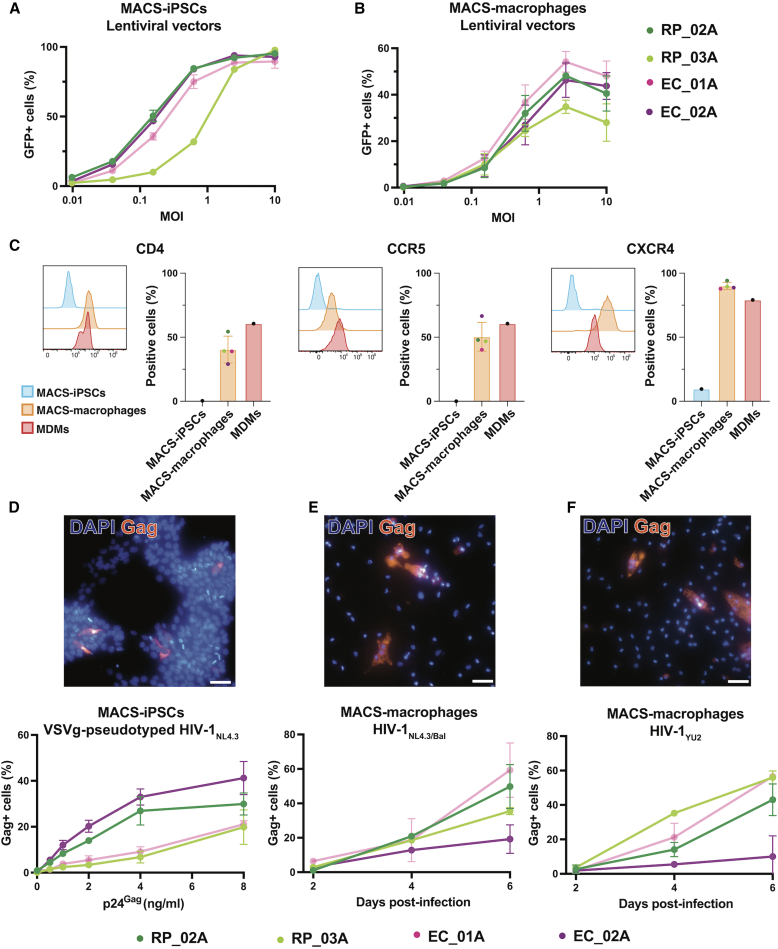 Figure 6
Peer Reviews
No public reviews on file for this paper yet. If you reviewed it on a platform where reviews are public (OpenReview, ICLR, NeurIPS, ICML), you can paste yours below so the community can read it here.
Videos
No videos yet. Explain this paper in a talk, walkthrough, or lecture? Add one.
Taxonomy
TopicsHIV Research and Treatment · Single-cell and spatial transcriptomics · CRISPR and Genetic Engineering