Clinical significance of regions of homozygosity detection in prenatal chromosomal microarray analysis
Ying Hao, Qian Geng, Xingping Li, Jingxin Yang, Yang Liu, Qingfa Huang, Yong Xu, Peining Li, Jiansheng Xie, Weiqing Wu, Bo Wu, Wenlan Liu

TL;DR
This study examines the importance of detecting regions of homozygosity in prenatal genetic testing and how it helps in diagnosing genetic disorders.
Contribution
The study provides new insights into the diagnostic yield and clinical utility of follow-up tests for regions of homozygosity in prenatal chromosomal microarray analysis.
Findings
ROH detection in prenatal CMA has a 2.7% positive predictive value for autosomal-recessive disorders.
Follow-up testing identified UPD-related diseases in 9.6% of cases with ROH.
The overall additive diagnostic yield from ROH detection is 0.04%.
Abstract
Chromosomal microarray analysis (CMA) detects pathogenic copy-number variants (pCNVs) and regions of homozygosity (ROHs) in prenatal genetic analysis. This study evaluates the clinical significance of ROH detection in prenatal settings. We reviewed 178 fetuses with ROH detected by CMA among 20,546 fetuses from 2015 to 2023. Clinical and laboratory results, including ultrasound anomalies, cell-free DNA (cfDNA) screening, karyotyping, exome sequencing (ES), and methylation-specific multiplex ligation-dependent probe amplification (MS-MLPA), were analyzed. These 178 fetuses with ROH accounted for 0.87% of prenatal cases. Among them, 24.2% had positive cfDNA screening results, and 52.8% underwent follow-up ES, trio CMA, and MS-MLPA. Follow-up studies detected pathogenic homozygous variants within ROH in two fetuses and uniparental disomy (UPD)-related diseases in five fetuses. Our results…
Genes, proteins, chemicals, diseases, species, mutations and cell lines named across the full text — each resolved to its canonical identifier and authoritative record.
Click any figure to enlarge with its caption.
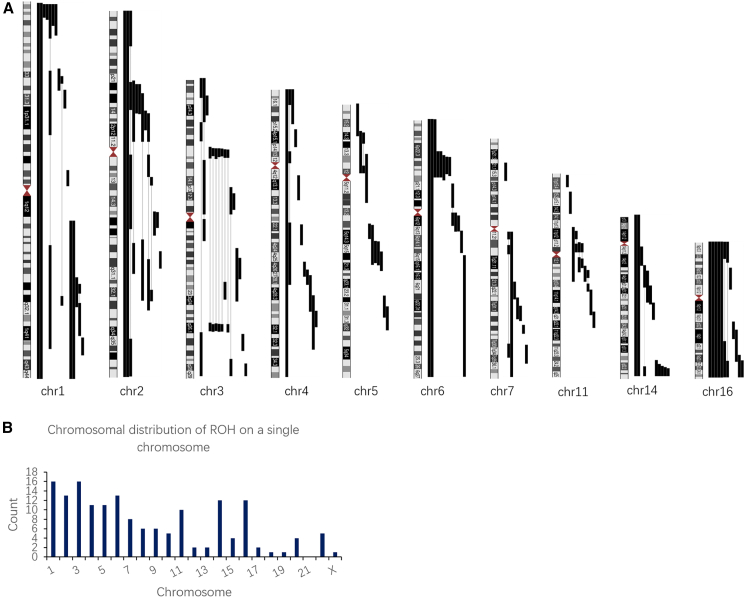 Figure 1
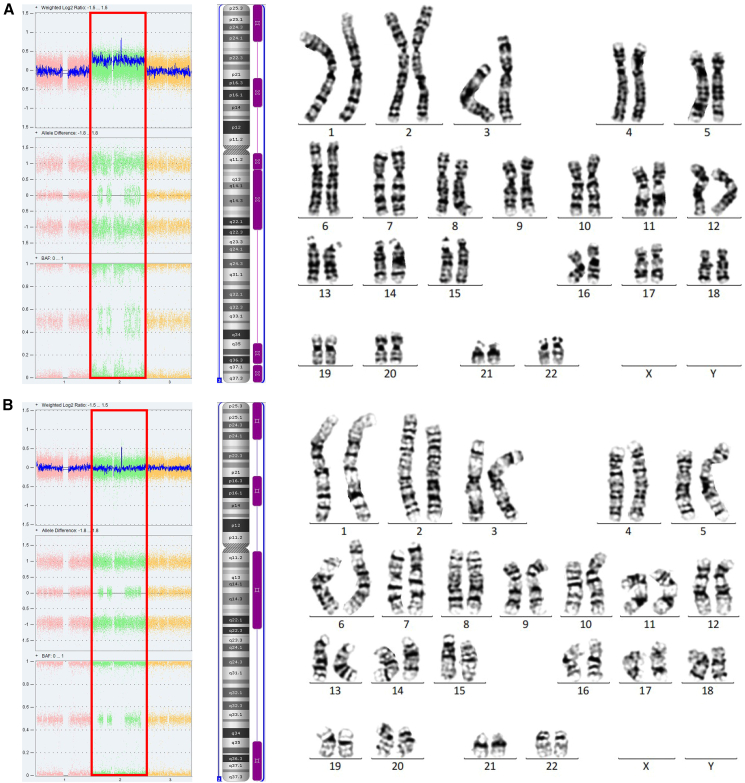 Figure 2
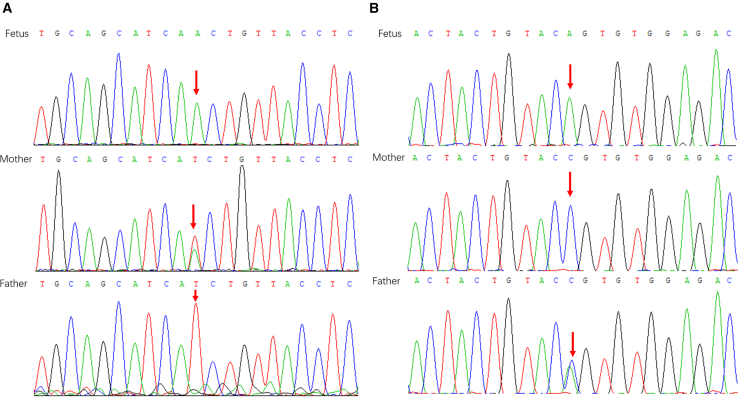 Figure 3
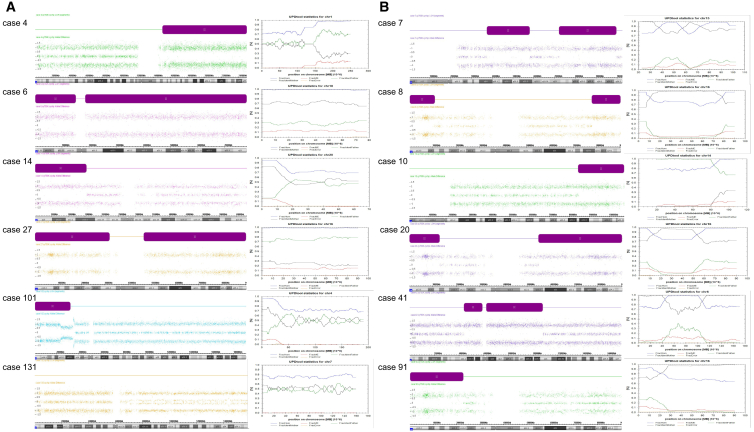 Figure 4
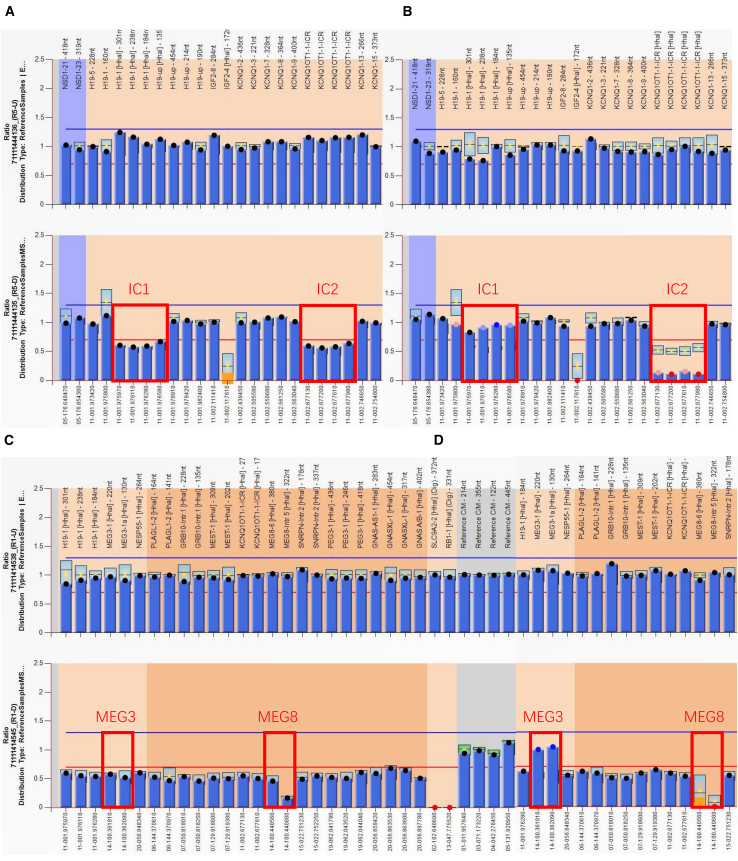 Figure 5
Peer Reviews
No public reviews on file for this paper yet. If you reviewed it on a platform where reviews are public (OpenReview, ICLR, NeurIPS, ICML), you can paste yours below so the community can read it here.
Videos
No videos yet. Explain this paper in a talk, walkthrough, or lecture? Add one.
Taxonomy
TopicsPrenatal Screening and Diagnostics · Genomic variations and chromosomal abnormalities · Genetic Syndromes and Imprinting