Realizing Scalable Chemical Vapor Deposition of Monolayer Graphene Films on Iron with Concurrent Surface Hardening by In Situ Observations
Bernhard Fickl, Werner Artner, Daniel Matulka, Jakob Rath, Martin Nastran, Markus Hofer, Raoul Blume, Michael Hävecker, Alexander Kirnbauer, Florian Fahrnberger, Herbert Hutter, Dengsong Zhang, Paul H. Mayrhofer, Axel Knop-Gericke, Beatriz Roldan Cuenya, Robert Schlögl

TL;DR
Researchers developed a scalable method to grow high-quality graphene on iron while simultaneously hardening its surface, using in situ observations to understand the process.
Contribution
The study introduces a scalable CVD method for monolayer graphene on iron with concurrent surface hardening, enabled by in situ analysis of growth mechanisms.
Findings
In situ XRD and NAP XPS revealed that carbothermal reduction of Fe-oxides is critical for graphene growth on iron.
Carbon uptake during CVD near the Fe–C eutectoid enables surface hardening akin to carburization.
The process allows scalable, high-quality monolayer graphene growth on iron substrates.
Abstract
Graphene has been suggested as an ultimately thin functional coating for metallurgical alloys, such as steels. However, even on pure iron (Fe), the parent phase of steels, the growth of high quality graphene films remains largely elusive to date. We here report scalable chemical vapor deposition (CVD) of high quality monolayer graphene films on Fe substrates. To achieve this, we here elucidate the mechanisms of graphene growth on Fe using complementary in situ X-ray diffractometry (XRD) and in situ near ambient pressure X-ray photoelectron spectroscopy (NAP XPS) during our scalable CVD conditions. As key factors that set Fe apart from other common graphene CVD catalyst supports such as Ni or Cu, we identify that for Fe (i) carbothermal reduction of persistent Fe-oxides and (ii) kinetic balancing of carbon uptake into the Fe during CVD near the Fe–C eutectoid because of the complex…
Genes, proteins, chemicals, diseases, species, mutations and cell lines named across the full text — each resolved to its canonical identifier and authoritative record.
Click any figure to enlarge with its caption.
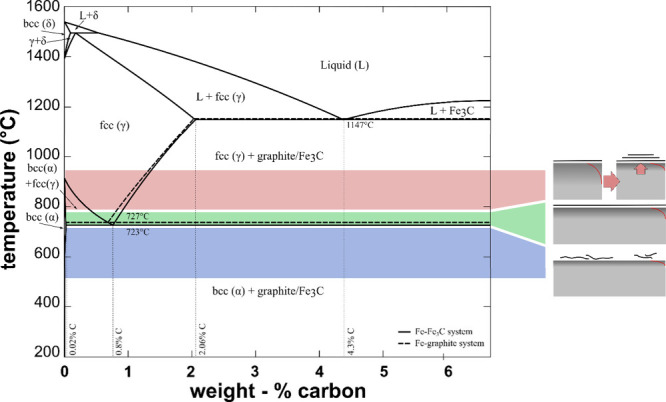 Figure 1
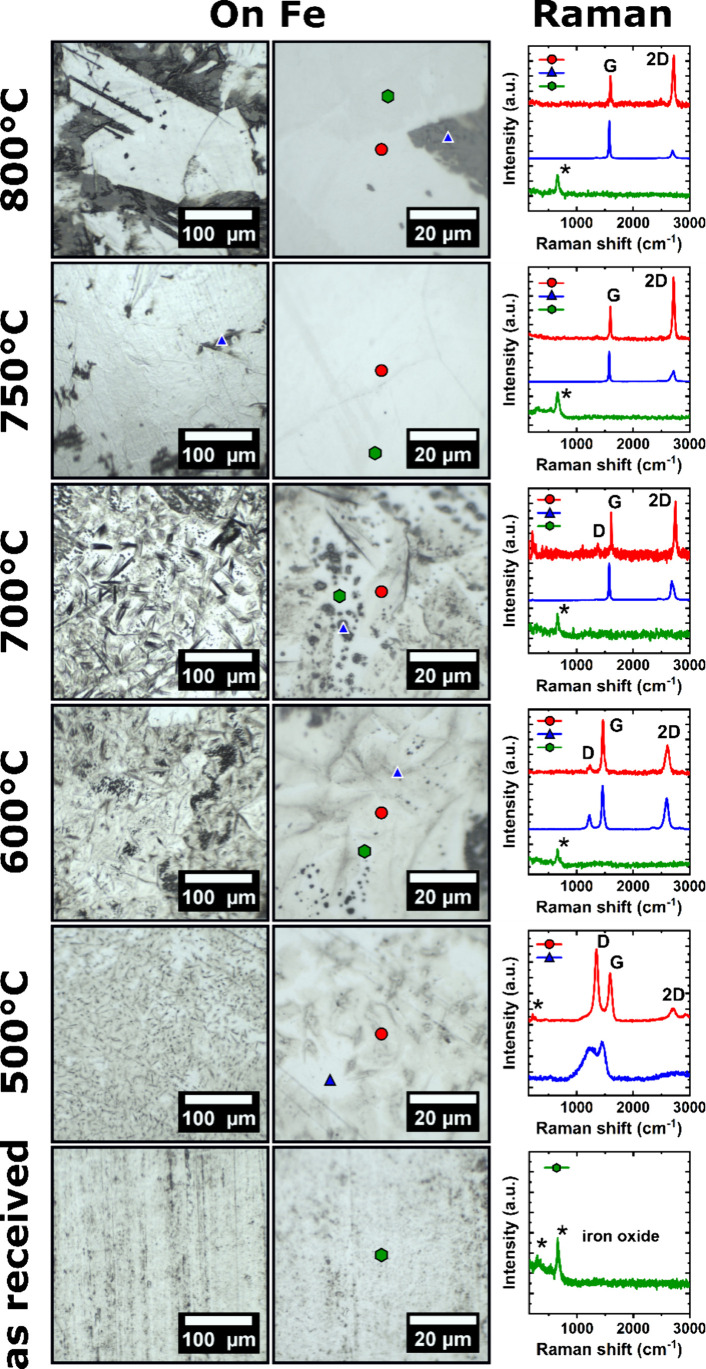 Figure 2
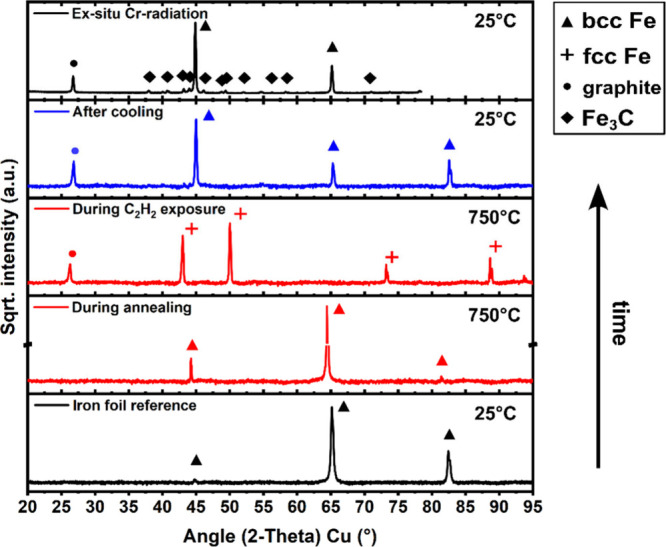 Figure 3
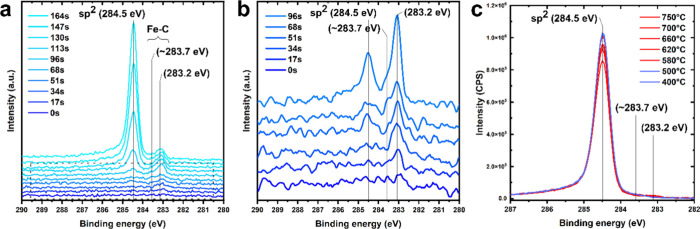 Figure 4
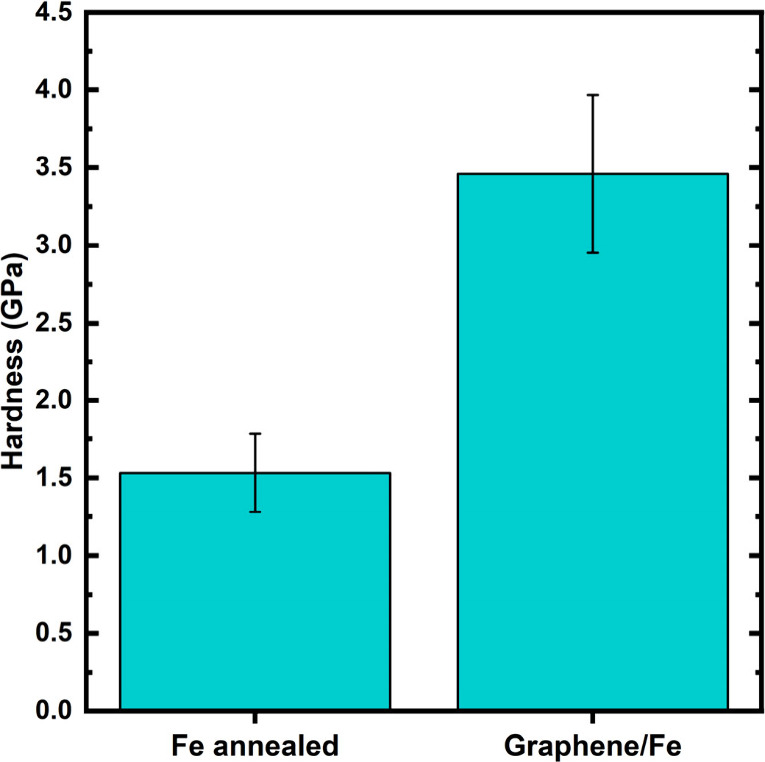 Figure 5
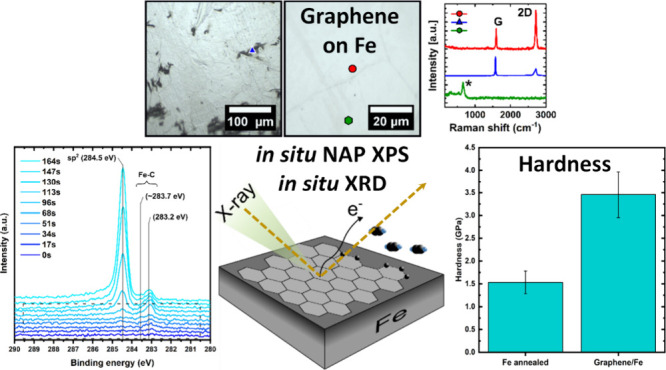 Figure 6
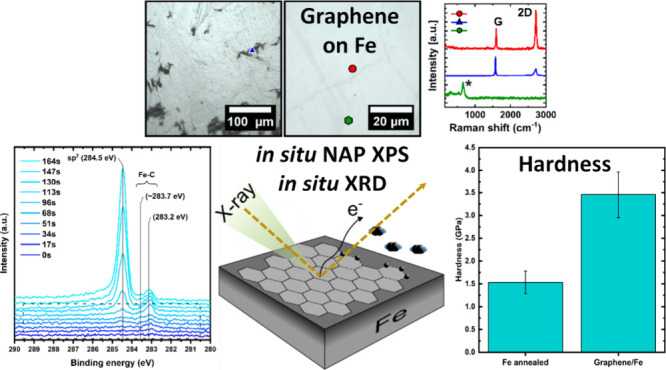 Figure 7
Peer Reviews
No public reviews on file for this paper yet. If you reviewed it on a platform where reviews are public (OpenReview, ICLR, NeurIPS, ICML), you can paste yours below so the community can read it here.
Videos
No videos yet. Explain this paper in a talk, walkthrough, or lecture? Add one.
Taxonomy
TopicsGraphene research and applications · Carbon Nanotubes in Composites · Chemical and Physical Properties of Materials