Exploring the Feasibility of Paper-Based Substrates for User-Friendly Electrochemiluminescent Sensors
Panagiota M. Kalligosfyri, Luca Scognamiglio, Elena Sossich, Ningtao Cheng, Federico Polo, Stefano Cinti

TL;DR
This paper explores using paper-based materials for electrochemiluminescent sensors, aiming to simplify and improve their usability and storage.
Contribution
The study introduces a novel integration of electrochemiluminescence with paper substrates, enabling reagent storage and simplified user operation.
Findings
Office paper showed better sensor performance due to lower porosity.
Filter paper caused signal loss and reduced analytical performance.
Paper-based substrates offer sustainable and cost-effective ECL sensing.
Abstract
Electrochemiluminescence (ECL) is a light-emitting process in which electrochemically generated excited states relax to the ground state and emit photons; in many systems, this excitation is produced through reactions involving a coreactant. ECL has been successfully employed in devising analytical methodologies requiring exceptional sensitivity and ultralow background, critical for precise measurements. Its seamless integration with paper-based platforms further enhances easiness of use, portability and cost-efficiency, expanding its applicability across biomedical, environmental, and point-of-care fields. This novel study aims at integrating the sensitivity offered by ECL and the experimental convenience of paper-based substrates, thus bridging a gap in the science of measurements and providing a new analytical tool with relevant features. Office paper and filter paper were evaluated…
Genes, proteins, chemicals, diseases, species, mutations and cell lines named across the full text — each resolved to its canonical identifier and authoritative record.
Click any figure to enlarge with its caption.
 Figure 1
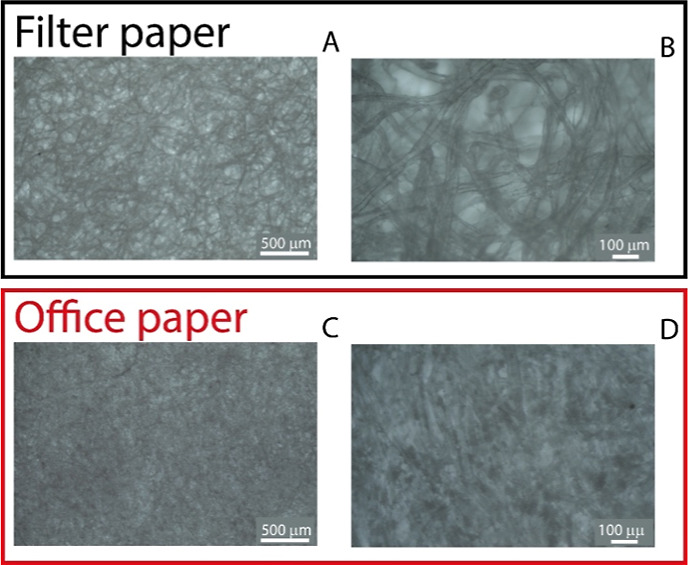 Figure 2
 Figure 3
 Figure 4
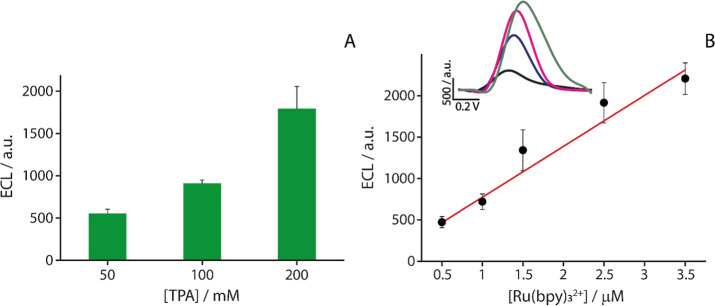 Figure 5
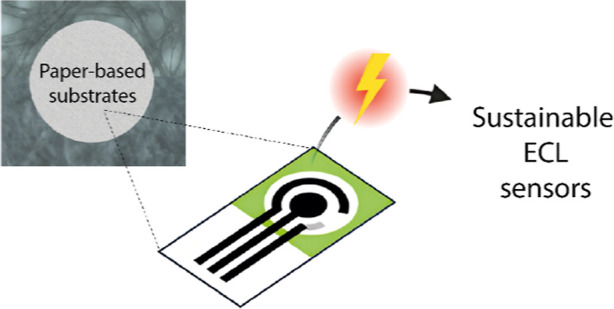 Figure 6
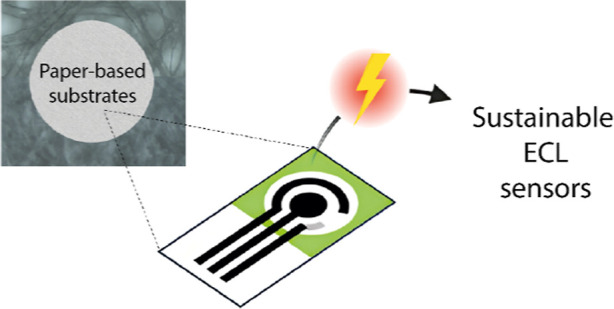 Figure 7
Peer Reviews
No public reviews on file for this paper yet. If you reviewed it on a platform where reviews are public (OpenReview, ICLR, NeurIPS, ICML), you can paste yours below so the community can read it here.
Videos
No videos yet. Explain this paper in a talk, walkthrough, or lecture? Add one.
Taxonomy
TopicsBiosensors and Analytical Detection · Advanced biosensing and bioanalysis techniques · Analytical Chemistry and Sensors